Sourdough Pain au Chocolat
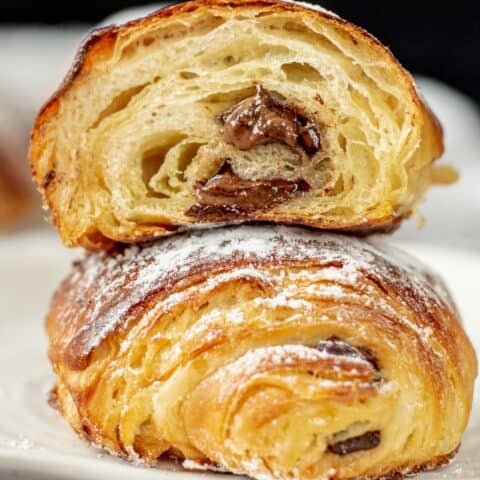
These sourdough pain au chocolat feature dark chocolate enclosed in a light and flaky pastry case.
Ingredients
Sourdough Starter - This makes approx 175g fed starter of which 150g will be used in the recipe.
- 35 g starter
- 70 g all-purpose flour
- 70 g water
Dough
- 450 g all-purpose flour
- 220 ml water
- 150 g fed and doubled sourdough starter
- 50 grams sugar
- 8 grams salt
- 40 g unsalted butter room temperature
Butter packet:
- 250 g unsalted butter room temperature
- 20 g all-purpose flour
Chocolate Filling
- 180 g chocolate batons or chopped semi-sweet chocolate
Egg Wash
- 1 egg + 1 tablespoon water
- Powdered sugar to serve
Instructions
Starter
- In the morning feed your starter by combing the starter, flour, and water in a bowl and mixing it until well-combined. Tip it into a clean jar or glass and let it double or triple.
Dough
- When the starter is ready to use, mix together the flour, water, sugar, sourdough starter, and salt in a bowl to create a shaggy dough. Tip the dough onto a floured workbench and knead it into a ball. Knead in the room temperature butter. This is going to make the dough sticky.
- Keep kneading and slapping the dough down on the bench for 5-8 minutes to create a smooth and soft dough ball. It will still be a bit sticky. Place it in a greased bowl and cover it with an airtight lid or plastic wrap.
- Leave the dough to ferment for around 3 hours, ideally at room temperature between 23-25°C/74-77°F. If your room is cooler than this, leave it for 4-5 hours. The dough should be a bit puffier after the ferment.
- Afterward, transfer it to the refrigerator overnight.
Butter packet
- Mix 250g of room temperature butter with 20g flour to create a butter mixture that is nice and malleable.
- Roll this butter mixture out between two sheets of parchment paper into a 6x8inch (15 x 20cm) rectangle. Place the butter in the fridge for around 10 minutes to cool. Ensure it is cool but still pliable.
- If the butter is too cold and stiff, it’s going to shatter in the dough when it’s rolled out which can create uneven layers. Aim for the butter and the dough to be similar consistencies. Gauging the exact temperature of the butter packet, so that it is a similar consistency to the dough is something that gets better with practice.
- On a floured bench, roll out the chilled dough into an 8x16inch (20x40cm) rectangle.
- Remove one sheet of parchment paper from the butter packet and place the butter in the middle of the dough. Remove the second sheet of parchment paper. Bring the top of the dough down and the bottom of the dough up to meet in the middle and tuck in the butter.
- Use a rolling pin to gently push on the dough to help disperse the butter.
- Top Tips - The butter should just be cool but not rock hard. Keeping the butter and the dough at similar consistencies is key. If the butter is too firm and brittle it won't incorporate into the dough well. However, ensure it doesn't warm and softens too much. Cold butter is what will give the flaky layers in the pastry If the butter melts into the dough, you'll end up with bread-like croissants with no layers.
Fold 1
- Roll this dough out into a rectangle that's around 20inches/50cm in length. While rolling, check that the dough isn't sticking to the bench and dust with flour if it is. Aim to lengthen the dough as opposed to making it wider, and don’t push down too hard. Just gentle rolling. Once rolled, fold the dough up like a pamphlet.
- Fold the dough like a pamphlet by bringing the top third down to the middle and then bringing the bottom third up overtop. Wrap the dough up using the parchment paper used for the butter place it in the fridge for 20-30 minutes. If your kitchen is on the cold side, the dough can rest on the bench.
Fold 2
- Turn the chilled dough 90 degrees and roll it out in front of you into another 20inches/50cm rectangle. At this point, you can cut off any scraggly edges, which will help give you more even layers later on.
- If you feel the butter is too hard and it's cracking as you roll, leave the dough to sit at room temperature for 10 minutes, then continue rolling.
- Repeat the folding process. Place it back in the fridge for 20-30 minutes.
Fold 3
- Repeat this step once more. After this fold, chill the dough for at least an hour.
Shaping
- Cut the dough into 2 and keep the half you’re not using in the fridge.
- Roll half the dough into an 8x20inch (20x50cm) rectangle. Cut the dough widthwise into five strips.
- Place a baton or a little line of chopped chocolate at the end of a strip and fold it over once to enclose the chocolate. Add another line of chocolate and fold it over, then continue rolling it all the way up.
- Continue with the remaining dough strips, then repeat with the other dough half.
Proofing
- The pain au chocolat now needs to proof until puffy. This is a very important step. Underproofed croissants and pain au chocolat will result in dense pastry, leaking butter, and a ‘raw’ dough texture.
- Leave the pain au chocolat to proof on parchment paper-lined trays for around 4 hours at a temperature between 23-25°C/74-77°F (no higher or the butter will melt). They should become puffy and jiggle when the tray is gently shaken. The layers in the croissant should be visible.
- You can brush the pain au chocolat with a little water to stop them from drying out or create a humid and warm spot by placing the pain au chocolat in a cold oven next to a cup of hot water. (Don’t place the water under the tray or it’ll warm the bottom too much.)
- Ensure the butter in the dough doesn't melt or it will ruin the layers.
Baking
- Once proofed, preheat the oven to 205°C/400°F.
- Once the oven is at temperature, brush the pain au chocolat with a layer of egg wash.
- Bake them for approximately 20-22 minutes until deep brown.
- Once baked, let them cool for 10 minutes and dust with powdered sugar.
Leftover pain au chocolate can be stored at room temperature for up to 4 days. They can be rewarmed in the microwave or in the oven.
Notes
The dough can be refrigerated longer once it has been laminated, even overnight again. On the morning of day 3, it can be shaped, proofed, and baked.
The shaped and proofed pain au chocolate can also be refrigerated, to be baked straight from the fridge the following morning.
Unbaked pain au Chocolat can be frozen after they have been shaped and proofed. This way they have already done all their rising and can be baked from frozen.
Nutrition
Serving: 1gCalories: 518kcalCarbohydrates: 64gProtein: 7gFat: 26gSaturated Fat: 16gPolyunsaturated Fat: 9gCholesterol: 71mgSodium: 282mgFiber: 2gSugar: 24g
Tried this recipe?Let us know how it was!