Brioche Hot Cross Buns
These delicious, buttery buns are a step up from traditional hot cross buns, with a rich flavor and tender, soft texture.
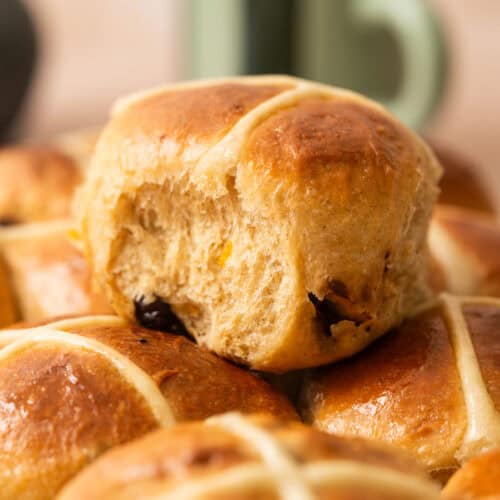
Ingredients
- 140 g raisins
- 60 g orange juice
- 1 Tbsp orange zest finely grated
- 120 g whole milk lukewarm (95-104°F / 35-40°C)
- 2 teaspoons instant yeast or active dried yeast
- 70 g granulated sugar
- 530 g all-purpose flour (at least 11% protein)
- 3 large eggs
- 1 ½ teaspoon salt
- 1 tsp vanilla extract
- 1 ½ teaspoon ground cinnamon
- ½ teaspoon ground ginger
- ¼ teaspoon ground nutmeg
- ⅛ teaspoon ground cloves
- 170 g unsalted butter room temperature but not greasy or too soft
Paste
- 32 g all-purpose flour
- 30 g water
Glaze
- 60 g water
- 50 g granulated sugar
Instructions
Dough
- Add the orange juice, raisins, and zest to a small bowl. Microwave for 30 to 40 seconds and stir. Set aside to soak while you make the dough. 140 g raisins, 60 g orange juice, 1 Tbsp orange zest
- Pour the lukewarm milk into the bowl of a stand mixer fitted with a dough hook. Stir in the yeast and one tablespoon of the sugar. If using active dried yeast, leave it to sit for 5-10 minutes until foamy. If it doesn't foam, the yeast is dead and you'll need a fresh packet. If using instant yeast, you can skip the wait, but if you're unsure how fresh your yeast is, let it sit for a few minutes anyway just to confirm it's active. 120 g whole milk, 2 teaspoons instant yeast, 70 g granulated sugar
- Add the flour, remaining sugar, spices, vanilla, salt, and eggs to the milk mixture. Fit the stand mixer with a dough hook and mix on low speed until a thick, shaggy dough forms. 530 g all-purpose flour, 3 large eggs, 1 ½ teaspoon salt, 1 tsp vanilla extract, 1 ½ teaspoon ground cinnamon, ½ teaspoon ground ginger, ¼ teaspoon ground nutmeg, ⅛ teaspoon ground cloves
- Add the cubed butter a few pieces at a time with the mixer running on low speed. Don't add the next piece until the previous one has disappeared into the dough. Once all the butter is in, continue mixing on low for a total of at least 15-20 minutes from when you started adding the butter. The dough will go through a sticky, rough-looking phase before it smooths out and starts pulling cleanly away from the sides of the bowl. To test if it's ready, let the dough rest a few minutes then pull off a small piece and stretch it gently between your fingers. If you can stretch it thin enough to almost see light through without it tearing instantly, the gluten is properly developed. This is called the windowpane test. 170 g unsalted butter
- Add the soaked raisins and all the orange juice. The dough will get sticky again but will mix in easily because the gluten is already developed. Mix on low speed for a couple of minutes until the juice is fully incorporated and the fruit is evenly distributed, then stop.
- Pull the dough onto a lightly floured surface and form it into a ball, tucking the dough under itself a few times to capture any stray raisins. Place the dough ball into a large greased bowl, cover with a lid or plastic wrap, and let it rise in a warm spot for 1½-2 hours until doubled in size.
- Punch down the dough and refrigerate for 8 to 12 hours for the best flavor. Alternatively, place the dough in the fridge for just 20-30 minutes to chill the butter slightly and then go straight to shaping.
Shaping
- Grease or line a 9x13-inch pan. Pull the dough onto a lightly floured surface. If the dough is refrigerated overnight, it will feel stiff and cold and a bit clammy. This is normal.
- Weigh the dough and divide it into 12 equal pieces, around 100g each. Shape each piece into a tight, smooth ball and place them in the prepared pan.
- Let the buns rise in a warm place until doubled in size, approximately 2 hours. They should look noticeably puffed and when gently pressed the dough springs back slowly.
- Preheat the oven to 350°F / 180°C standard oven. Mix the flour and water for the crosses into a thick paste and transfer to a piping bag with a small round tip, or a zip-lock bag with the corner snipped. Pipe crosses across the tops of the buns. 32 g all-purpose flour, 30 g water
- Bake for 28-30 minutes until deep golden brown. If you have an instant-read thermometer, the buns are done when the internal temperature reaches 190-195°F (88-90°C).
- While the buns bake, heat together sugar and water until the sugar has dissolved. Brush this sugar glaze generously over the hot buns as soon as they come out of the oven. You won't need all the glaze. Leave to cool for about 20 minutes before eating. 60 g water, 50 g granulated sugar
Notes
- Both US customary and metric measurements are provided. Use the toggle to switch between the two.
- The butter must be softened to room temperature and pliable, not warm or greasy. Take it out of the fridge 30 to 45 minutes before you start.
- Soft brown sugar can be substituted for the granulated sugar for a slightly deeper flavor.
- If the dough looks or feels greasy while mixing, refrigerate the bowl for 15 to 20 minutes and resume mixing. It should come back together. Don't windowpane test a greasy dough, instead chill it and get it back together first, then test.
- The overnight refrigeration step is optional but recommended for best flavor and easier shaping.
Nutrition
Serving: 1bunCalories: 374kcalCarbohydrates: 56gProtein: 8gFat: 14gSaturated Fat: 8gPolyunsaturated Fat: 1gMonounsaturated Fat: 4gTrans Fat: 0.5gCholesterol: 78mgSodium: 319mgPotassium: 215mgFiber: 3gSugar: 9gVitamin A: 451IUVitamin C: 4mgCalcium: 38mgIron: 3mg
Tried this recipe?Let us know how it was!