Authentic Brioche Bread Recipe
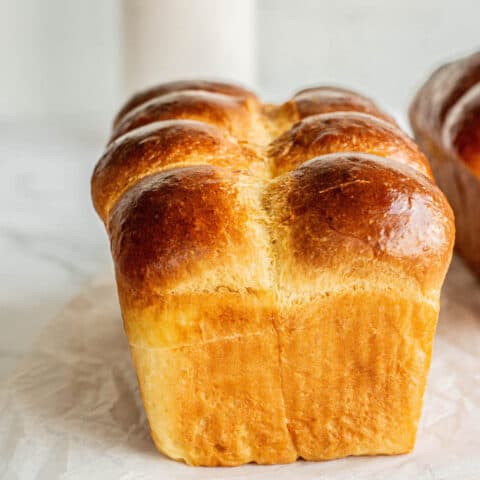
This brioche bread recipe makes a yellow, buttery and tender bread. This recipe makes 2 loaves
Ingredients
- 125 g milk lukewarm(95-104°F / 35-40°C)
- 2 1/2 teaspoons instant yeast or active dried yeast
- 65 g granulated sugar
- 600 g all-purpose flour
- 5 large eggs approx. 260g-270g excluding shell.
- 1 3/4 teaspoon salt
- 230 g unsalted butter cool room temperature, cubed
Egg wash
- 1 large egg
- 1 Tablespoon water
Instructions
Dough
- Pour the lukewarm milk into the bowl of a stand mixer fitted with a dough hook. Stir in the yeast and one tablespoon of the sugar. If using active dried yeast, leave it to sit for 5-10 minutes until foamy. If using instant yeast, you can skip the wait and proceed straight to the next step. 125 g milk, 2 1/2 teaspoons instant yeast, 65 g granulated sugar
- Add the remaining sugar, flour, eggs, and salt to the milk mixture. Turn the mixer on low and combine until a thick, slightly sticky dough forms. Mix on low for 5 minutes to begin developing the gluten. 600 g all-purpose flour, 5 large eggs, 1 3/4 teaspoon salt
- Add the cubed butter a few pieces at a time with the mixer running on low speed. Don't add the next piece until the previous one has disappeared into the dough. Once all the butter is in, continue mixing for a total of at least 15-20 minutes from when you started adding the butter. The dough will go through a sticky, rough-looking phase before it smooths out and starts pulling cleanly away from the sides of the bowl. This is normal. Once it looks smooth and cohesive, stop the mixer and let the dough rest for 5 minutes. Then pull off a small piece and stretch it gently between your fingers. If you can stretch it thin enough to almost see light through without it tearing, the gluten is properly developed. This is called the windowpane test. If it tears, put it back on the mixer for a few more minutes and test again. 230 g unsalted butter
- Pull the dough from the bowl onto a lightly floured surface and form it into a ball. Place it into a clean greased bowl, cover with a lid or plastic wrap, and let it rise at room temperature for around 1 hour until just puffy. Then deflate it lightly and refrigerate overnight. This room-temperature rise adds flavor, but if you're short on time you can refrigerate the dough straight after kneading.
Shaping
- Pull the cold dough from the bowl and tip it onto a lightly floured surface. It will feel stiff and cold, which is normal. Deflate it and divide into two equal portions. Line two loaf pans (9x5 inch or 8.5x4.5 inch) with parchment paper.
- Shape each portion using one of the following methods:
- Option 1 (rolls). Divide each portion into 8 equal pieces. Roll each into a tight ball and place them side by side in two rows in the lined tin.
- Option 2 (braid). Divide each portion into 3 equal pieces. Roll each into a log about 30cm (12 inches) long. Braid the three lengths together, tuck in the ends, and place in the lined tin.
- Let the shaped loaves rise in a warm spot (around 75-80°F / 24-27°C) until doubled in size and feeling airy. This typically takes 2-3 hours depending on room temperature. The dough should not feel so warm that the butter is melting.
Baking
- Preheat the oven to 350°F / 180°C. Whisk the egg and water together for the egg wash. Brush gently over the tops of the risen loaves. 1 large egg, 1 Tablespoon water
- Bake for 30-35 minutes until a deep golden brown. If the tops are browning too quickly, loosely tent with aluminum foil. The loaves are done when they sound hollow when tapped on the bottom, or when an instant-read thermometer reads 195°F / 90°C in the center.
- Leave the loaves to cool in their pans for 15 minutes, then transfer to a wire rack. Let them cool fully before slicing. The crumb needs time to set.
Notes
- Both US customary and metric measurements are provided. Use the toggle to switch between the two.
- Flour. This recipe works best with all-purpose flour with around 11% protein. Protein levels vary between brands and the names of flour vary between countries, so it's worth checking the protein level on the packet rather than going by name alone.
- Butter temperature. The butter must be at cool room temperature, not cold from the fridge and not soft or greasy. Take it out 30-45 minutes before you start. Too cold and it tears the dough. Too warm and the dough turns greasy.
- If the dough looks greasy or separated while mixing, refrigerate the bowl for 15-20 minutes and resume on low speed. Chill it first before doing the windowpane test.
- Kneading by hand. Slice the butter into thin pieces rather than cubes. Press it into the dough using the heel of your palm. Once all the butter is in, switch to a slap-and-fold method: lift the dough, slap it onto the bench, fold it over itself, and repeat in fast, steady movements. This takes 15-20 minutes.
- Leftover brioche keeps at room temperature in an airtight container for up to 3 days. Freeze sliced for up to 3 months.
Nutrition
Serving: 2slicesCalories: 463kcalCarbohydrates: 53gProtein: 12gFat: 23gSaturated Fat: 13gPolyunsaturated Fat: 2gMonounsaturated Fat: 6gTrans Fat: 1gCholesterol: 163mgSodium: 402mgPotassium: 159mgFiber: 2gSugar: 6gVitamin A: 757IUVitamin C: 0.01mgCalcium: 48mgIron: 3mg
Tried this recipe?Let us know how it was!