Easy Sourdough Focaccia Recipe
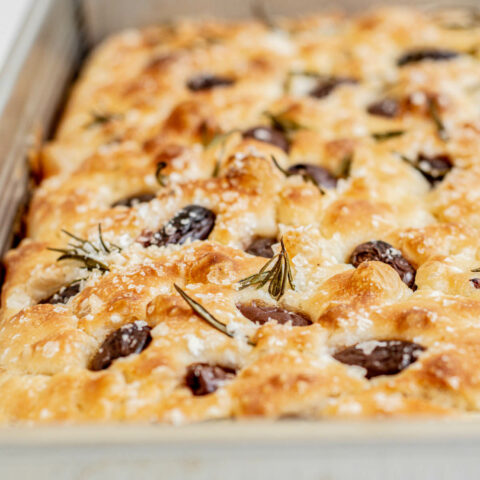
This simple sourdough focaccia recipe has a soft interior and a deliciously crispy, olive oil-fried crust. It is high hydration but easy to make by hand. Baked in a 9x13" pan.
Ingredients
Sourdough starter
- 25 g sourdough starter
- 50 g all-purpose flour
- 50 g water
Dough
- 530 g all-purpose flour
- 480 g water
- All the sourdough starter around 100g
- 8 g salt
Toppings
- Kalamata olives
- Fresh rosemary
- Flaky salt
Instructions
- In the morning or the evening before, feed your sourdough starter and let it rise until doubled in size.
- In a large bowl, combine the water, sourdough starter, flour, and salt. Use a rubber spatula or wooden spoon to bring it together into a wet, shaggy dough.
- Over a period of 2 hours, perform 4 sets of stretch and folds, one every 30 minutes. To stretch and fold, lift one side of the dough up and pull it over itself, then turn the bowl and repeat on the next side, continuing until you have worked all the way around. That is one set. The first set will be shaggy and the dough will rip easily, but as you work through the sets the gluten develops and the dough gains strength.
- Each time the dough sits, cover the bowl with a damp kitchen towel to stop the surface from drying out.
Bulk fermenting
- After the final stretch and fold, let the dough rise at room temperature for around 2 to 4 hours. You should see signs of bulk fermentation, with plenty of bubbles appearing throughout the dough.
- This depends on the temperature of your kitchen. A cooler kitchen means the dough needs to sit a little longer. You can create a warm spot by placing a mug of boiled water in a turned-off oven.
- Transfer the dough to an airtight container, or cover the bowl with plastic wrap.
- Place it in the fridge overnight, or for up to 36 hours for an extra-long ferment.
Shaping
- Drizzle the bottom of a 9x13 inch baking pan with a generous amount of olive oil. You can line the pan with parchment paper as well if you think it might stick.
- Transfer the cold dough to the oiled pan.
- Let it rest for 10 minutes, then oil your fingers and press your fingertips into the dough to spread it out into the pan. If the dough resists stretching, let it rest and try again in a few minutes.
- Let the dough rise in a warm place until it is jiggly and puffy. This can take anywhere from 3 to 5 hours depending on the room temperature.
- Keep the dough covered at this stage, or brush it with extra-virgin olive oil to stop the top from drying out.
Dimpling and topping
- Preheat the oven to 450°F / 230°C.
- Drizzle a little olive oil over the surface of the dough, then use oiled fingers to create deep dimples all over the top, pushing all the way down. Do this across the entire surface.
- Press sliced olives deep into the dough. Press in the rosemary leaves. Sprinkle the dough with flaky salt.
- Bake the focaccia for around 25 to 30 minutes, until puffed, deep golden brown, and pulling away from the edges of the pan. If the top starts browning too much, loosely cover it with aluminum foil.
- Remove it from the oven and let it sit for 3 to 4 minutes. Carefully lift it out of the pan, then let it cool further on a wire rack before serving.
Notes
Both US customary and metric measurements are provided. Use the toggle to switch between the two.
The cup sizes given are US cups, which are smaller than metric cups. For best results, measure in grams.
If you are feeding your starter overnight, use a little less starter and more flour and water to slow the rise so it doesn't collapse before morning. For example, 15g starter to 60g flour to 60g water.
Nutrition
Serving: 1servingCalories: 213kcalCarbohydrates: 45gProtein: 6gFat: 1gSaturated Fat: 0.1gPolyunsaturated Fat: 0.2gMonounsaturated Fat: 0.1gSodium: 314mgPotassium: 62mgFiber: 2gSugar: 0.2gCalcium: 10mgIron: 3mg
Tried this recipe?Let us know how it was!