

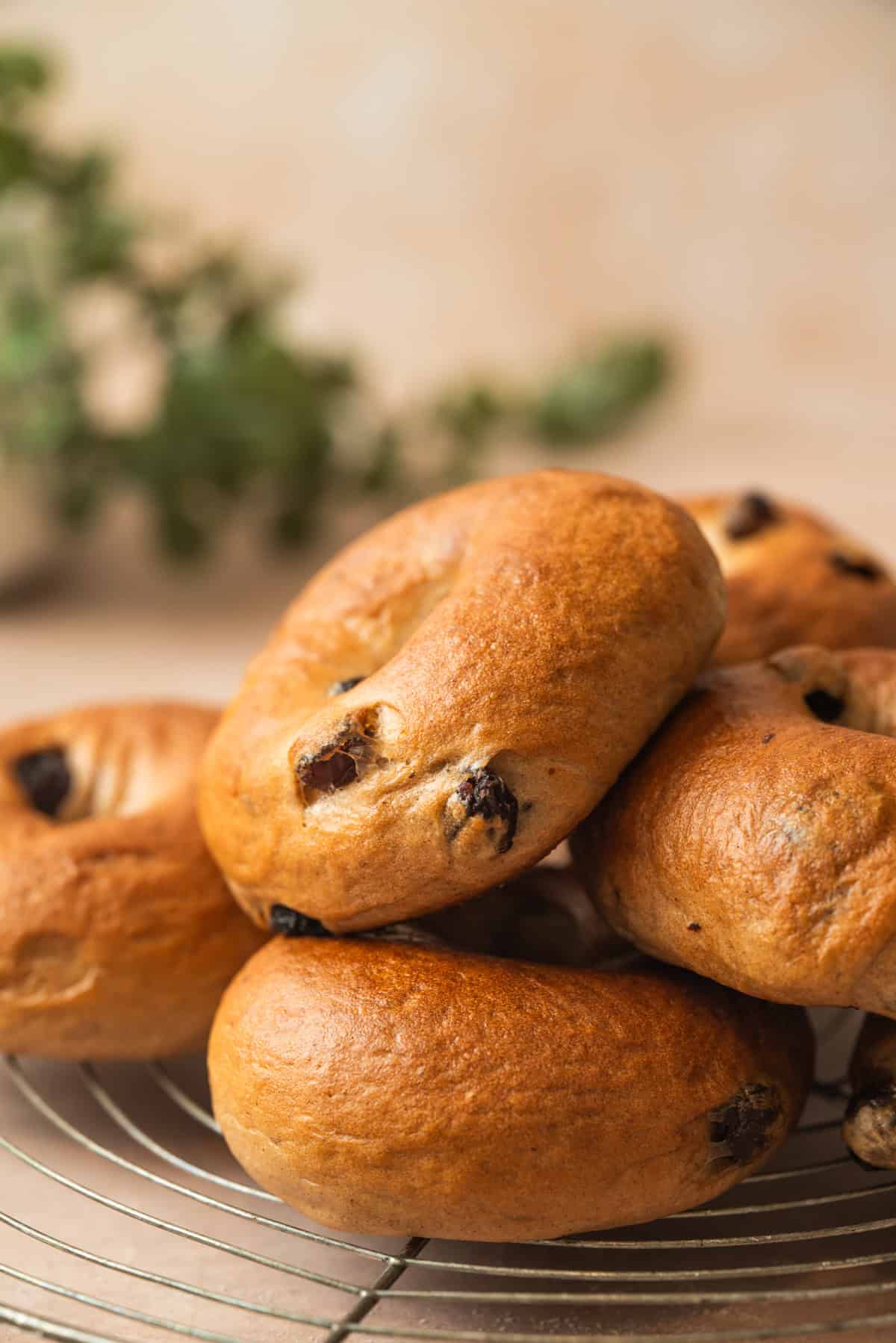

These are the cinnamon raisin bagels you’ve been looking for. Properly chewy crust. Warm cinnamon in every bite and plump, juicy fruit that stays that way because the raisins are soaked first. Better than the bagel shop, and easier to make than you’d think.
These cinnamon raisin bagels use the same lean, low-hydration dough as a classic bagel, which is what gives them that dense, chewy crumb and tight interior. The cinnamon goes directly into the dough so the spice is carried throughout. The raisins are soaked in hot water first so they stay plump and juicy all the way through baking rather than drying out and toughening up around the edges.
This recipe is based on my overnight bagels and makes 8 medium bagels. You can make the dough same-day or let it cold-proof overnight for a deeper flavor.
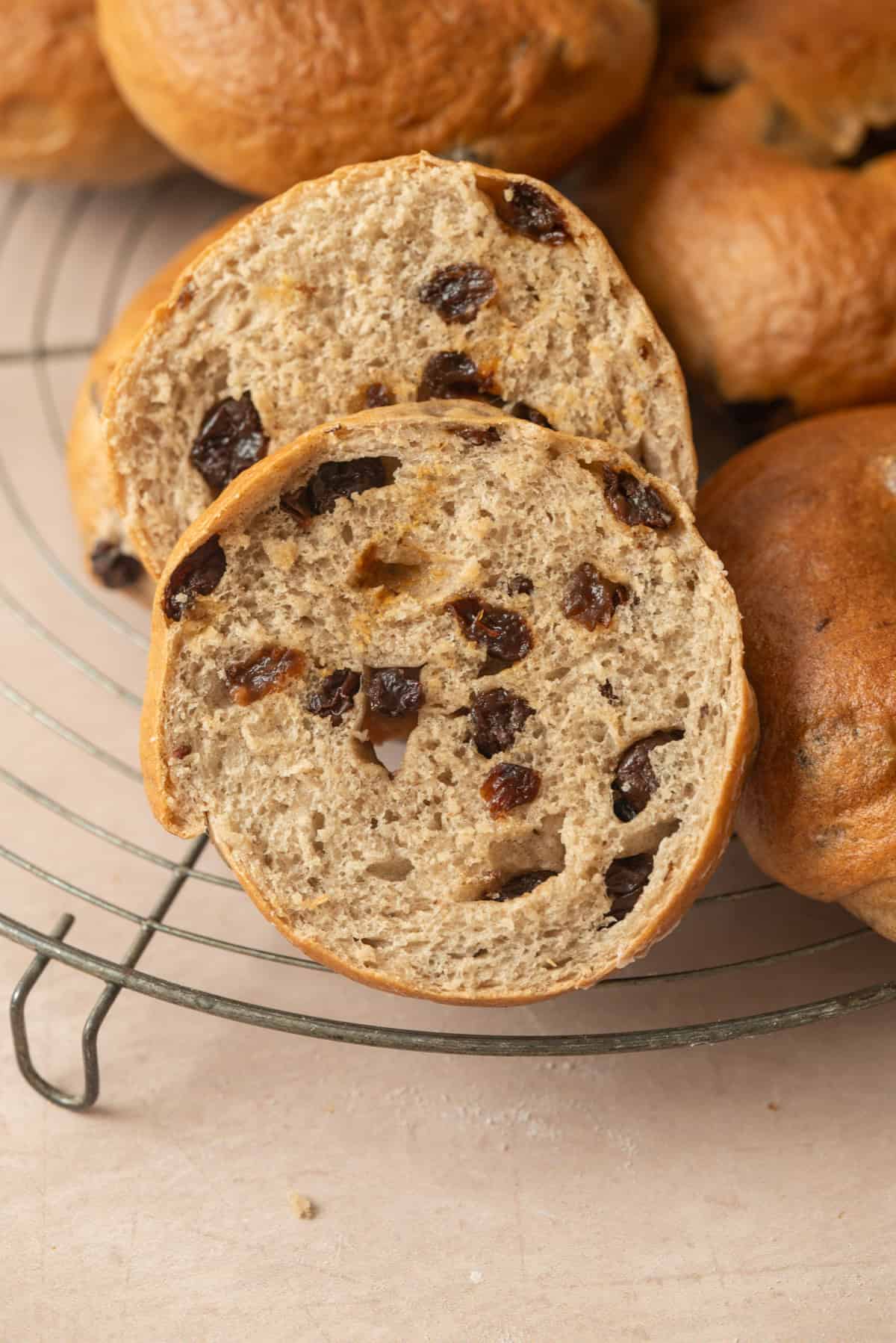
A look at the key ingredients
- Bread flour. Use one with at least 11% protein, up to 13%. The higher the protein, the chewier the bagel. All-purpose flour works if it’s a strong one, but bread flour gives the best results.
- Instant or active dried yeast. Both work. Active dried needs to bloom in the warm water for 5 minutes first. Instant can go straight in, but if you’re not sure how fresh your packet is, bloom it anyway to check it’s still active before committing to the rest of the recipe.
- Soft brown sugar. It goes into the dough and into the poaching water. In the dough it feeds the yeast and adds a subtle depth. In the water bath it helps the crust brown beautifully without needing an egg wash.
- Ground cinnamon. It goes directly into the dough, so every bite has that warm spice rather than just the bits near a raisin.
- Raisins. The key change from a plain bagel. I soak the raisins in hot water for 10-15 minutes before adding them to the dough. Dry raisins pull moisture from the dough as it bakes, which can leave dry, tough patches around the fruit. Soaked raisins stay plump and juicy all the way through. Make sure to drain them well and pat them dry before adding, since this is a low-hydration dough and extra moisture will make it too sticky.
- Baking soda for the water bath. The baking soda raises the pH of the water, which speeds up browning in the oven and gives the crust a slightly chewier. There is just a small amount so that it doesn’t push the crust into pretzel territory.
Method
- Soak the raisins in hot water for 10-15 minutes. Drain well and squeeze out the excess water.
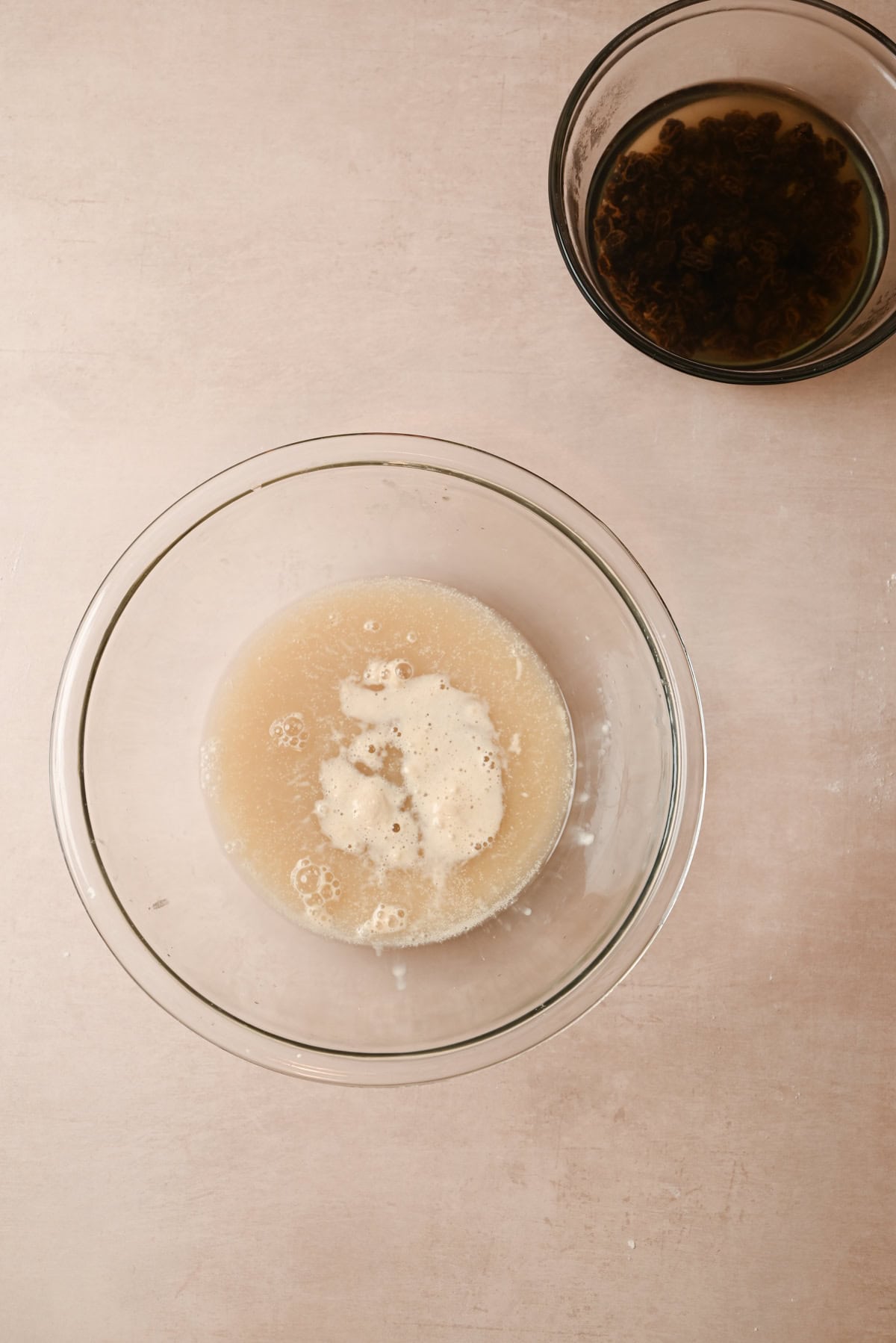
- Mix water, yeast and brown sugar.
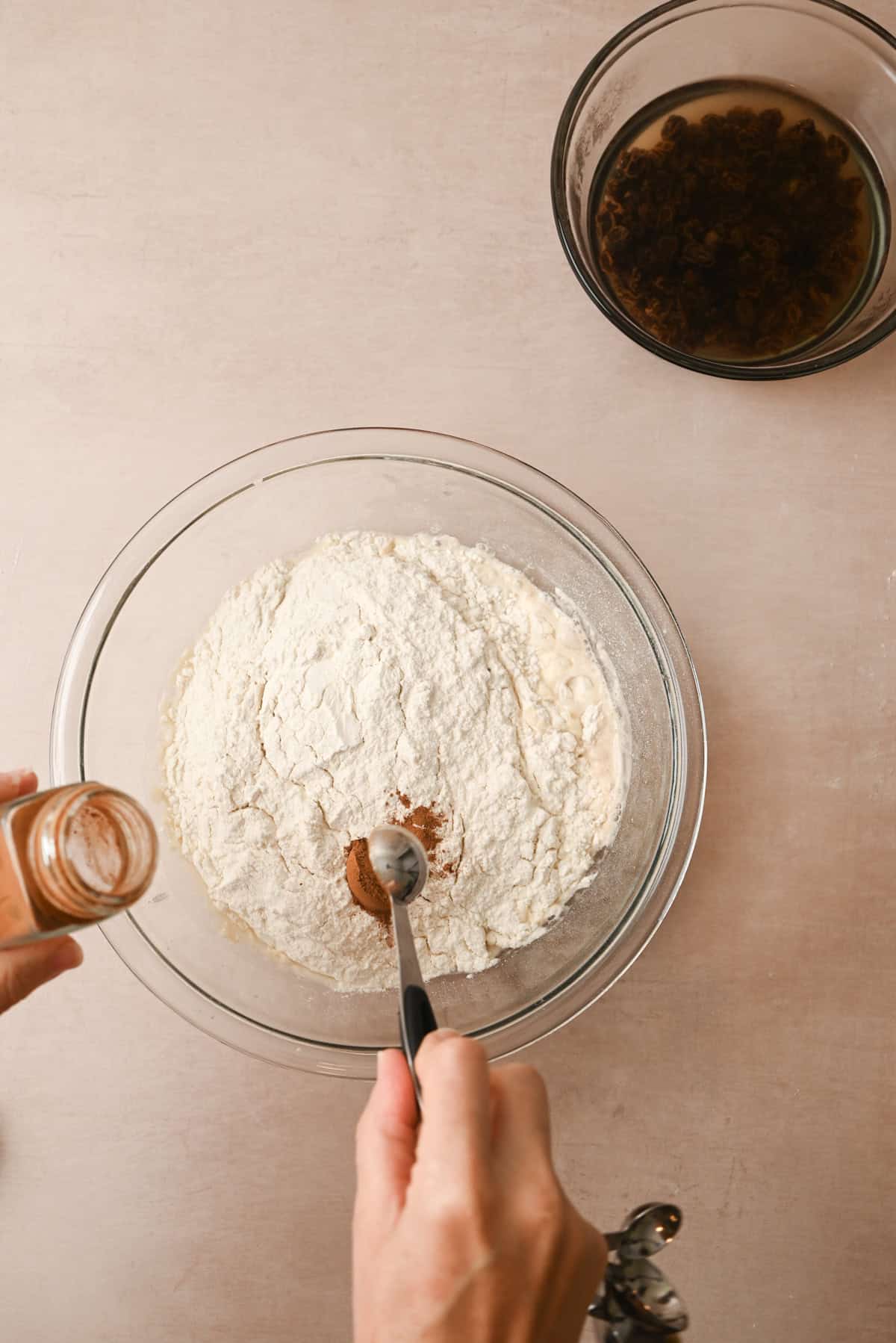
- Add the flour, cinnamon, and salt.
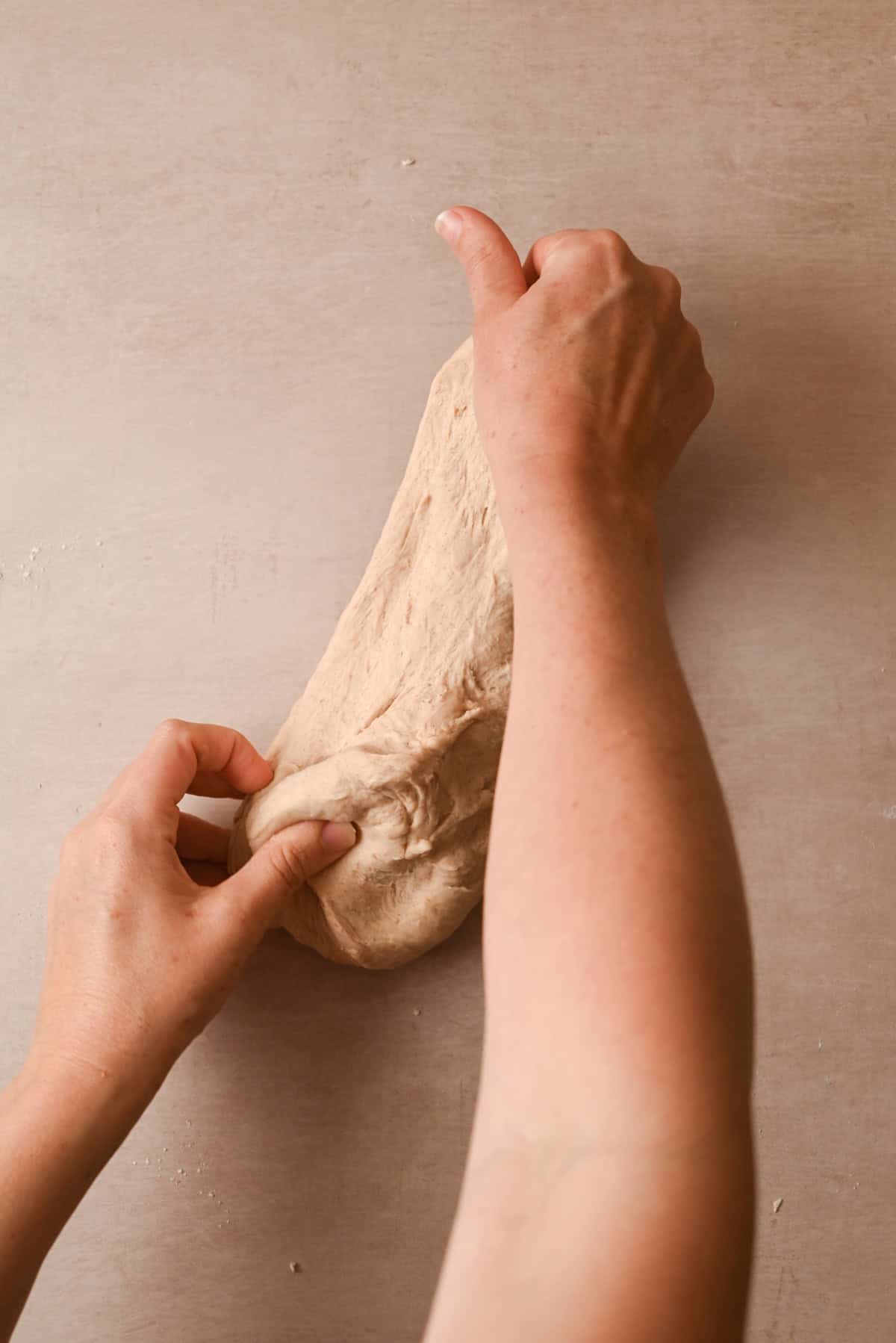
- Knead the dough for 6-8 minutes until strong and smooth.
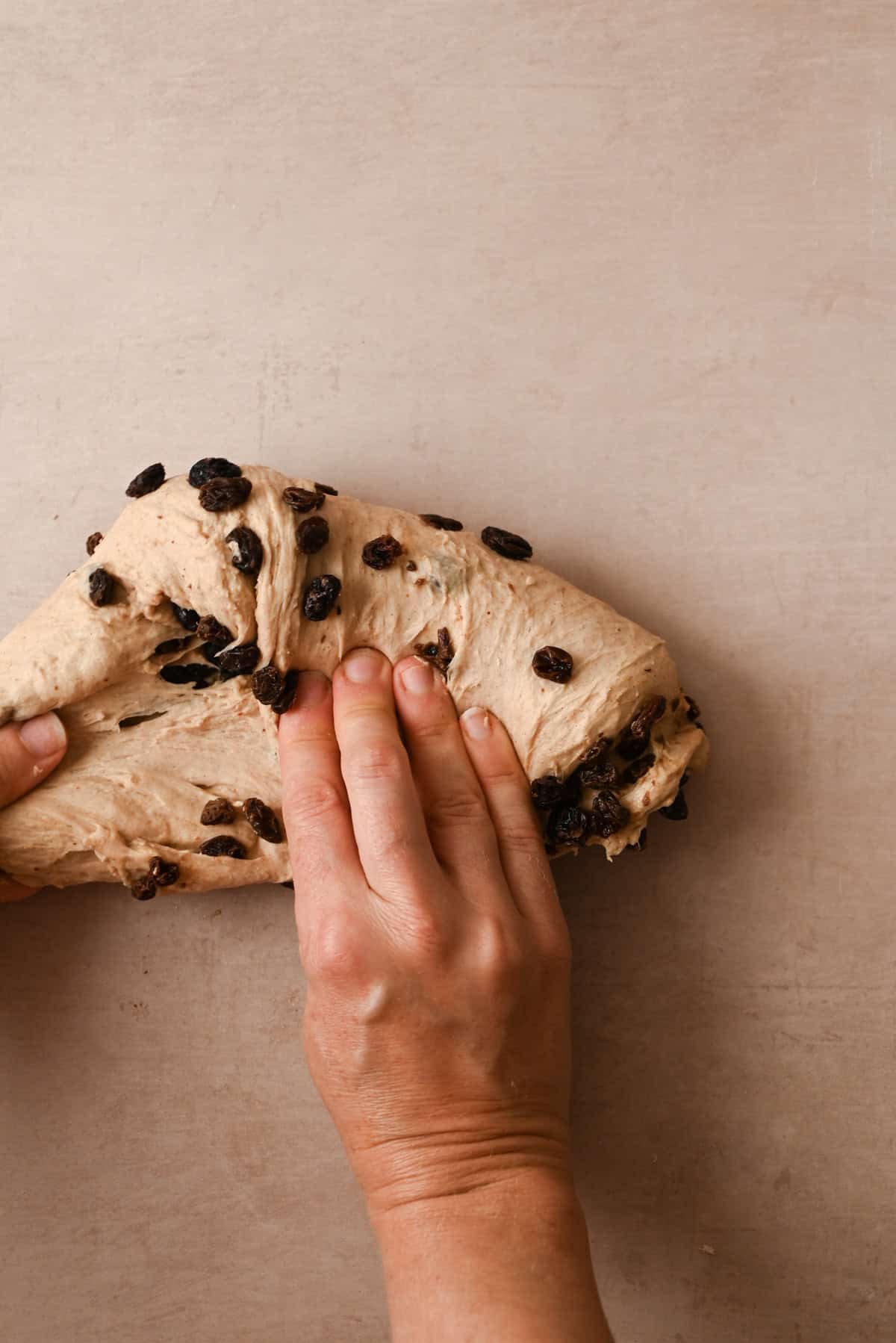
- Flatten the dough into a disc, scatter the drained raisins over the surface and knead them in gently, pressing and turning rather than just folding, until evenly distributed with no wet patches.
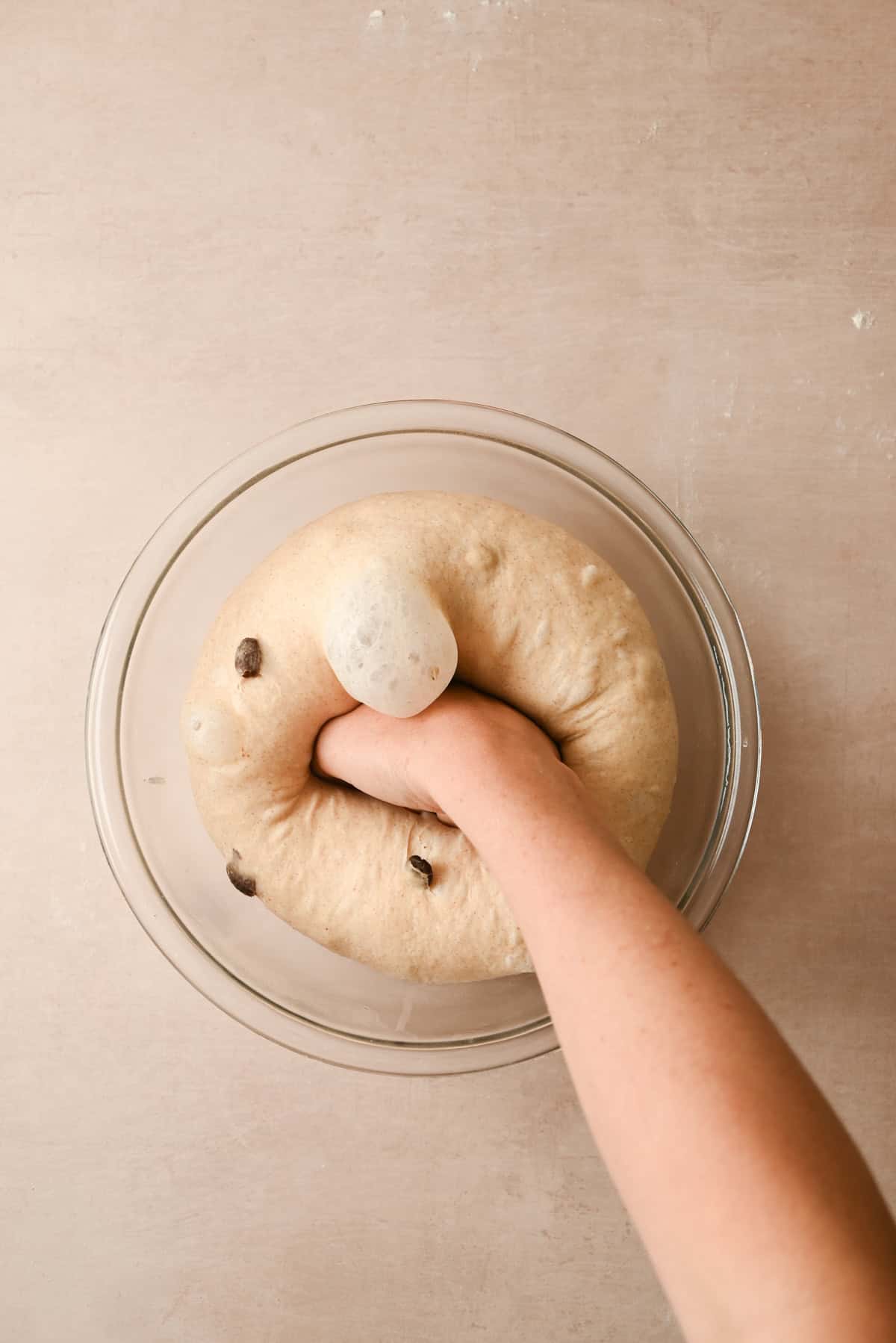
- Place the dough in a greased bowl, cover, and let it rise until doubled.

- Divide into 8 equal pieces, shape into balls, and rest for 5 minutes.
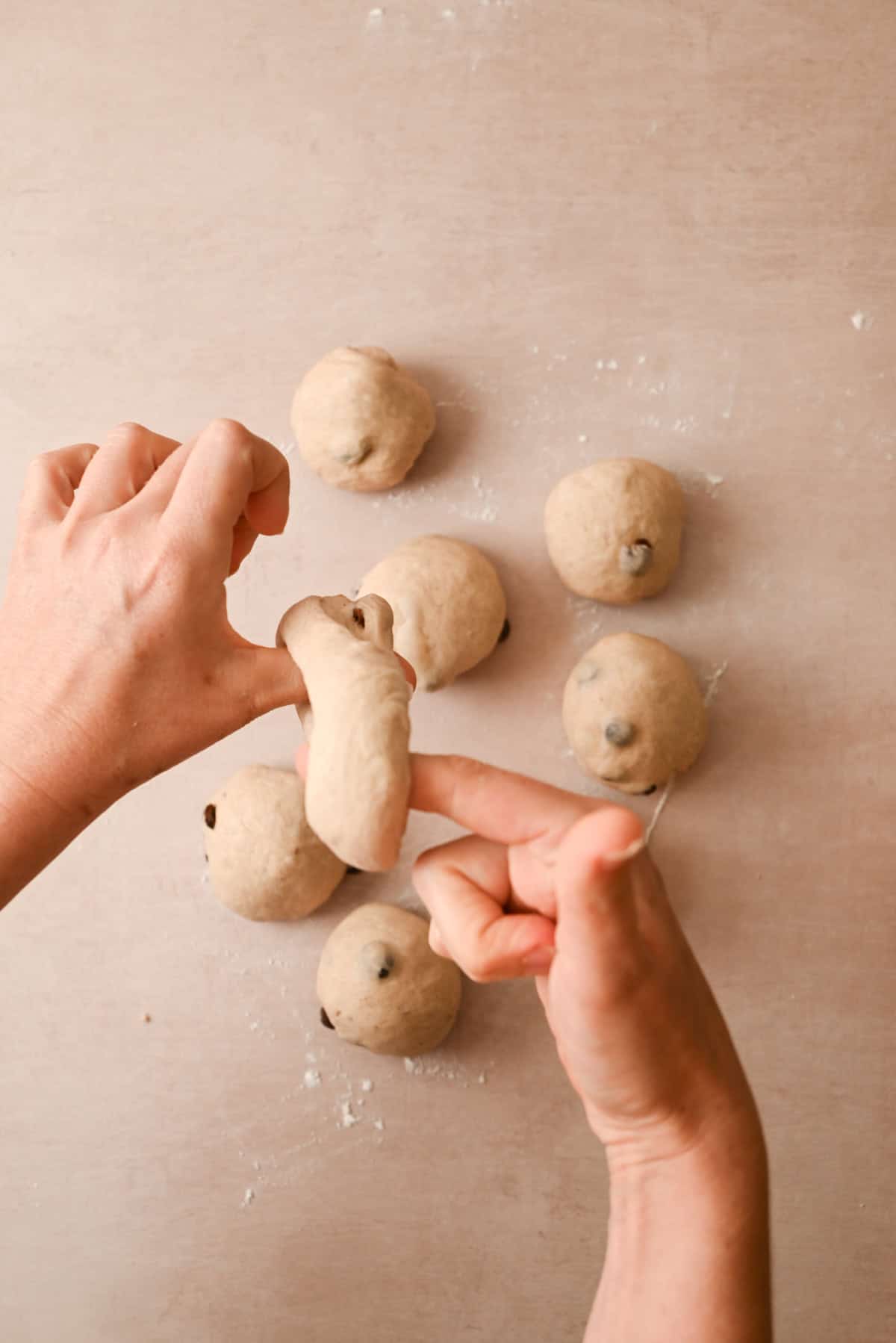
- Push a hole through the center of each ball with your thumbs and stretch into a bagel shape. Make the hole larger than you think because it will shrink.
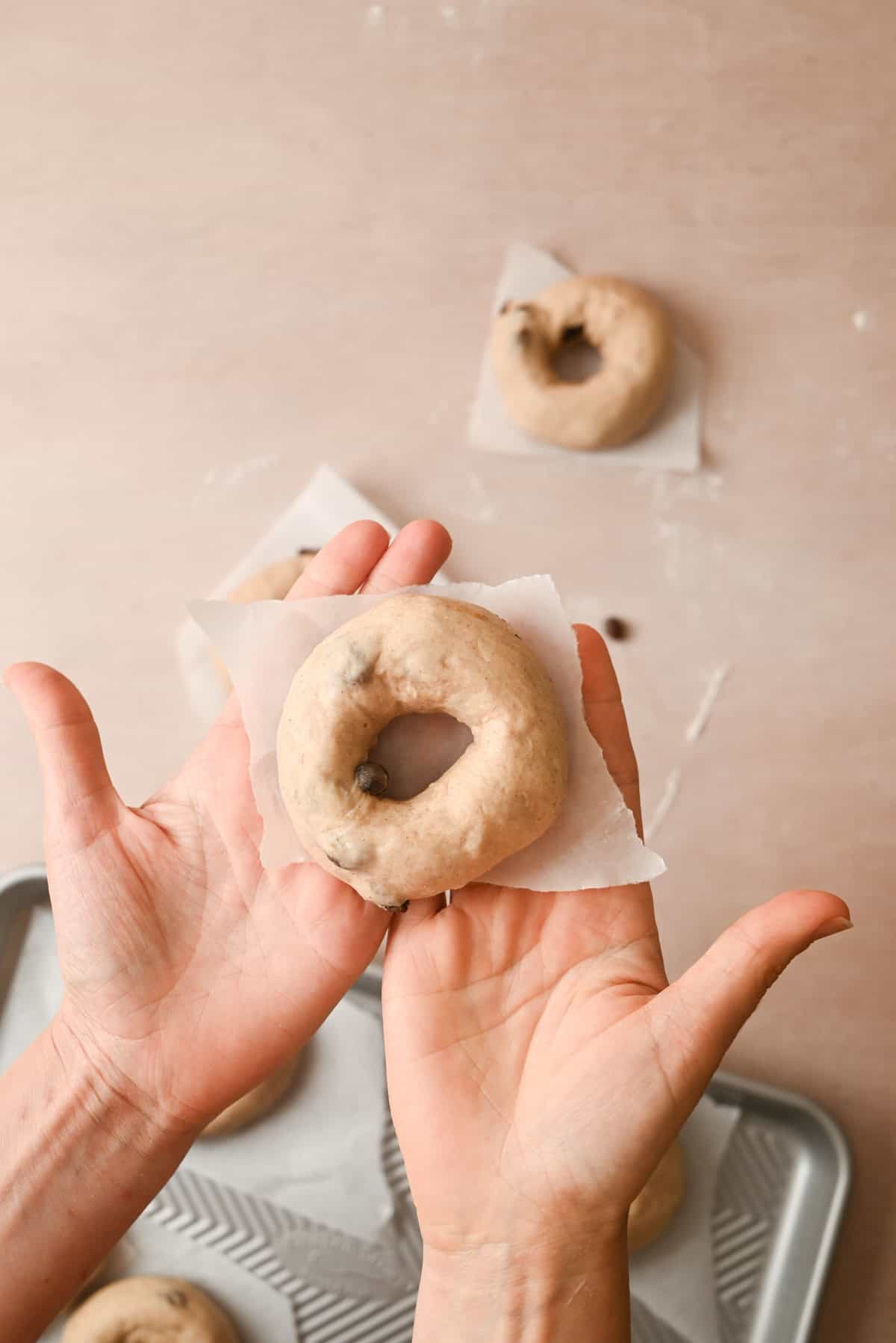
- Let the shaped bagels puff for 30 minutes on individual pieces of parchment paper while you bring the water to a boil and preheat the oven.

- Boil 2-3 bagels at a time for 1 minute, flipping after 30 seconds. Drain on a wire rack.
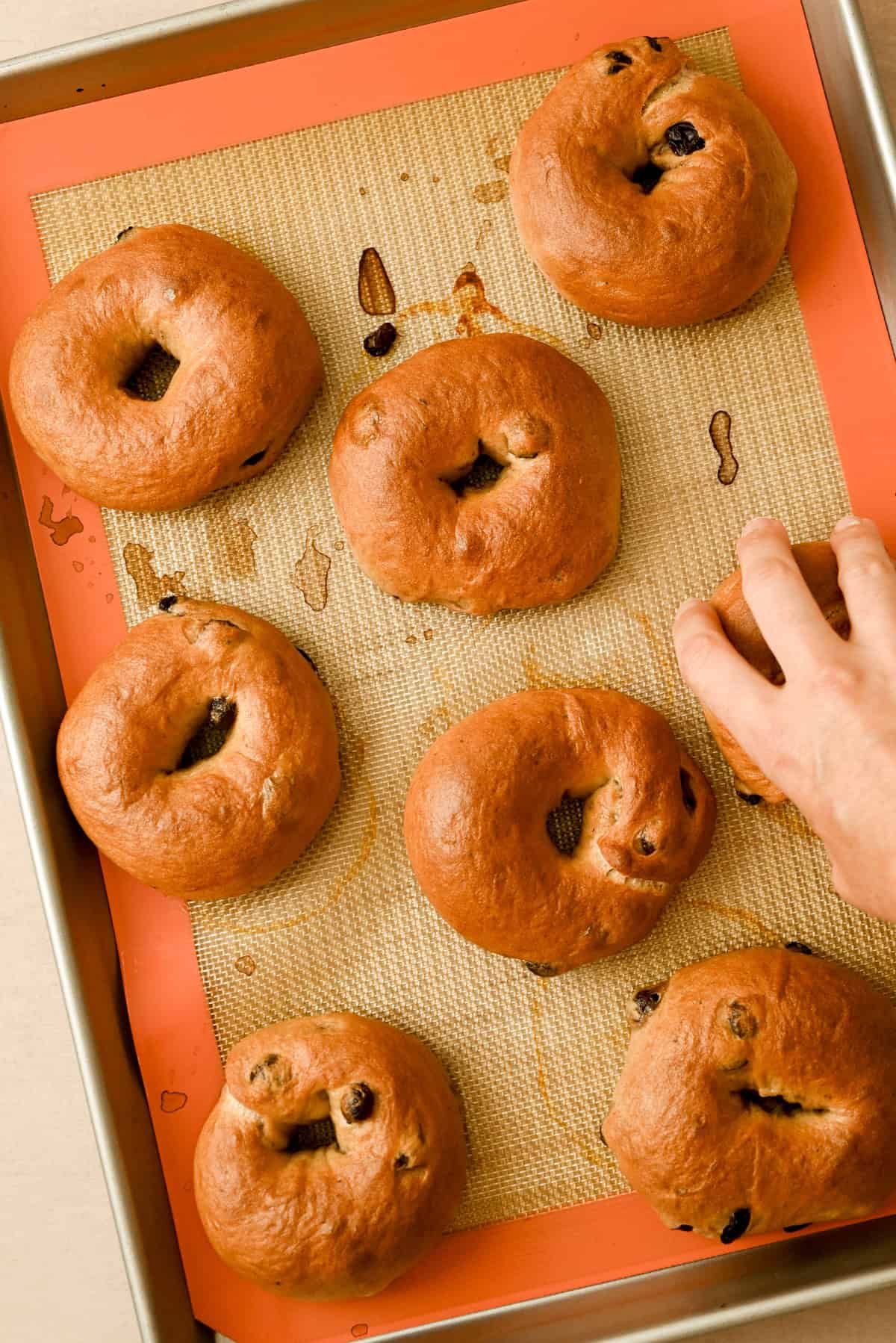
- Bake at 430°F (220°C) for 22-25 minutes until deep golden brown.
Tips for the best cinnamon raisin bagels
Serving and storing
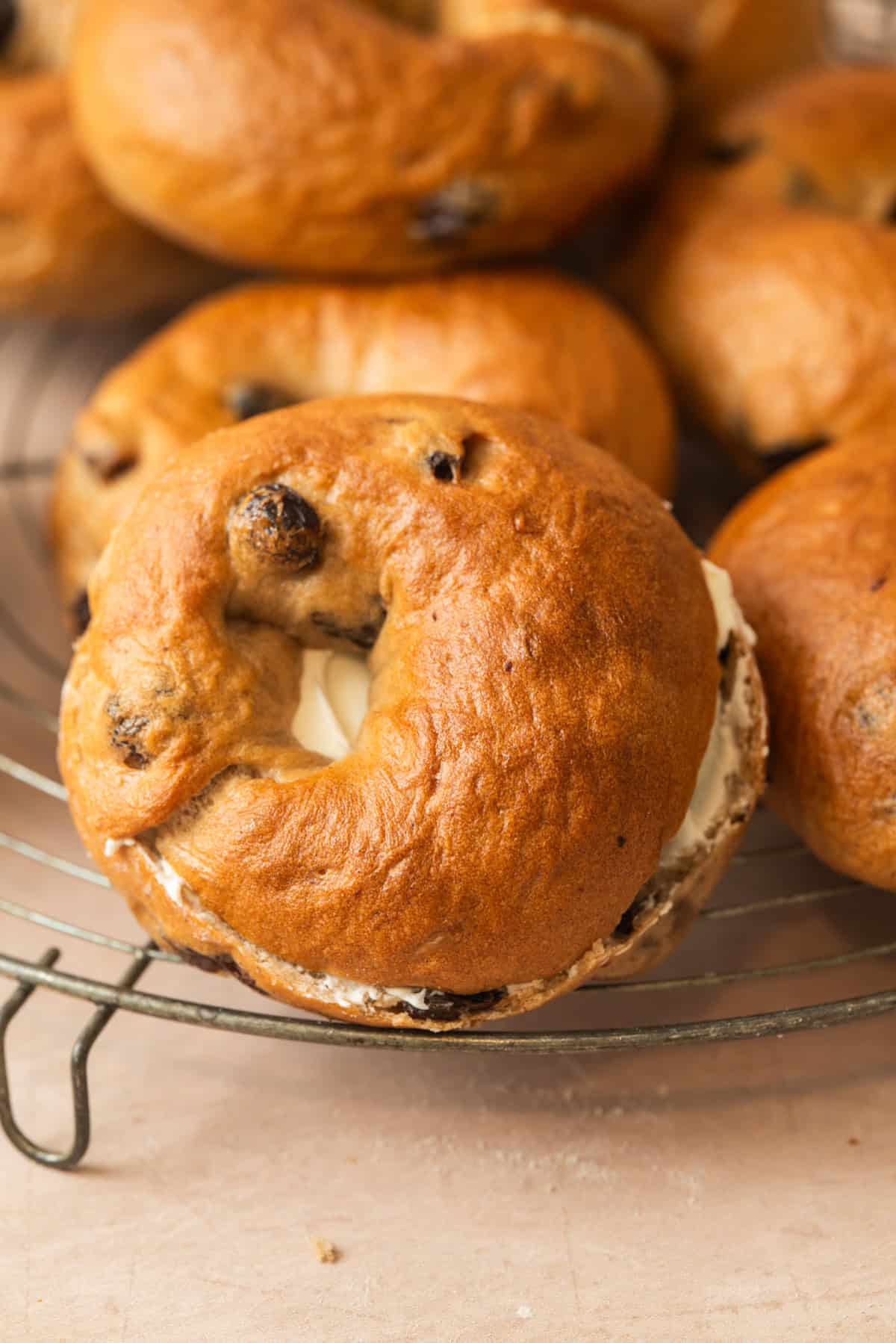
Serve fresh on the day with a generous smear of cream cheese. I’ve been loving them lately with cream cheese, a drizzle of honey, and a pinch of flaky salt on top. The salt against the sweet raisins and honey is really good. Toasted with salted butter is the other classic. On the following days they’re best toasted, as the crust softens overnight.
Bagels keep in an airtight container at room temperature for up to 3 days. They also freeze brilliantly for up to 3 months. I like to slice them before freezing so I can pop a half straight into the toaster from frozen without waiting for them to thaw.
Love these? The blueberry bagels use a similar base dough and are just as good. The overnight bagels are the plain version this recipe is based on, and a great one to have in your back pocket. For something a little different, try the sourdough bagels or the pumpkin bagels.
Cinnamon Raisin Bagels
Ingredients
Raisins
- 100 g raisins
- hot water enough to cover the raisins
Bagel dough
- 240 g water lukewarm (95-104°F / 35-40°C)
- 1 1/2 tsp instant yeast or active dried yeast
- 25 g soft brown sugar
- 406 g bread flour
- 2 teaspoon ground cinnamon
- 1 ¼ teaspoon salt
Poaching
- 2 litres water
- 12 g brown sugar
- 1/2 tsp baking soda
Instructions
- Add the raisins to a small bowl and cover with hot water (not boiling, just hot from the tap or cooled for a minute off the boil). Leave to soak for 10-15 minutes until plump. Drain thoroughly in a sieve, then squeeze to remove as much leftover water as possible. 100 g raisins, hot water
- In a large bowl, combine the 240g warm water, yeast, and brown sugar and stir together. If using active dried yeast, leave it to sit for 5 minutes until foamy. If using instant yeast, you can proceed straight away, though if you're unsure how fresh your yeast is, let it sit for a few minutes to confirm it's active. 240 g water, 1 1/2 tsp instant yeast , 25 g soft brown sugar
- Add the flour, cinnamon, and salt to the yeast mixture and use a fork to combine everything into a rough dough. Switch to your hands and push the dough together into a rough ball. Tip it onto a clean bench and knead for 6-8 minutes until the dough is smooth and strong. It should feel stiff and firm, not sticky. If using a stand mixer, use the dough hook on low speed for the same amount of time. 406 g bread flour, 2 teaspoon ground cinnamon, 1 ¼ teaspoon salt
- Flatten the dough into a disc and scatter the drained, patted-dry raisins over the surface. Fold the sides of the dough up over the raisins and begin kneading, pressing and turning the dough rather than just folding it over itself. Folding alone can trap raisins in layers without actually distributing them, so make sure you're pushing the dough through rather than just wrapping it. Be gentle enough not to rip the raisins as you work, because torn raisins release moisture and sugar into the dough which can make the surface sticky and uneven. Knead for 2-3 minutes until the raisins are visibly spread throughout with no clumps, and the dough feels uniform with no damp or slippery patches from residual moisture. If you notice a wet spot, keep working that area until it's absorbed. The dough should feel smooth and consistent all the way through before you move on.
- Form the dough into a ball and place it in a large greased bowl. Cover with plastic wrap and let it rise in a warm place until doubled in size, around 1-1.5 hours.
- Overnight option: After the rise, punch down the dough, cover tightly, and refrigerate for up to 24 hours. The slow cold ferment develops much better flavor. Shape straight from the fridge the next day.
Shaping
- Pull the risen dough from the bowl onto a lightly floured surface. Divide it into 8 equal pieces (use a kitchen scale for even bagels). Shape each piece into a smooth ball and let them rest uncovered for 5 minutes.
- Take a dough ball and push both thumbs through the center. Roll the dough around your thumbs and index fingers in a circular motion to widen the hole. Aim for a hole that looks too large – it will shrink back significantly during proofing and boiling. Place the shaped bagels on a baking sheet lined with parchment paper. Repeat with the remaining dough balls.
- Let the shaped bagels puff for around 30 minutes at room temperature while the oven preheats and the water comes to a boil.
Water bath
- Preheat the oven to 428°F (220°C) and line a large baking sheet with parchment paper. Bring a large pot of water to a boil and stir in the honey and baking soda. The baking soda will bubble up briefly when it hits the hot water, which is normal. 2 litres water, 12 g brown sugar, 1/2 tsp baking soda
- Dust any excess flour off the bagels. Drop them into the boiling water 2-3 at a time. Poach for 1 minute total, flipping them after 30 seconds. Remove with a slotted spoon, let them drain for a few seconds, then transfer to the lined baking sheet.
Baking
- Bake for 22-25 minutes until deep golden brown. If the bagels are browning unevenly, rotate the tray after 15 minutes. If your baking sheet is dark colored, place a second sheet pan underneath it to prevent the bottoms from getting too dark.
- Transfer to a wire rack and cool for at least 30 minutes before slicing. The crust will feel hard when they first come out but will soften to the right texture as they cool.
Notes
- Both US customary and metric measurements are provided. Use the toggle to switch between the two.
- Flour. Bread flour with 11-13% protein gives the best chewy texture. Some strong all-purpose flours work too – check the protein level on the packet.
- Overnight rise. After the first rise, the dough can be punched down, covered tightly, and refrigerated for up to 24 hours before shaping. This is the best way to develop flavor.
- Bagels keep at room temperature in an airtight container for up to 3 days. Slice before freezing for easy toasting straight from frozen. Freeze for up to 3 months.



O. M. G! These were delicious! After making and eating these, now I know now what a real bagel is supposed to taste like. Thank you so much for giving us such an easy delicious bagel recipe! ❤️
Hi! I’ve been making your blueberry bagel recipe for my boyfriend and he loves them! And hee recently requested for cinnamon raisin so I’m very happy to see that you have a recipe!
Just wondering what the nutritional facts are on these bagels? I saw that you had them listed on the blueberry recipe. Thanks!
Hey! I have added it in now 🙂 thanks!