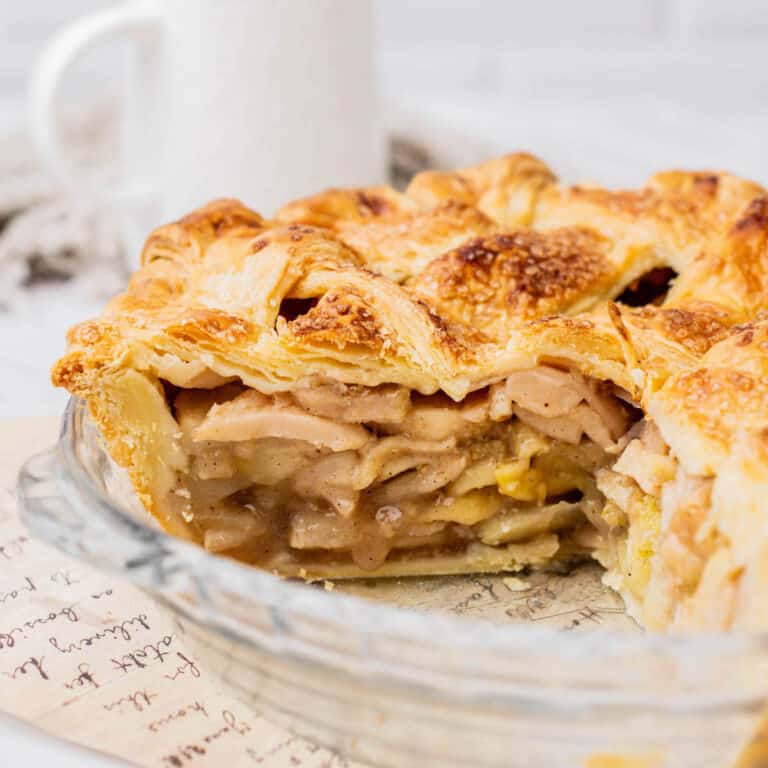

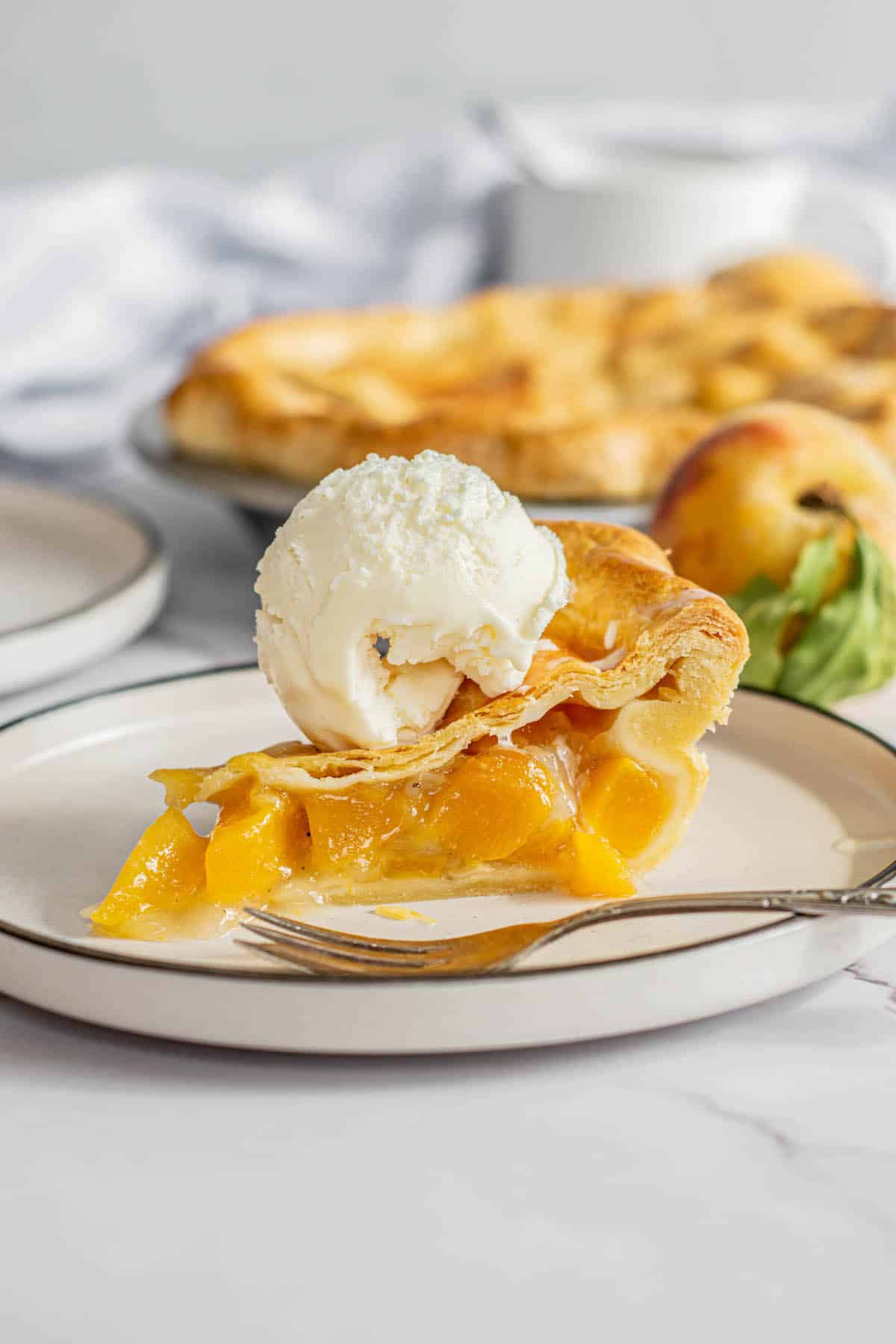

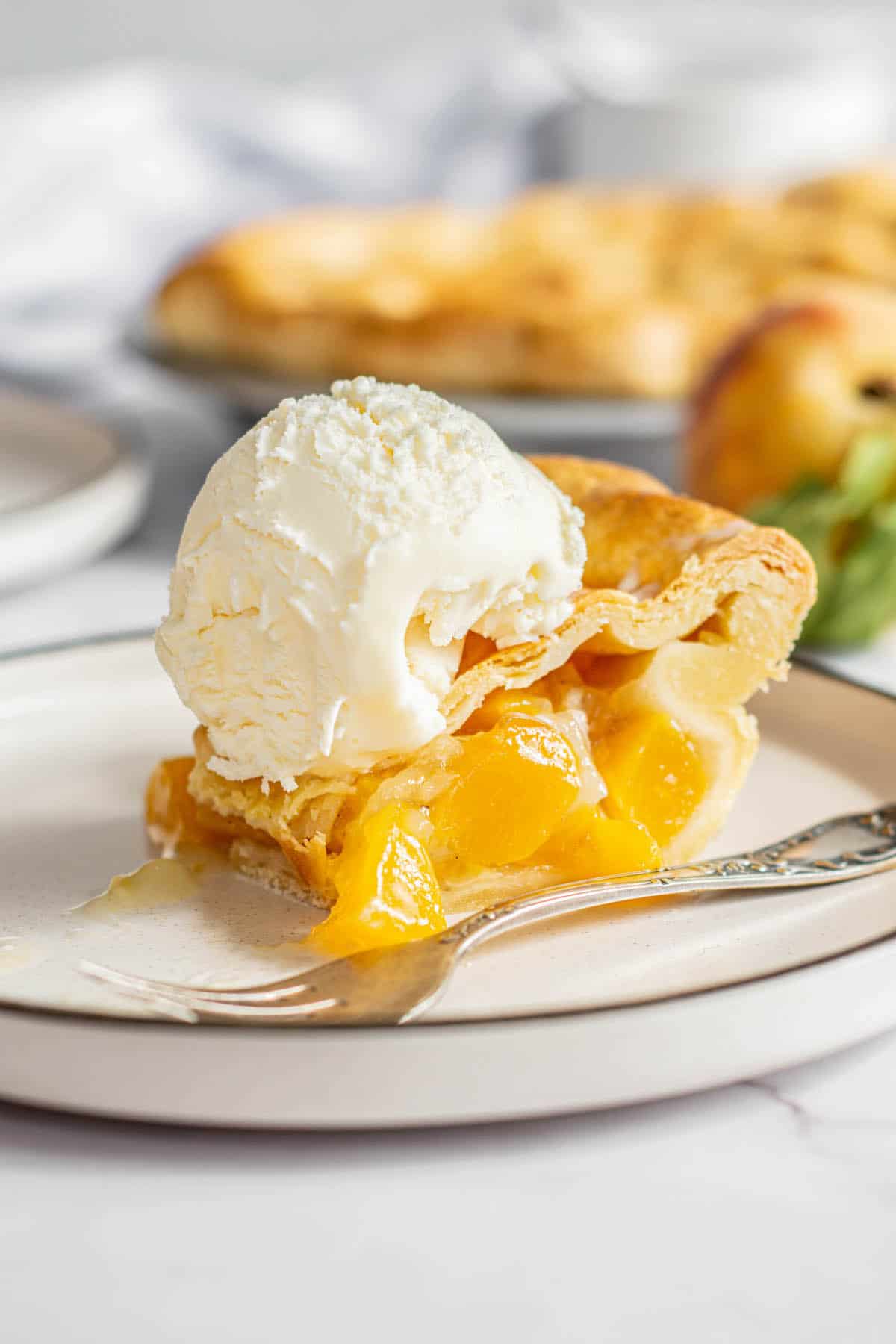
This fresh peach pie has a buttery, flaky crust and a filling made with ripe summer peaches that are bright, tender, and just the right amount of jammy. The peaches are macerated in sugar first to draw out their juices, and those juices get reduced into a syrup that goes right back into the filling. It’s one of the best ways to use fresh peaches when they’re in season.
About this peach pie
A good peach pie is all about the fruit. The filling here is simple: fresh peaches get tossed in sugar and left to macerate for about 35 to 45 minutes to release their juices. Those juices get strained off, simmered down with a tablespoon of butter until slightly syrupy, and poured right back over the fruit. It concentrates the peach flavor so you get a filling that tastes intensely peachy without being watery or overly thick.
The crust is my flaky butter pie crust, which I laminate with a simple fold to create extra layers. I have a full post with step-by-step photos on how to make it, so I won’t repeat all of that here. If you’re short on time, store-bought pie crust works too, it’s just not going to taste quite as good.
If you love peaches in baking, I also have a peach almond tart with a pâte sablée crust and almond cream filling, a peach honey galette for something more rustic, and a peach cobbler with pie crust if you want to skip the bottom crust entirely.
Key ingredients and why
Method
- Make the flaky pie crust dough and chill it for at least 2 hours..
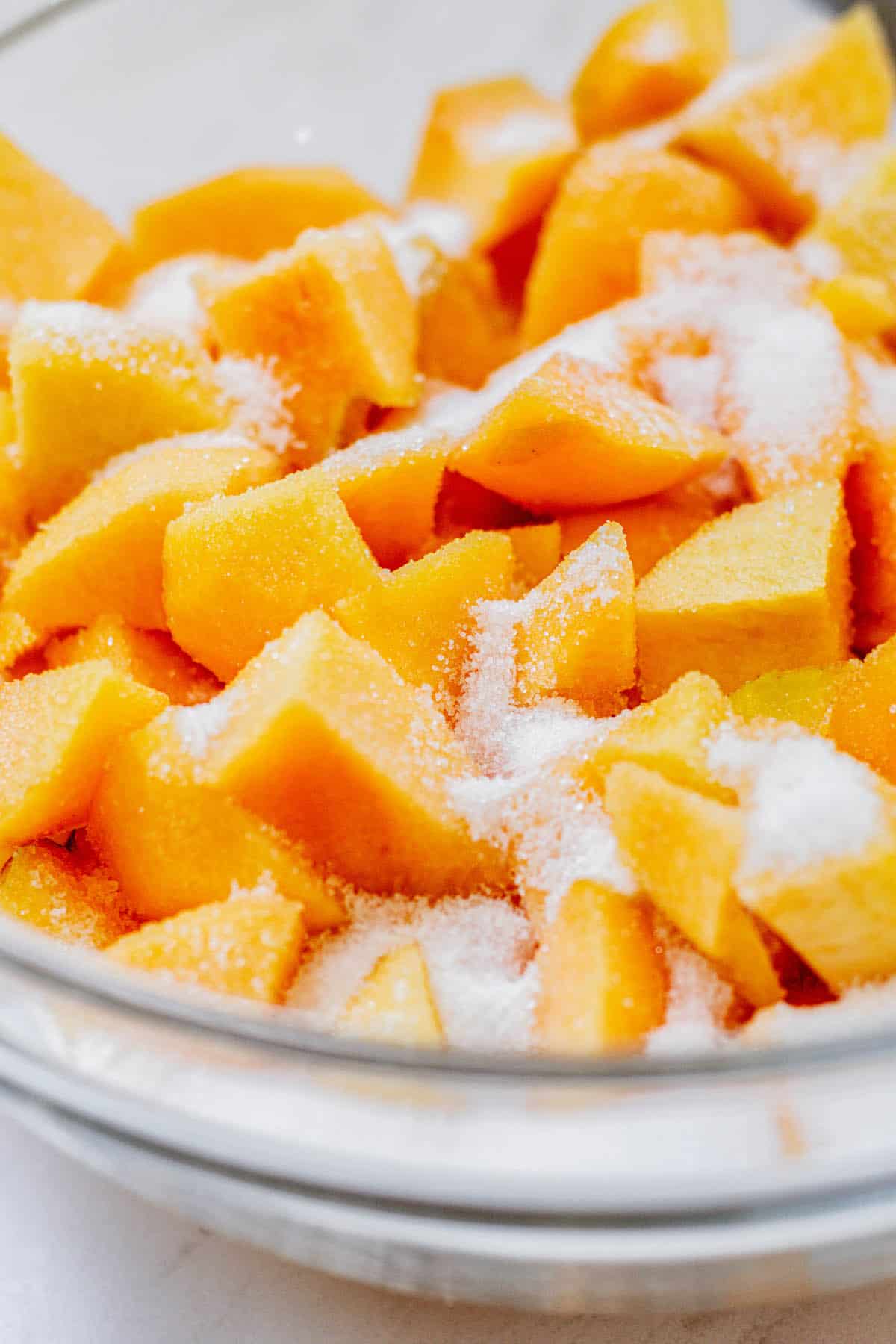
- Peel and chop the peaches, then toss them with sugar.
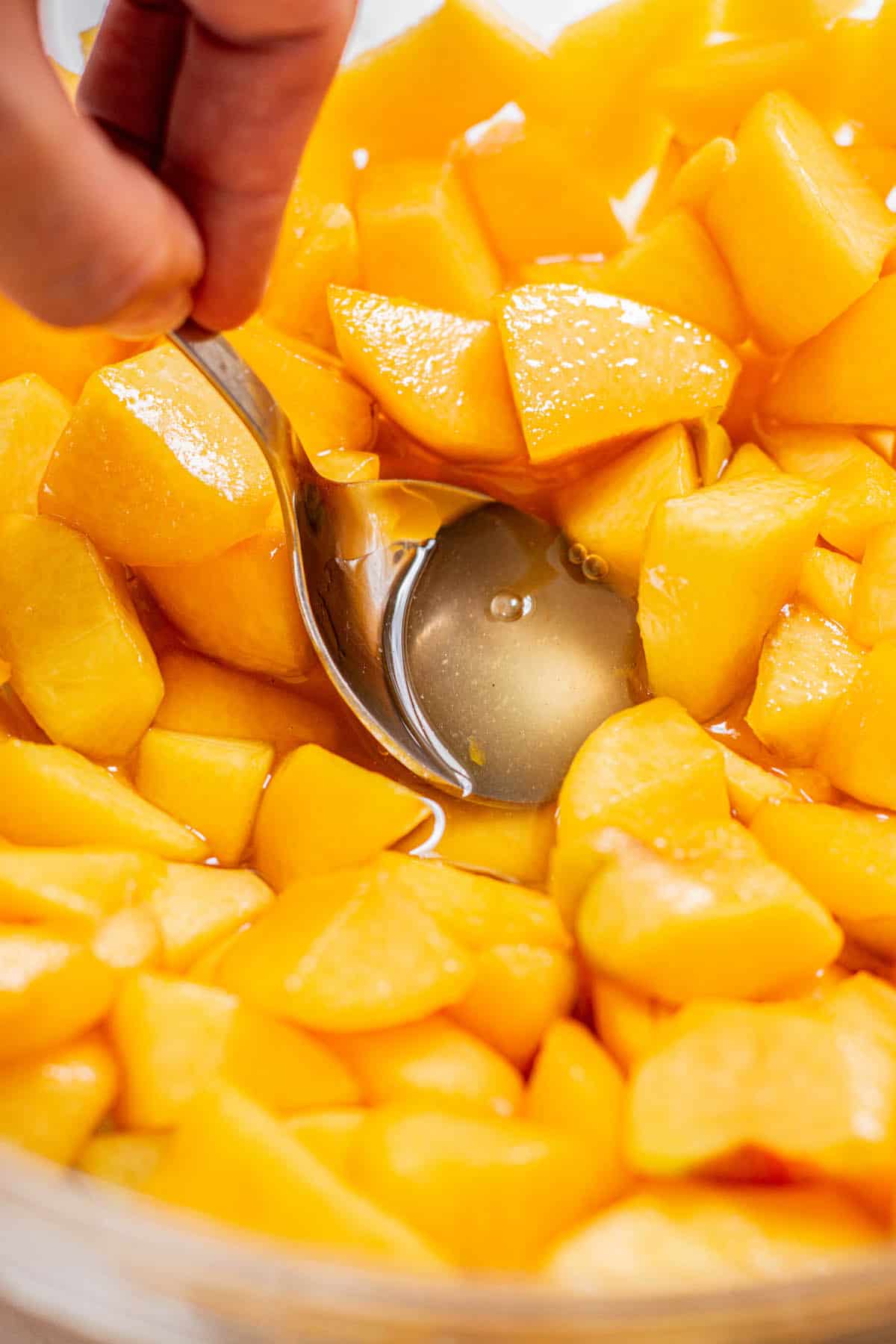
- Let the peaches sit and macerate in the sugar for around 35-45 minutes to release their excess juices.
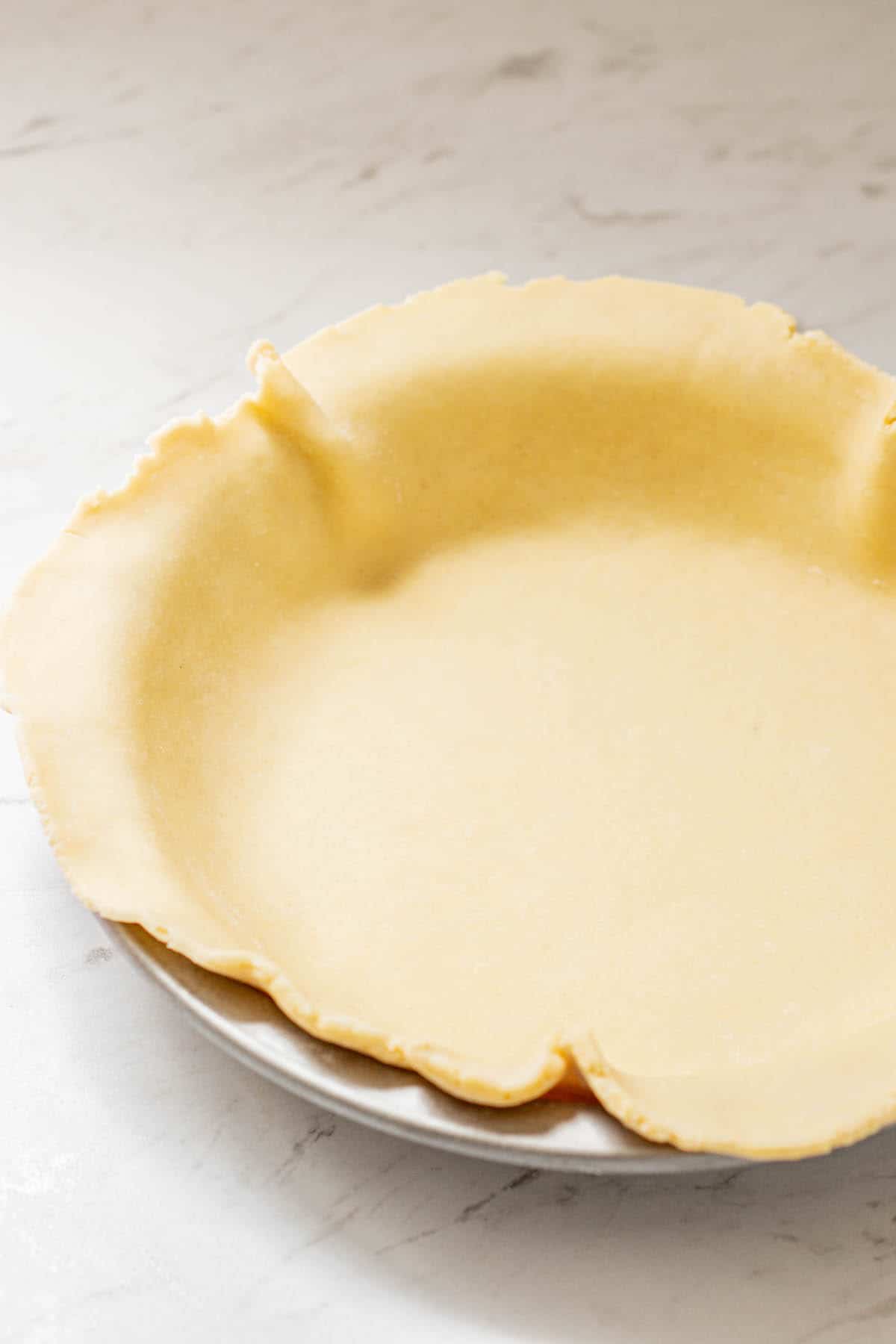
- While the peaches macerate, roll out one pastry disc and fit it into a 9-inch pie dish.
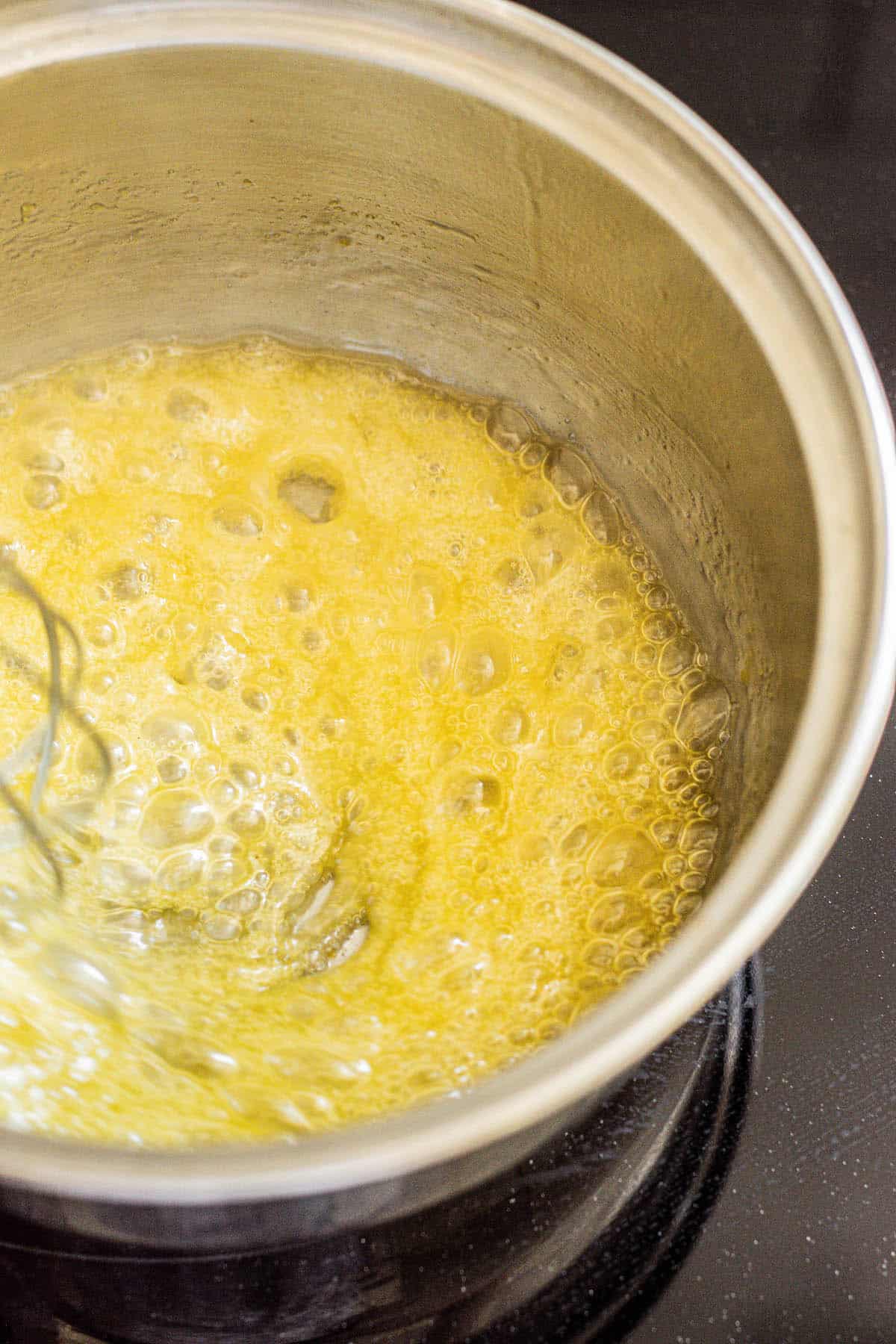
- Strain the peach juices into a small saucepan, add butter, and simmer until reduced by half and slightly syrupy.
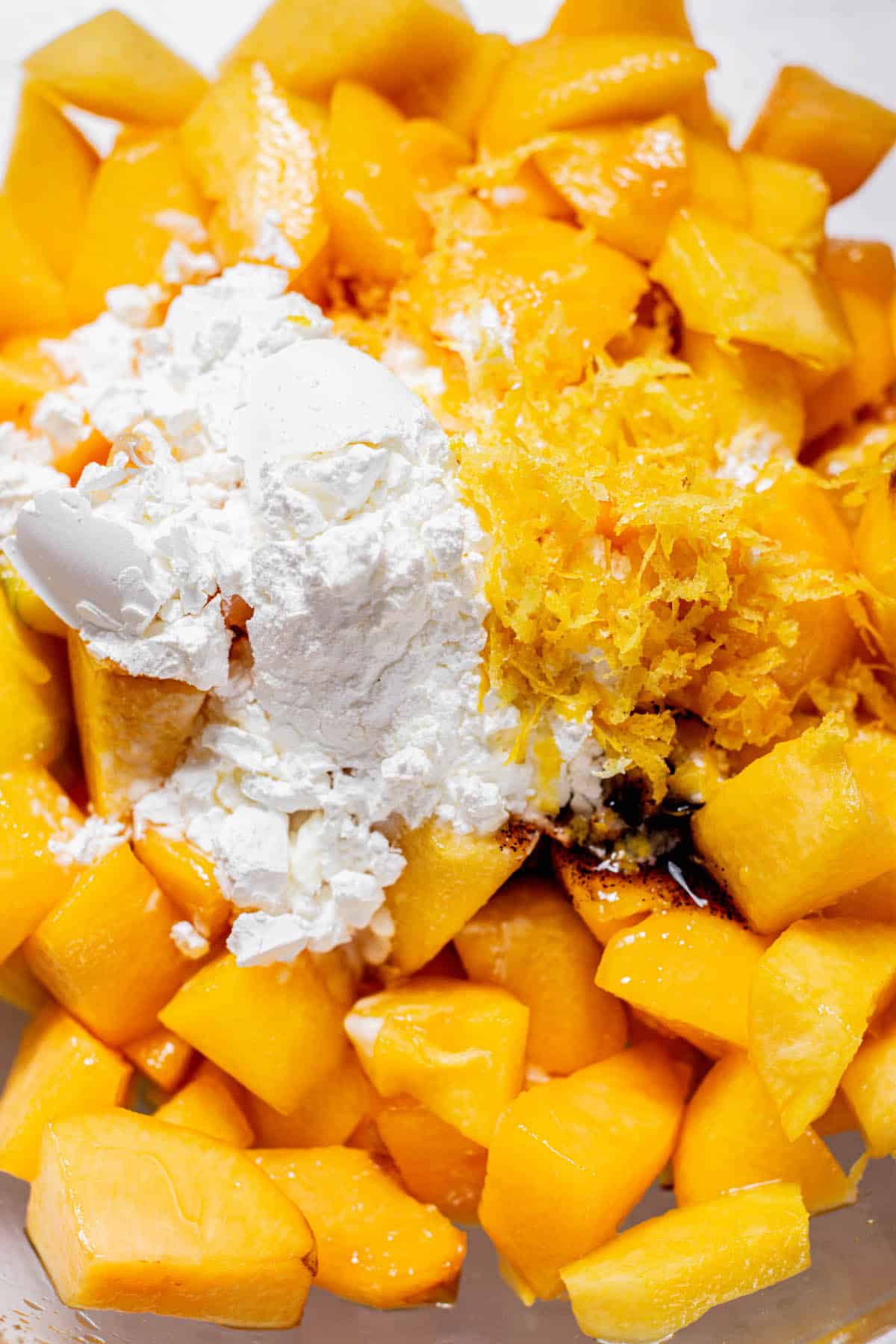
- Add the cornstarch, lemon zest, lemon juice, almond extract, vanilla, and salt to the peaches.
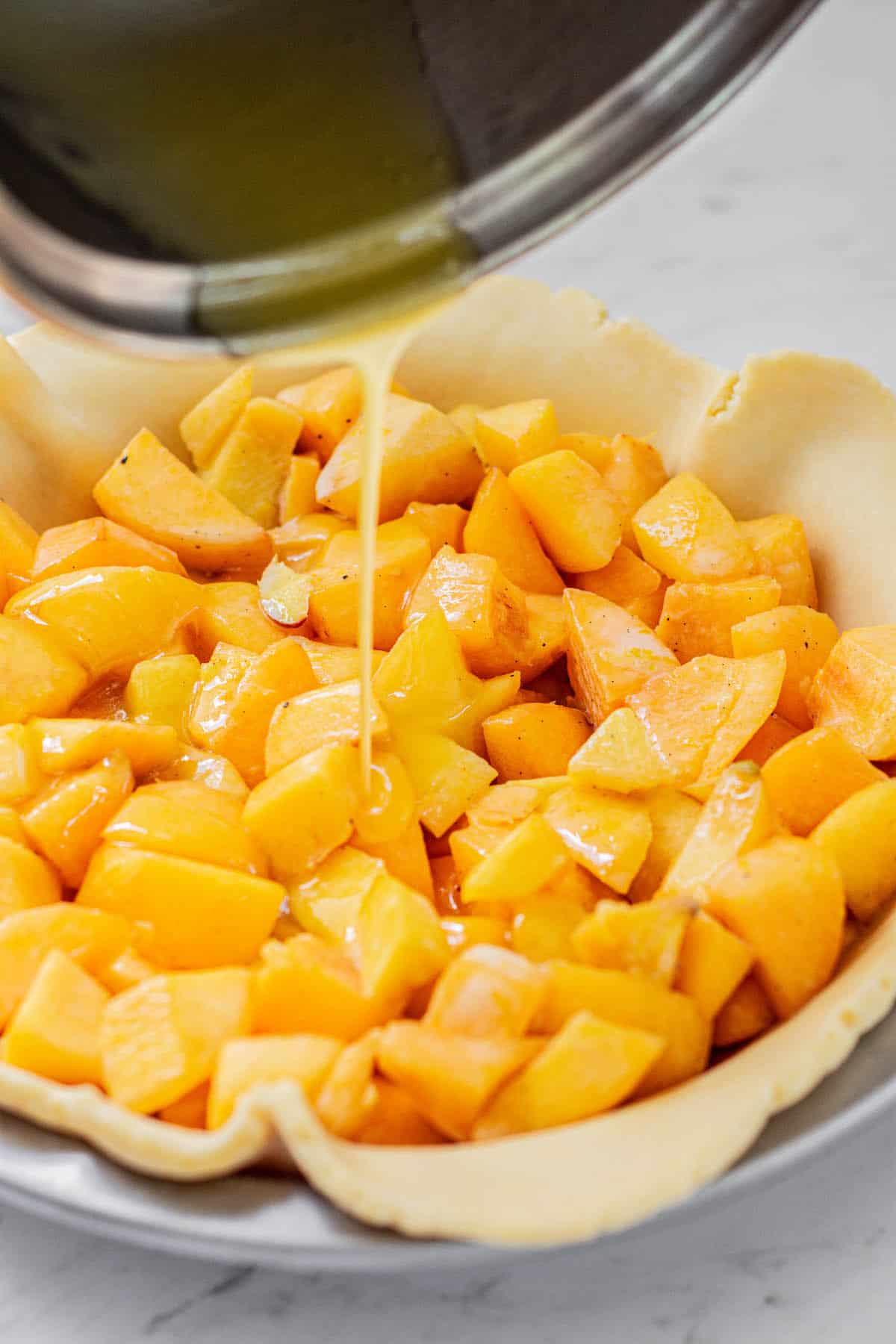
- Spoon the peach mixture into the pie shell. Drizzle the reduced peach syrup over the peach pie filling.
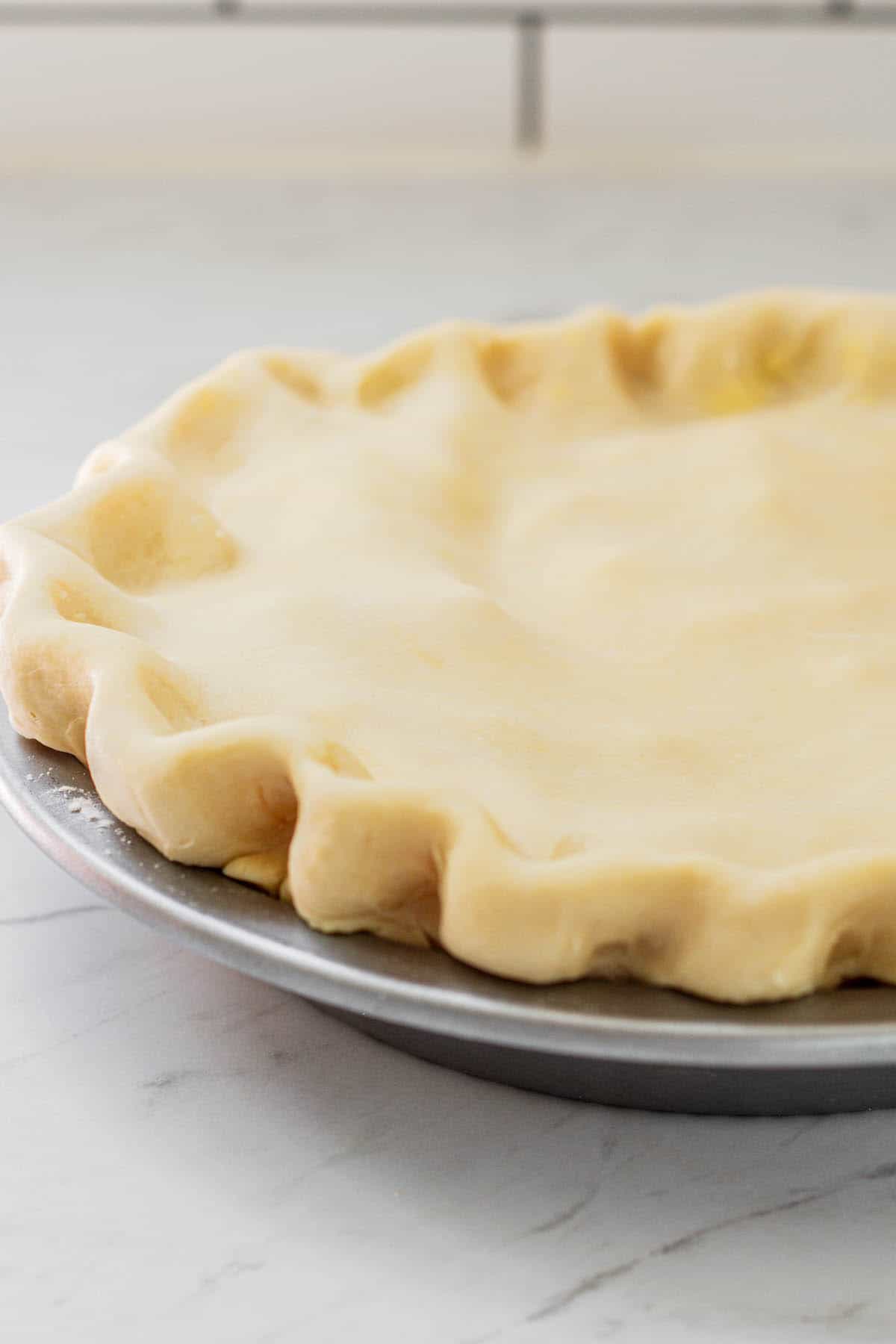
- Roll out the top crust and drape it over the filling (or create a lattice).
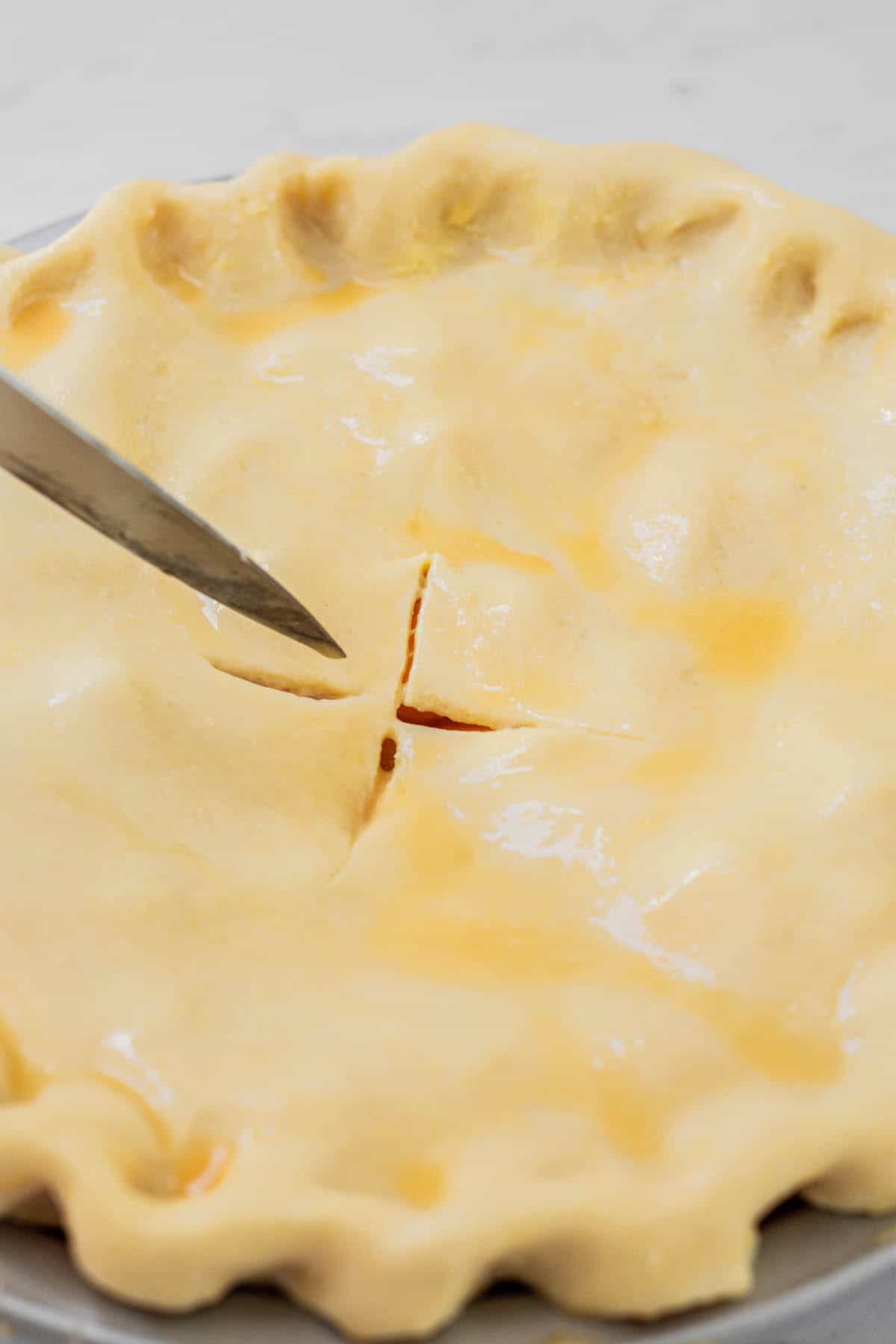
- Trim, seal, and flute the edges. Brush with egg wash and cut a few slits for steam.
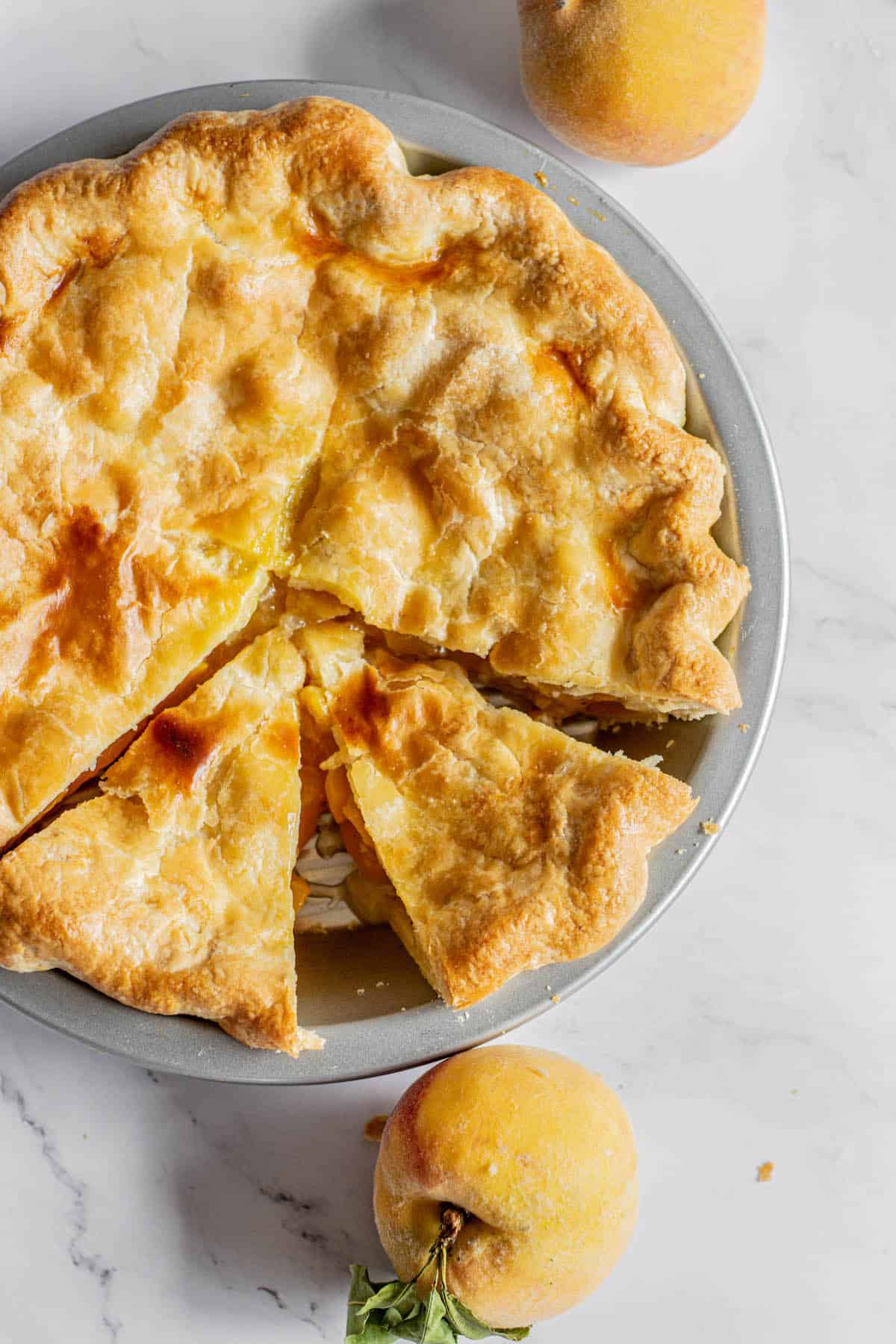
Bake at 425°F (220°C) for 15 minutes, then reduce to 350°F (180°C) for a further 50 to 55 minutes until the filling is bubbling and the crust is deep golden brown. Let it cool completely before slicing.
Tips
Storing
This pie keeps well at room temperature for up to 2 days (loosely covered) or in the refrigerator for up to 4 days. Reheat individual slices in a low oven to warm through.
The pie crust dough can be made up to 3 days ahead and kept refrigerated, or frozen for up to 2 months. Thaw frozen dough overnight in the fridge before rolling.
Fresh Peach Pie
Ingredients
Pastry
- 312 g all-purpose flour
- 1 teaspoon sugar
- ¾ teaspoon salt
- 225 g unsalted butter cold
- 1 Tablespoon lemon juice or vinegar apple cider vinegar or white vinegar
- 150 g ice-cold water
Filling
- 1.2 kg peaches ripe but still a bit firm
- 135 g granulated sugar
- 14 g unsalted butter
- 25 g cornstarch
- 1 Tablespoon lemon juice
- 1 Tablespoon lemon zest
- 1 teaspoon vanilla extract or paste
- ¼ teaspoon almond extract optional
- ¼ teaspoon salt
Egg wash
- 1 egg + 1 Tablespoon water
Instructions
Pie crust
- In a large bowl, combine the flour, sugar, and salt. Add the cold cubed butter and cut it into the flour using a pastry cutter or your fingertips until the mixture resembles coarse breadcrumbs with some pea-sized pieces of butter remaining. 312 g all-purpose flour , 1 teaspoon sugar, ¾ teaspoon salt, 225 g unsalted butter
- Add the lemon juice (or vinegar) to the ice-cold water. Drizzle it into the flour mixture a tablespoon at a time, using a spatula or your hands to combine. Add only as much liquid as needed. The dough should hold together when pressed but not be sticky. 1 Tablespoon lemon juice or vinegar, 150 g ice-cold water
- Turn the dough out onto a lightly floured surface and shape it into a rough rectangle. Roll it out into a roughly 10-inch (25 cm) rectangle. Fold the bottom third up to the middle, then fold the top third over the top, like folding a letter. Turn the dough a quarter turn and repeat this roll and fold once more.
- Cut the dough into two equal pieces and shape each into a flat disc. Wrap tightly in plastic wrap and chill for at least 2 hours, or up to 2 days. For full step-by-step photos, see my flaky pie crust recipe.
Peach filling
- Peel the peaches (see tips for the easiest method), halve them, remove the pits, and chop into roughly 1-inch (2.5 cm) cubes. Add them to a large bowl and sprinkle over the granulated sugar. Toss gently to combine. 1.2 kg peaches, 135 g granulated sugar
- Let the peaches macerate in the sugar at room temperature for 35 to 45 minutes. They will release a good amount of juice.
- While the peaches are macerating, roll out one pastry disc into a 12-inch (30 cm) circle on a lightly floured surface. Gently roll it onto the rolling pin and transfer it to a 9-inch pie dish. Let the dough drape over the edges. Place in the fridge while you prepare the filling.
Reduce the peach syrup
- When the peaches have finished macerating, set a fine mesh strainer over a small saucepan and strain the juices from the peaches. Add the butter to the saucepan. 14 g unsalted butter
- Place the saucepan over medium heat and bring to a simmer. Let it simmer, stirring occasionally, until the liquid has reduced by about half and is slightly thickened and syrupy. This takes about 5 minutes. Set aside.
Assemble
- To the bowl of peaches, add the cornstarch, lemon zest, lemon juice, almond extract (if using), vanilla, and salt. Stir gently to combine. 25 g cornstarch, 1 Tablespoon lemon juice, 1 Tablespoon lemon zest, ¼ teaspoon almond extract, 1 teaspoon vanilla extract or paste, ¼ teaspoon salt
- Spoon the peach filling into the prepared pie shell. Drizzle the reduced peach syrup evenly over the top.
- Preheat the oven to 425°F (220°C).
- Roll out the second pastry disc into a 12-inch (30 cm) circle. Either drape it over the top of the filling as a full top crust, or cut it into strips for a lattice. Trim the excess dough, leaving about a 1-inch overhang.
- Tuck and roll the overhanging edges of both the top and bottom crust together, then flute with your fingers or press with a fork to seal.
- Brush the top crust with egg wash. If using a full top crust, cut 4 to 5 small slits to allow steam to escape. 1 egg + 1 Tablespoon water
Bake
- Bake the pie at 425°F (220°C) for 15 minutes. This initial high heat helps the crust puff and set.
- Reduce the oven temperature to 350°F (180°C) and continue baking for a further 50 to 55 minutes, until the filling is thick and bubbling through the slits and the crust is a deep golden brown.
- If the crust edges are browning too quickly, loosely cover them with strips of aluminum foil, leaving the center exposed so it can continue to brown.
- Let the pie cool completely at room temperature for at least 4 hours before slicing. The filling needs this time to set. If you cut it too soon, it will be runny.
Notes
- For full pie crust instructions with step-by-step photos, see my flaky pie crust recipe.
- Peeling peaches: A serrated vegetable peeler is the easiest method and works on all ripeness levels. For very ripe peaches, you can blanch them instead: score a small X on the bottom, dip in boiling water for 30 to 60 seconds, then transfer to ice water. The skins will slip right off.
- Why macerate? Letting the peaches sit in sugar draws out excess moisture. Reducing those juices and adding them back gives you concentrated peach flavor without a soggy pie.
- Make sure the filling bubbles. If the filling isn’t bubbling when you take the pie out, the cornstarch hasn’t fully activated and the pie won’t set. Keep baking.
- Cooling is essential. The pie needs at least 4 hours (ideally overnight) at room temperature for the filling to firm up. Serving it warm too soon will result in a runny filling.
- Make ahead: The pie crust dough can be made up to 3 days ahead and refrigerated, or frozen for up to 2 months.
- Both US customary and metric measurements are provided. Use the toggle to switch between the two.