Belgian Pancakes (Pannenkoeken)
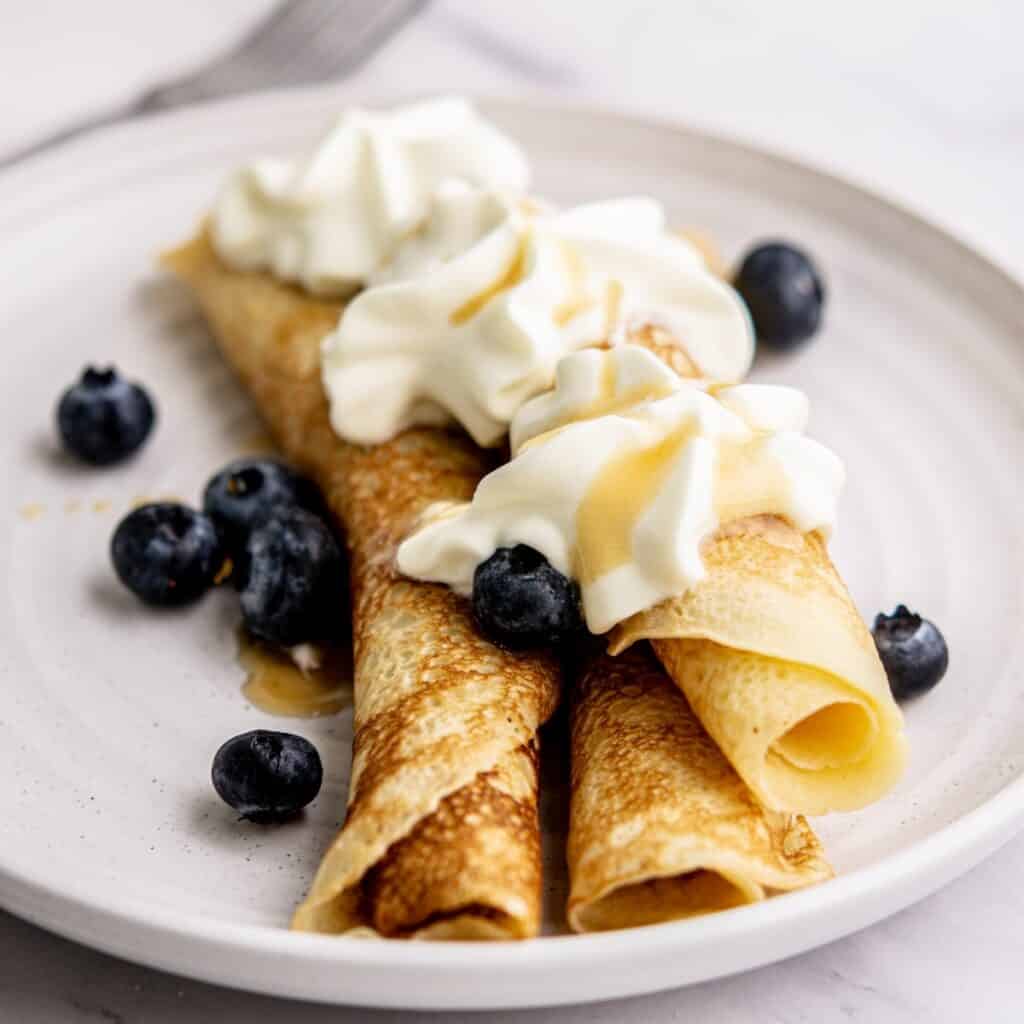
Belgian pancakes are thin, soft, and tender, with a hint of sweetness. They’re great for stacking and rolling and so delicious.

About these belgian pancakes
These Belgian pancakes are from the Flemish region of Belgium. Similar to French crêpes but softer and more tender. My dad is the main pancake maker at my parents’ house, and this is his version of the recipe. Traditional pannenkoeken can be a bit chewy from the gluten in the batter. Dad would always add a touch of baking powder, not to make them fluffy, but to interrupt the gluten and give a more delicate texture. Since having kids of my own, I’ve been making them too. We have them with a sprinkle of sugar, rolled up, but you can use fruit, cream, compote, or whatever you like!
Pancakes for every birthday
One of the massive stacks of pancakes dad would make. His ones are much rounder and more even than mine, but he’s had years of practice!

Ingredients
Here’s what you need. You can find the amounts in the printable recipe card at the bottom of this post.

Instructions
- Add all the ingredients in one bowl and whisk until smooth. You can also use an immersion blender to make extra smooth batter. It’s going to be very runny.

- Make sure the pan is hot before frying the first pancake so it doesn’t stick, and spread on a little coconut oil or butter. Pour the batter into the pan and swirl it around to cover the bottom of the pan as much as you can. This is where the runny batter is helpful because it will spread out quite easily with the tilt of the pan.

- Fry for around 45-60 seconds on one side until it’s golden brown. Turn the pancake and fry for 15 seconds on the other side.

- Stack the pancakes on a plate as they are cooked and continue with the rest of the batter.
TIPS
- Preheat your pan enough. If the pan is too cold, the pancake will stick. More often than not, the first pancake will stick while you learn your pan’s heat. Just think of it like a tester.
- Grease the pan lightly with butter or oil, spreading it evenly with a paper towel to prevent sticking but without adding too much.
- Pour the batter into the center of the pan and quickly swirl it around to coat the surface for an even, thin pancake.
- Flip when the surface of the pancake dries out. Use a thin spatula to loosen the edges, then flip gently.
- Adjust the heat as needed to prevent pancakes from browning too quickly or unevenly. You’ll need to get to know your own stove and what works best.
Serving
We loved these pancakes served simply. Just a sprinkle of sugar and rolled up. But really, the options are endless. You can pile on fresh berries, sliced bananas, drizzle them with syrup or fruit compote.


Related recipes
Belgian Pancakes
Ingredients
- 250 g all-purpose flour
- 3/4 teaspoon baking powder
- 3 large eggs
- 600 g milk plus more if needed to thin the batter
- 12 g granulated sugar
- 45 g butter melted
- 1/4 teaspoon salt
Greasing
- oil or butter
Instructions
- Add the flour, eggs, melted butter, baking powder, sugar, salt, and milk in a large bowl. Whisk together until it's a smooth and runny batter. You can use an immersion blender if you have it, to make it extra smooth, or run the batter through a sieve. 250 g all-purpose flour, 3/4 teaspoon baking powder, 3 large eggs, 600 g milk, 12 g granulated sugar, 45 g butter, 1/4 teaspoon salt
- Let the batter rest for 15 minutes. If you find your batter too thick, add extra milk as needed. It should be the consistency of thin pourable cream. The batter should be runny enough to spread immediately when you tilt the pan.
- Heat a flat, low-sided crêpe pan, carbon steel, or well-seasoned cast iron over medium heat. A heavy bottom helps prevent hot spots. Non-stick is forgiving and easy to use, but it can produce paler pancakes with less flavor compared to steel or iron.
- The pan is ready when a drop of batter sizzles immediately but doesn't smoke. Lightly grease with butter or oil.
- Pour around 1/4-1/3 cup of batter into the centre of the pan, then immediately lift and tilt in a circular motion to spread it thin before it sets. Cook until the top looks dry and matte with edges lifting slightly, around 1–2 minutes. Loosen the edges with a thin spatula, then flip. Cook the second side until golden, around 30–60 seconds, depending on your pan heat. The first pancake is always a test and you can adjust your heat from there.
- Repeat with the remaining batter and stack the cooked pancakes on a plate.
Notes
Cooking notes
-
- Preheat your pan enough. If the pan is too cold, the pancake will stick. More often than not, the first pancake will stick while you learn your pan’s heat. Just think of it like a tester.
-
- Grease the pan lightly with butter or oil, spreading it evenly with a paper towel to prevent sticking but without adding too much.
-
- Pour the batter into the center of the pan and quickly swirl it around to coat the surface for an even, thin pancake.
-
- Flip when the surface of the pancake dries out. Use a thin spatula to loosen the edges, then flip gently.
-
- Adjust the heat as needed to prevent pancakes from browning too quickly or unevenly. You’ll need to get to know your own stove and what works best.

Have not tried it yet, but reading the recipe and instructions you already know how its gonna turn out. additionally this is the best site ive been in where you can actually adjust the measurements depending on how many you wanna make.
Is there a traditional Belgian version of these that are savory?
Yup there are savory versions of Belgian pancakes, though they’re usually made without any rising agents like baking powder. Savory pancakes tend to be thinner and more crêpe-like, with a soft but slightly firmer texture that holds up well to fillings like ham, cheese, or sautéed vegetables. These ones, with baking powder in the batter, are a bit softer and more tender