
Pâte Sablée Tart Dough
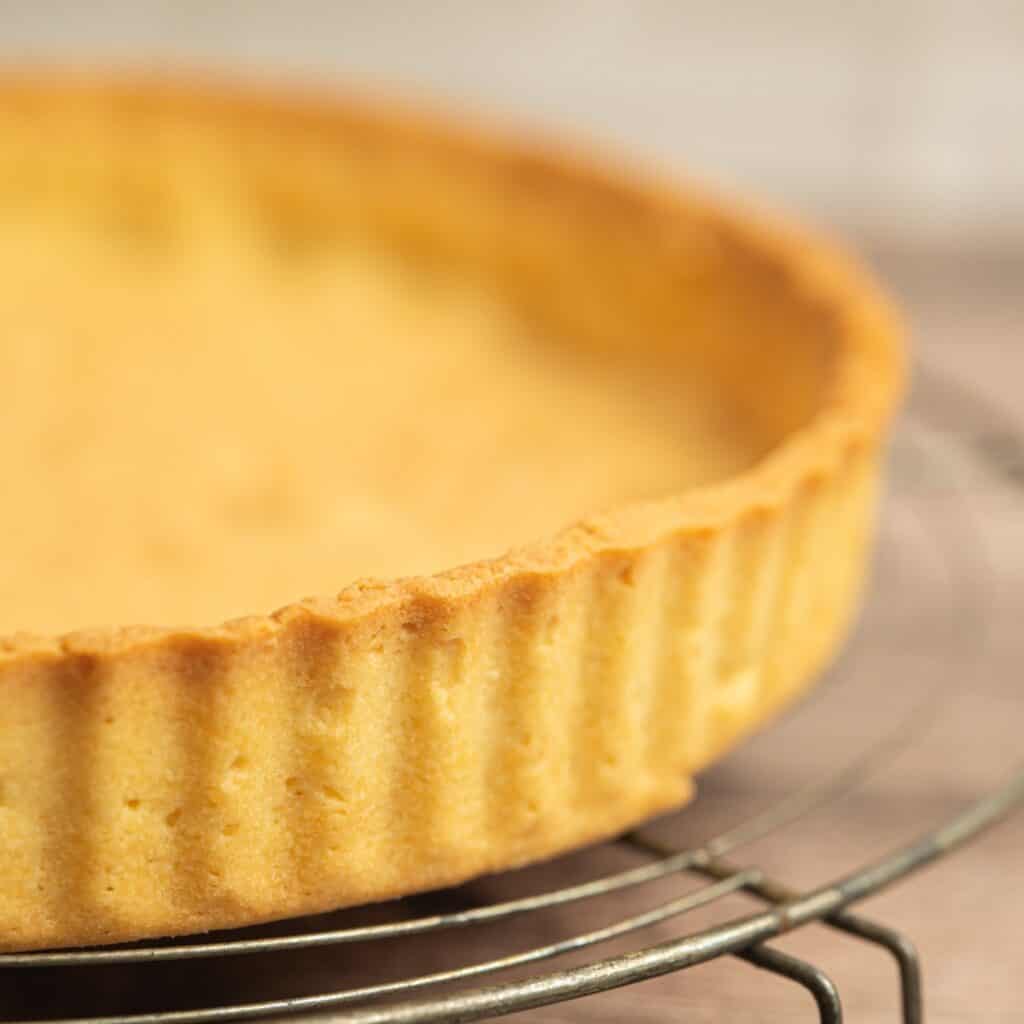
Pâte sablée is one of the classic French sweet tart doughs, with a tender, sandy texture and a lightly sweet flavour. Once baked, it becomes a buttery, crumbly shell that’s rich rather than crisp. It’s a good choice for baked or set fillings and is best served at room temperature, when the butter softens, and the texture really comes through. It can also work with curds if you like a softer and more delicate crust.
About this recipe
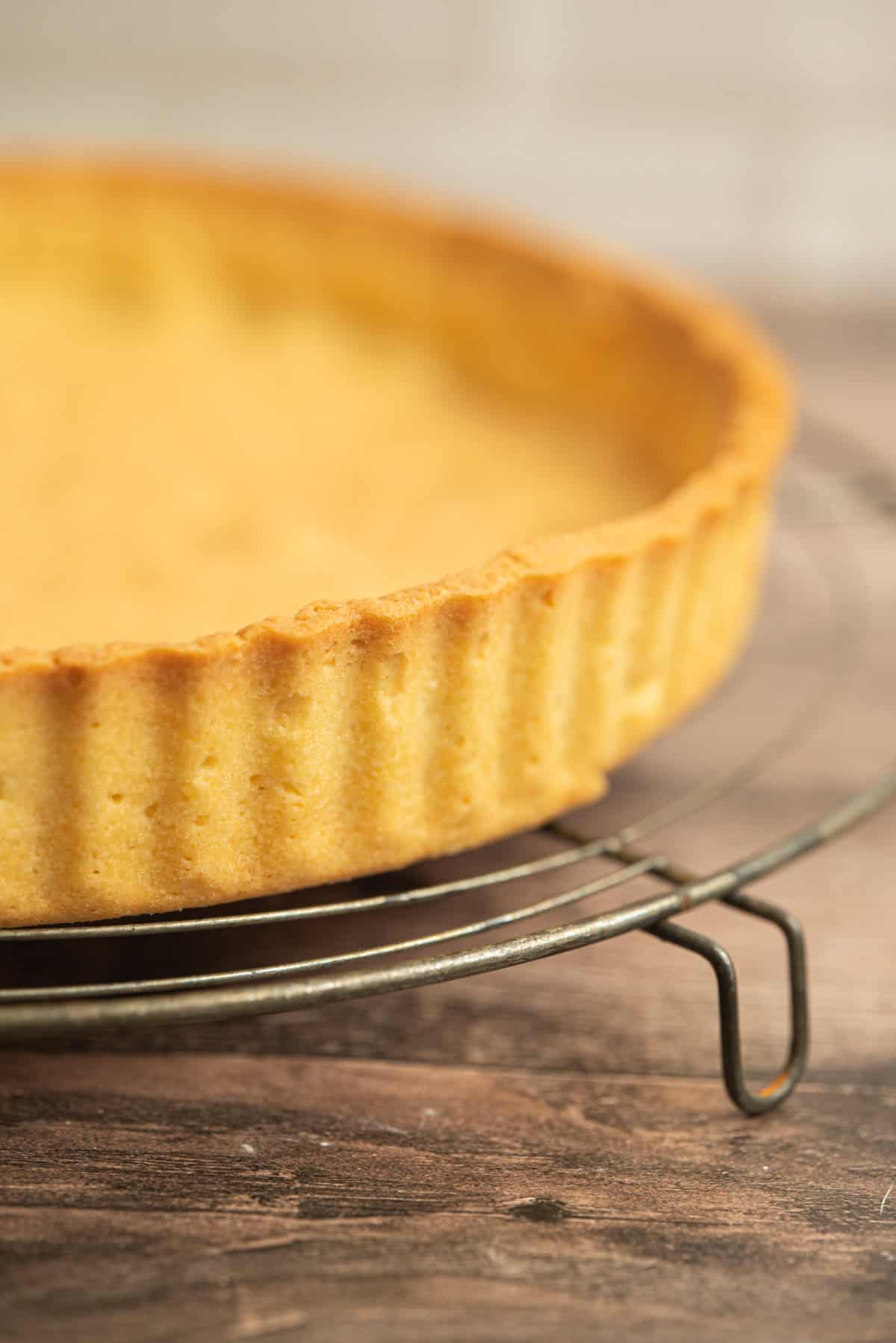
This pâte sablée makes a very crumbly tart shell with an almost shortbread-like texture. It’s the perfect tart shell for baked fillings. It’s a very simple dough, with just 6 (or 5, more on that soon) ingredients: flour, butter, egg, almond meal and powdered sugar.
The butter is rubbed into the dry ingredients until the mixture looks like fine sand, and then the egg goes in to bring the dough together. This keeps the pastry short and crumbly because it doesn’t over-develop the gluten. You can also make pâte sablée by creaming the butter and sugar first, but the key is to stop mixing early so you don’t build too much structure into the dough before it bakes. I add a little bit of almond meal to it as well, barely any really but enough to add bit of tenderness. You can skip it though.
Chill times and baking
There are two chill times in this recipe, one before rolling and one after the dough is in the tart pan. Both of them matter because they relax the gluten and stop the crust from shrinking during baking, which keeps the edges clean and tidy.
I bake this one at a lower temperature than you might expect. It helps to color the base more evenly and stay flat. You also don’t need pie weights here. A well-chilled dough and a not too hot oven are enough to keep it from puffing up. Depending on the filling you are using, pâte sablée can be fully baked before filling or baked with the filling already inside, which makes it a really flexible dough recipe to have in your pocket.
If you are after something with a little more structure that gives you cleaner slices, I also have a pâte sucrée recipe on the blog. This one has a very similar ingredient list but a slightly different method so the shell is firmer and holds up really well to chilled fillings.
What you need
Step-by-step
Combine the dry ingredients
- Whisk the flour, powdered sugar, almond flour, and salt together.

Add the butter
- Work the butter into the dry ingredients with your fingertips or a pastry blender until the mixture looks like fine crumbs.

Mix in the egg
- Mix in the egg until the dough comes together into a soft ball.

Fraisage: Tip the mixture onto the bench and use the heel of your hand to gently push portions of the dough forward. This is called fraisage and it helps the dough form a smooth, cohesive mass without overmixing. Do this just a couple of times until the dough comes together into a soft ball.
Wrap and chill
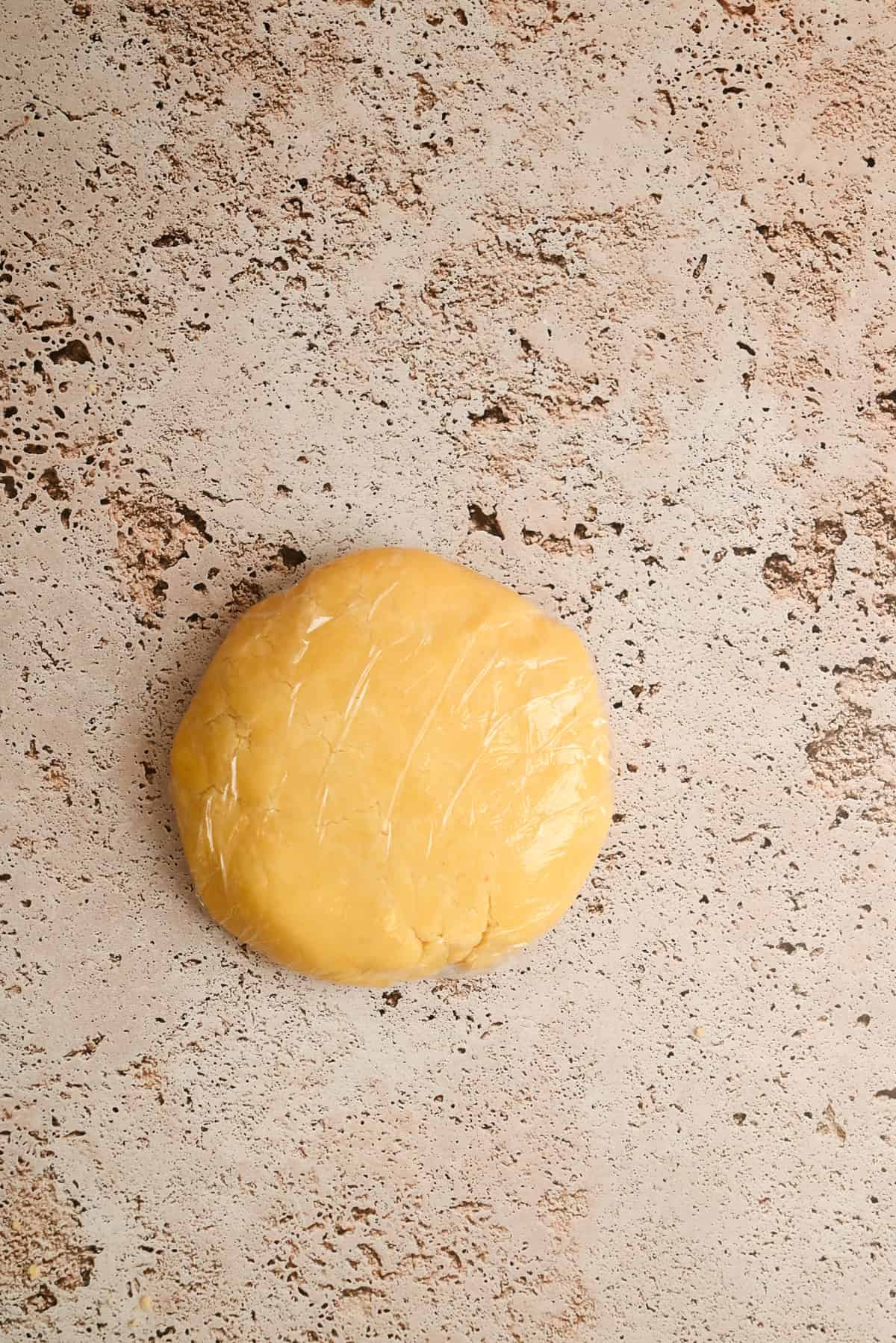
- Wrap and chill for at least 30 minutes. This firms the butter and relaxes the gluten.
Fit into tart pan
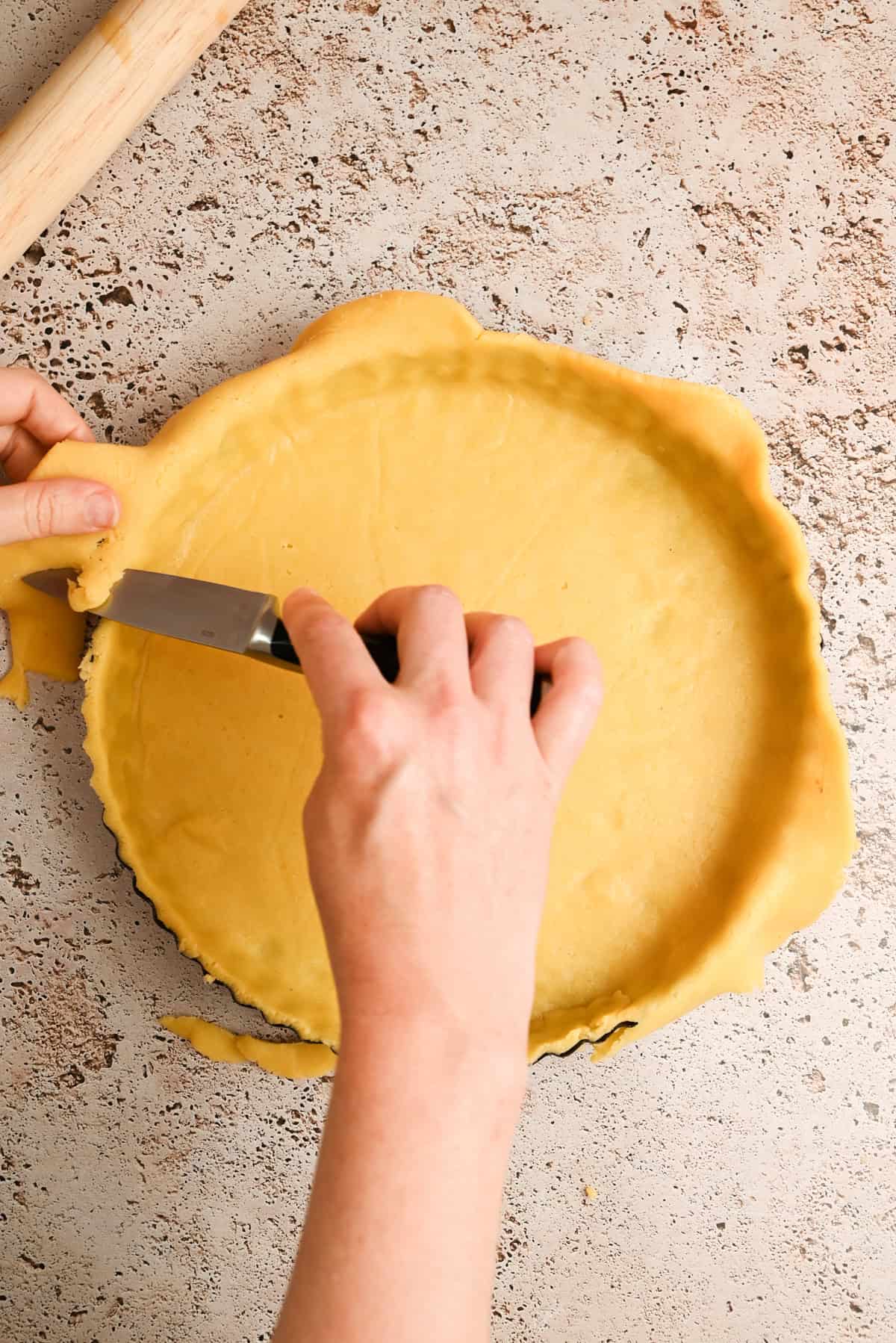
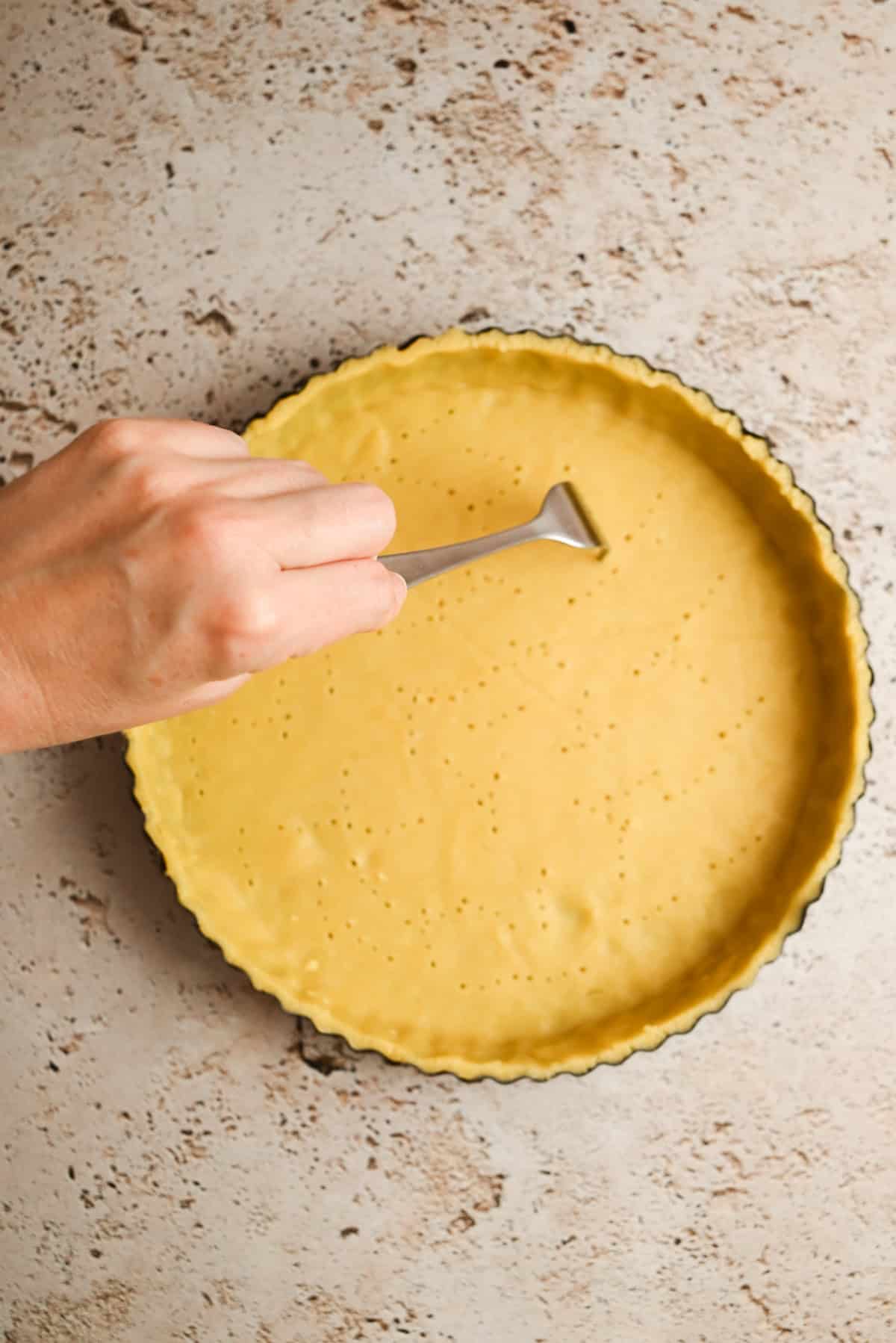
- Roll the dough 3 to 4 mm thick, fit it into a 9 or 10- inch tart pan and trim the edges.
Dock and chill again
- Dock the base with a fork and chill the lined pan for 15 to 20 minutes.

Bake until golden brown
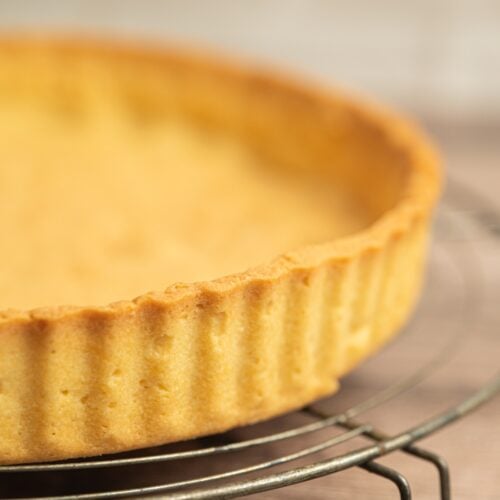
- Bake until dry and lightly golden.
Pâte sablée in a food processor
You can make this dough in a food processor instead of mixing it by hand. Add the flour, powdered sugar, almond flour, and salt to the bowl and pulse to combine. Then add the cold butter and pulse until the mixture resembles fine sand. Add the egg and pulse again until the dough starts to clump together. Tip it out, bring it into a ball, and chill as usual. It gives the same sandy, tender texture and is a great shortcut if you want the dough ready in a few minutes.

FAQs about pâte sablée
Uses for pâte sablée
- Almond or other nut frangipane tarts, plain or with fruit. Here’s my blueberry frangipane tart that uses this recipe.
- Chilled or no-bake fillings like ganache and pastry cream. I don’t recommend it for heavy baked fillings like custard or a warm poured filling like lemon curd.
Pâte Sablée Tart Dough
Ingredients
- 205 g all purpose flour
- 80 g powdered sugar
- 15 g almond flour optional
- 1/4 tsp salt
- 113 g unsalted butter cold, cubed
- 1 large egg lightly whisked
Instructions
- Add the flour, powdered sugar, almond flour, and salt to a bowl.205 g all purpose flour, 80 g powdered sugar, 15 g almond flour, 1/4 tsp salt
- Add the cold butter and use a pastry cutter or your fingers to cut and rub it into the flour until the mixture looks sandy. 113 g unsalted butter
- Add the egg and mix until the dough starts to clump. Tip it onto the bench and use the heel of your hand to gently push small portions of the dough forward. This is called fraisage and it helps bring the dough together without over mixing. 1 large egg
- Shape into a disc, wrap, and chill for an hour.
Pre-Baking The Pastry
- Pre-baking is needed for chilled or no-bake fillings. If you are using a baked filling like frangipane or baked custard, the pastry can be partially baked or baked with the filling instead.
- Heat the oven to 320°F (160°C).
- Take the dough out of the fridge and let it sit for 5 to 10 minutes. It should still feel cold, but not rock hard. If it cracks immediately when you try to roll, it is too cold.
- Roll pâte sablée on a lightly floured bench or between two sheets of parchment. Rolling the dough between parchment keeps it clean and makes it easier to transfer to the tart pan. Aim for an even thickness of about 3 to 4 mm and roll it a few inches wider than your 9 or 10 inch tart pan so you have enough overhang to lift and fit it easily
- To fit the pan, lift the dough with your rolling pin or forearms and lower it gently into an ungreased tart pan. Press it into the base and up the sides without stretching it. If you get cracks or thin spots, patch them with extra dough. Sablée patches blend in once baked, so it’s completely fine to do.
- Trim the edges and dock the base with a fork, then chill it again for 30 minutes.
- Bake for 30-35 minutes until dry and lightly golden all over. Cool completely.
Food processor option
- Add the dry ingredients to the processor and pulse to combine. Add the butter and pulse until sandy. Add the egg and pulse again until the dough starts to clump. Tip it out, bring it together, and chill as usual.