

Sourdough Burger Buns
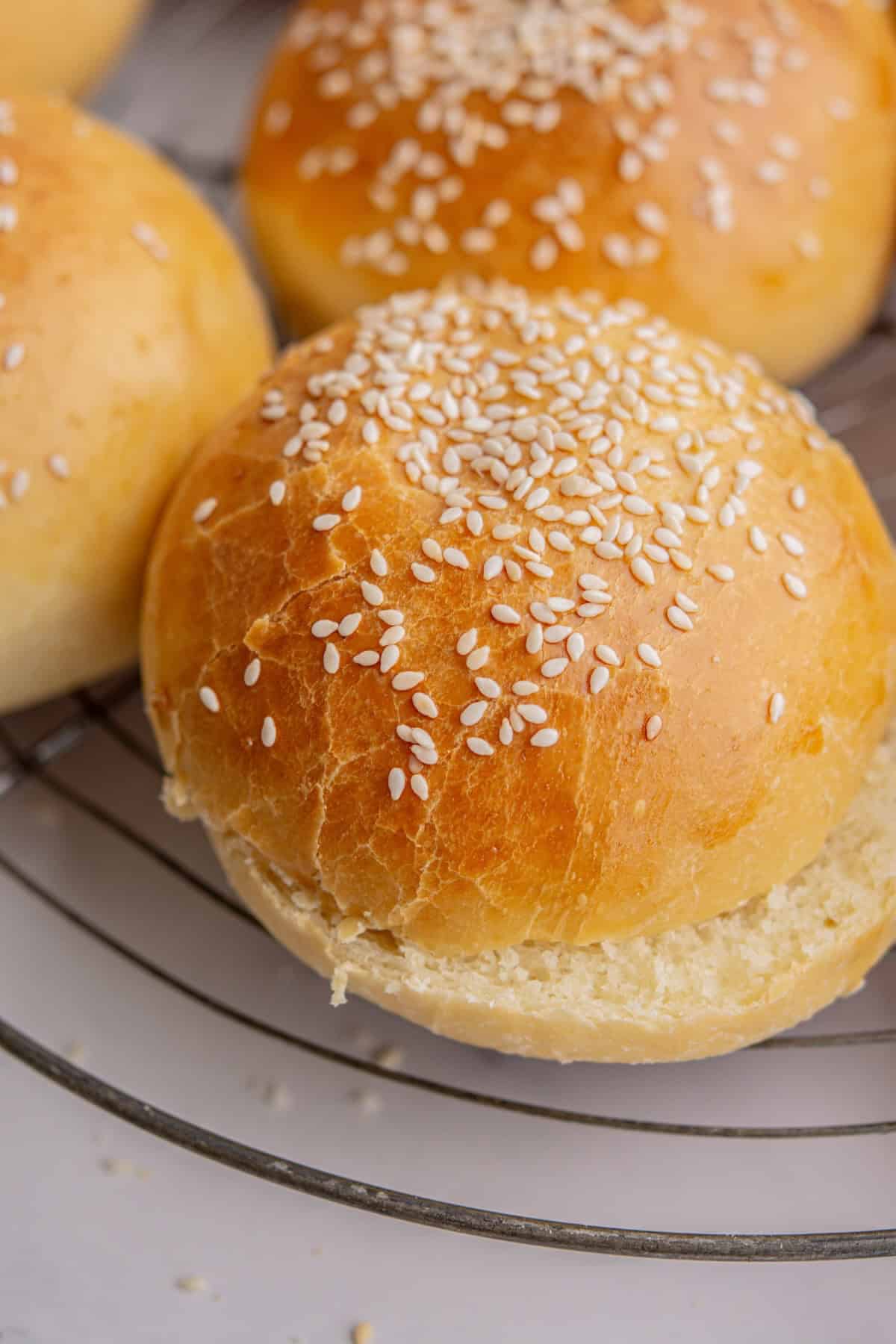
These sourdough burger buns are soft, fluffy, and naturally leavened with sourdough starter. It’s a really easy dough to make, either by hand or in a mixer. The buns bake up lovely and golden with soft and tender crumb.
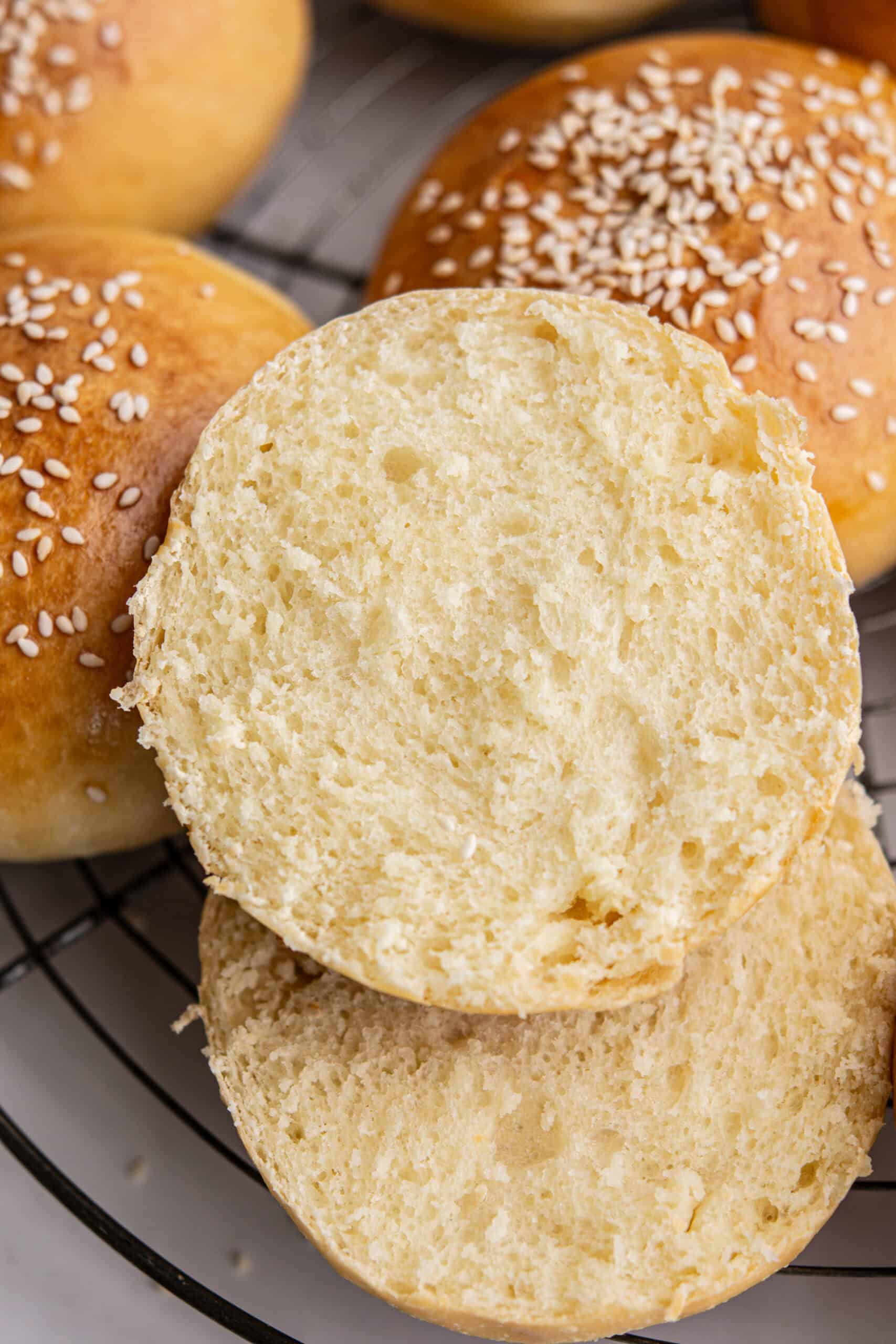
Homemade burger buns are a staple everyone should know I think, and this sourdough version makes buns that are soft and pillowy with just a hint of tang from the starter. The sesame seeds on top are optional, but they definitely do more than just add a look, when they get toasted in the oven they bring quite a bit of flavor so I say it’s worth adding them if you’ve got them.
Like my sourdough dinner rolls and sourdough cinnamon rolls, these use an enriched dough of milk, egg, and butter that keeps the crumb soft and tender. It’s not like super enriched, but there’s enough there to stop the buns from being chewy. I mix these by hand personally. The dough is sticky but not unmanageable, and a bit of a slap and fold method for mixing makes gluten development pretty easy. That said, a stand mixer works just as well though.
The timing is flexible. You can mix the dough and bake everything in one day, or give the dough an overnight cold rise in the fridge and shape and bake the next morning. Both work well. The overnight option gives slightly more flavor and fits more easily into a busy schedule.
New to sourdough? Read the complete guide to feeding and maintaining a sourdough starter before you begin.
Timing
Because this recipe uses a levain, there’s always one overnight step before you bake. Here’s how the two schedules look:
Standard (two days):
Evening of day 1: Build the levain (10 to 12 hours)
Day 2: Mix the dough, bulk ferment (3 to 4 hours), shape, proof (2 to 4 hours), bake
Slow option (three days):
Evening of day 1: Build the levain
Day 2: Mix the dough, bulk ferment, then refrigerate the dough overnight
Day 3: Shape, proof, bake
The recipe below is written for the standard two-day schedule. If you want to use the slow option, after the bulk ferment on Day 2 simply cover the dough tightly and refrigerate for up to 16 hours. Pull it out the next day, let it rest for 10 minutes, then continue from the shaping step.
A note on the levain
I always use a levain rather than adding my starter directly to the dough. It means I’m using the starter at its freshest and most active, and I find it gives a more reliable rise than starter that’s been sitting in the fridge. It takes a bit more planning, but for enriched doughs like these it’s worth it. A levain is just a small, fresh portion of starter that you feed and use entirely in the recipe.
If you’d rather use your active starter directly, that works too. Substitute with around 100g of active starter.
How to make (by hand or stand mixer)
Make the levain
- The night before baking, mix 20g of starter with 60g of flour and 60g of water in a clean jar. Cover loosely and leave at room temperature for 10 to 12 hours until at least doubled and very bubbly.

The 1:3:3 ratio is designed for an average kitchen temperature of around 68 to 75°F (20 to 24°C). If your kitchen runs warm overnight (above 75°F / 24°C), the levain can peak and collapse before you’re ready to use it. In that case, feed at a higher ratio like 1:4:4 or 1:5:5 to give it more food to get through the night, or leave it somewhere cooler like a lower shelf in the fridge for part of the time.
Mix the dough
- In a large bowl or the bowl of your stand mixer, combine all the ingredients except the butter. Mix until a shaggy dough forms. Turn it out onto a clean surface and knead for 5 minutes to begin developing the gluten.
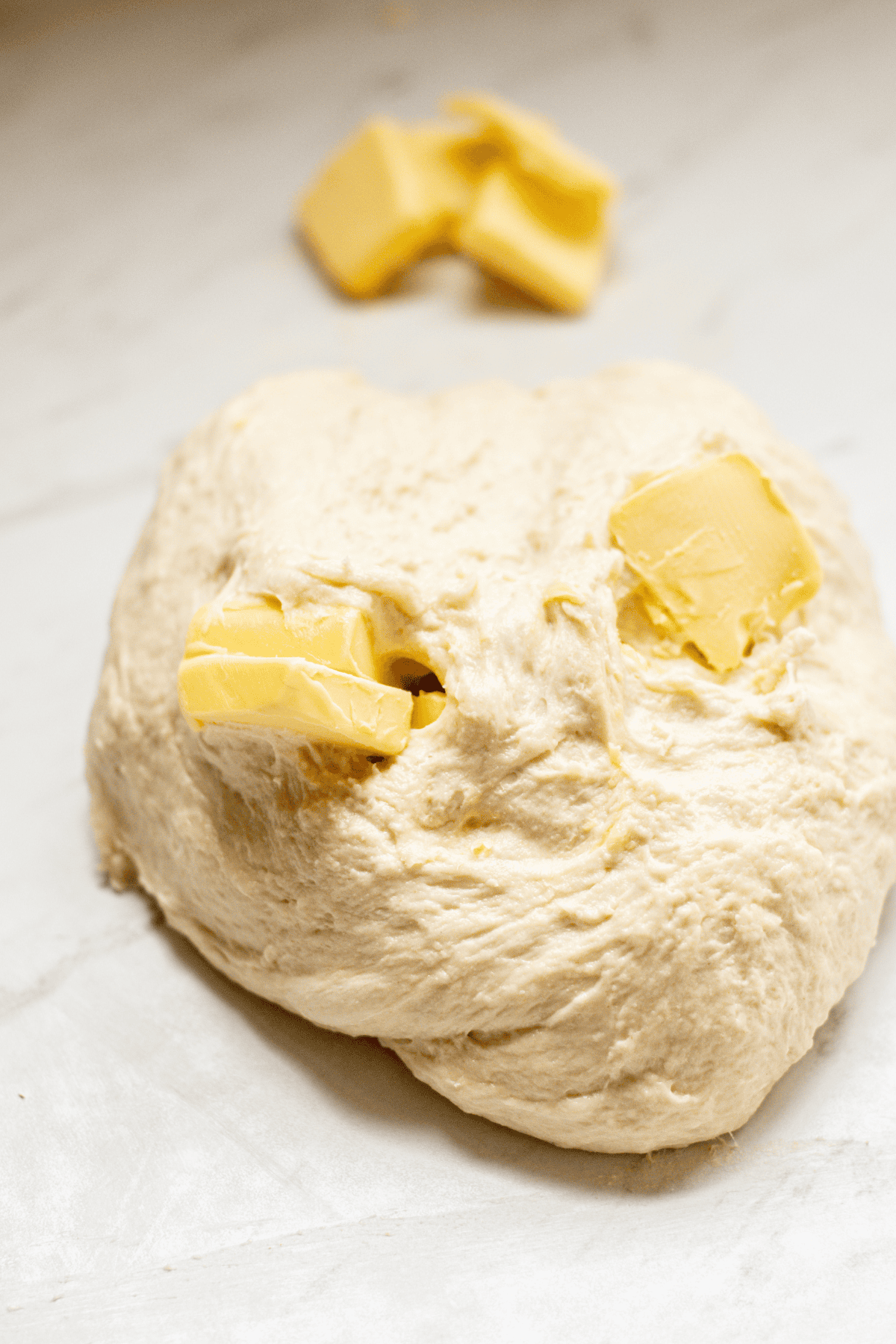
- Add the butter cubes and knead them in. It will make the dough sticky at first.
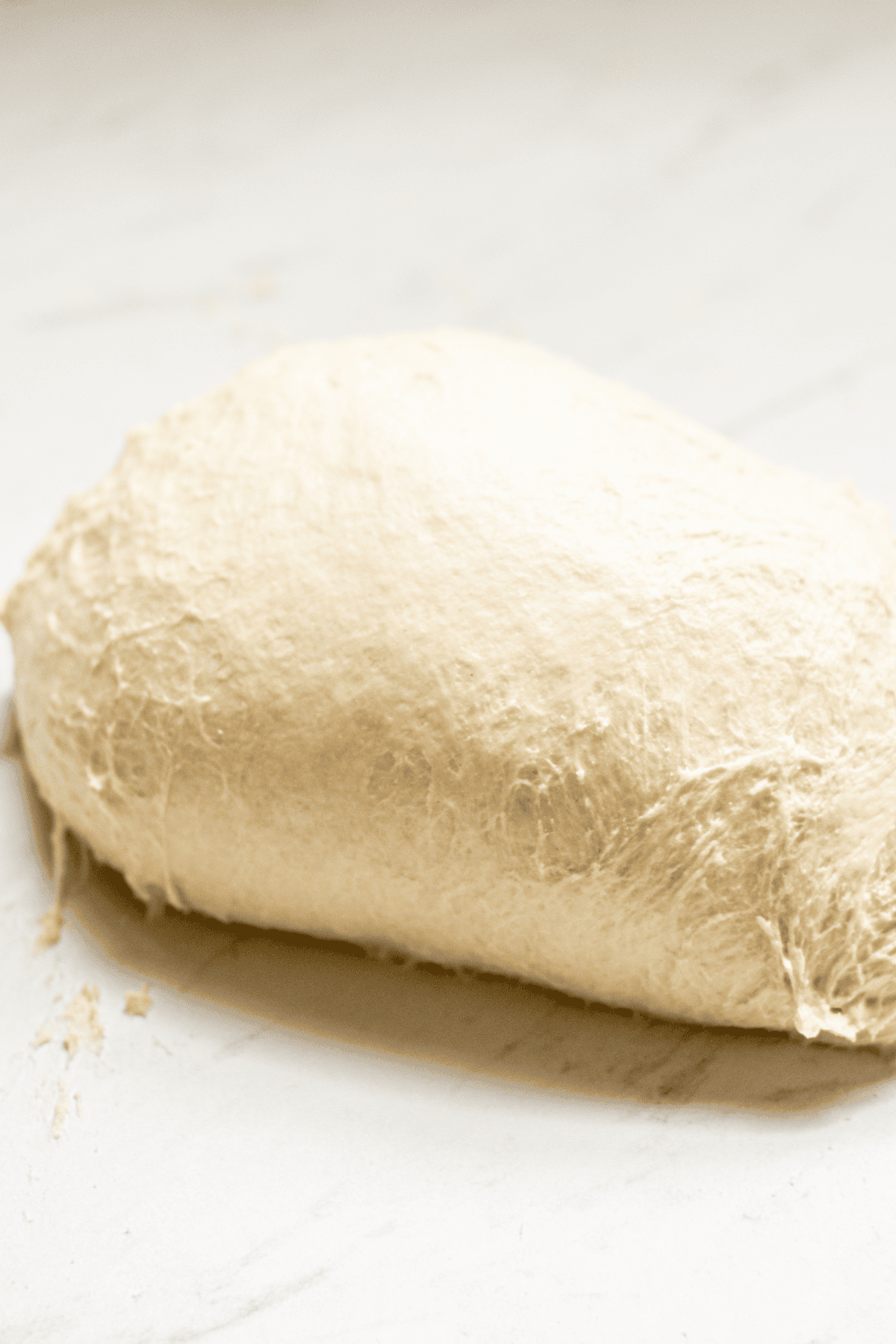
- The dough will start sticky but will come together as you knead. Knead for around 8-10 minutes.
With a stand mixer: Fit the dough hook and mix on low speed for 10-15 minutes until the dough is smooth and pulls away cleanly from the sides of the bowl.
Bulk ferment
- Shape the dough into a ball and place in a lightly greased bowl. Cover and leave at room temperature until it has doubled by around 60-70%. This will take 4 to 6 hours depending on the strength of your starter and the temperature of your kitchen.
Overnight option: Bulk ferment until bulked by 40%, then cover the bowl tightly and refrigerate for up to 16 hours. Pull the dough out the next day and continue from the shaping step.
A note on sourness:
Stopping the bulk ferment at almost doubled rather than fully doubled keeps the flavor mild. If you push it too far, the buns can come out more sour than you might like.
If you’re using the slow option and putting the dough in the fridge overnight, pull it earlier than you would for a same-day bake. You’re only looking for around 40% rise before it goes in. The dough will keep fermenting slowly in the cold overnight, so if you let it get too far at room temperature first it’ll be over-fermented by morning.
For the same-day bake, if the bulk ferment is taking much longer than expected it’s usually because your kitchen is too cool. It’s worth moving the dough somewhere warmer rather than just leaving it to sit. A slow ferment in a cool kitchen gives the bacteria more time to produce acid, which is what makes the buns taste sour.
This is different to putting the dough in the fridge on purpose. The fridge is cold enough to *almost* pause fermentation completely, which actually keeps the flavor gentle and controlled. A cool kitchen sits in an awkward in-between zone where things are still fermenting but slowly, and that’s where sourness can creep in.
Divide and shape
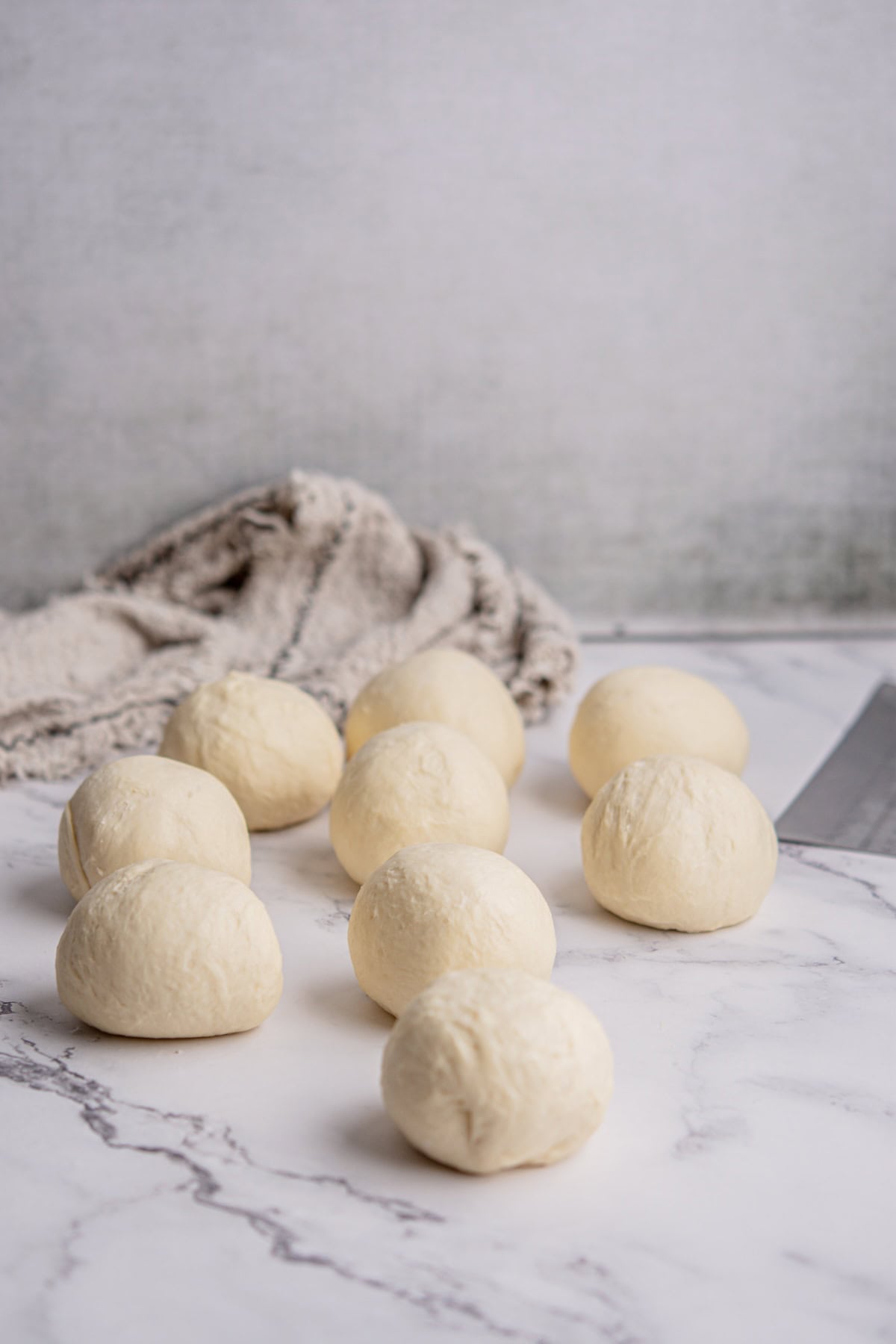
- Divide the dough into 9 pieces and shape each piece into a tight, smooth ball.
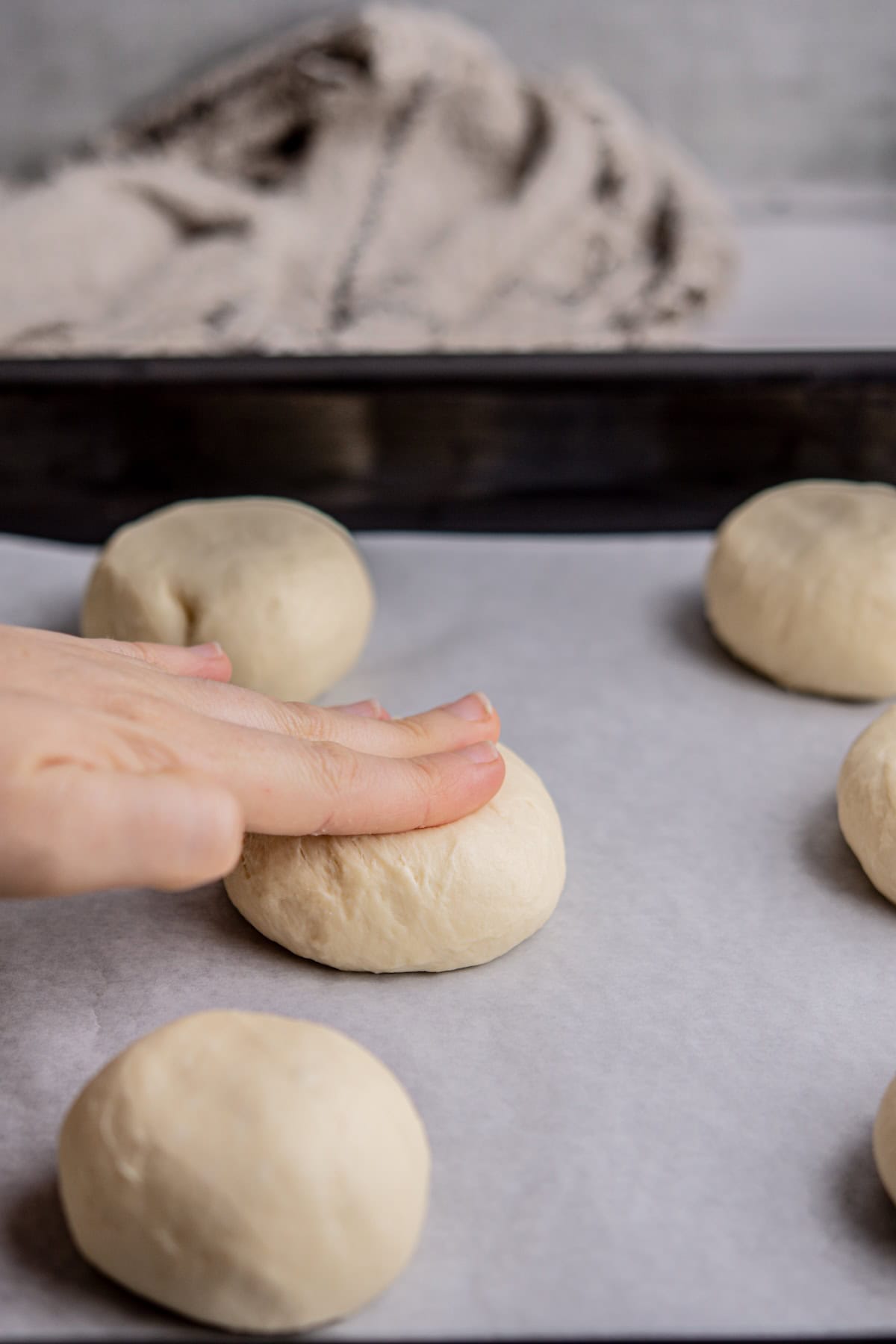
- Gently flatten each ball, then cover loosely and leave to proof at room temperature until almost doubled, 2 to 4 hours.
Egg wash and bake
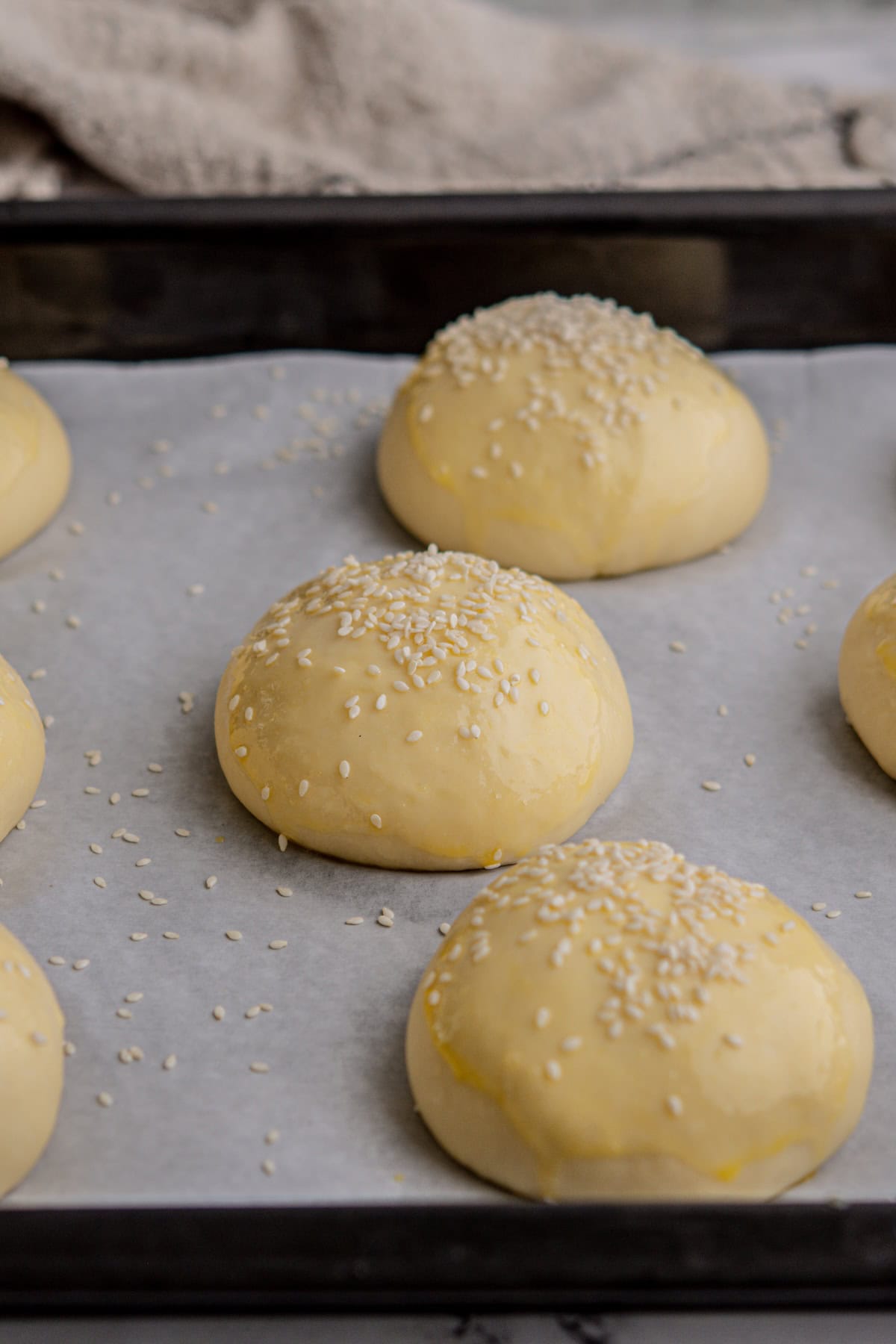
- Brush egg wash gently over the tops of the buns and sprinkle with sesame seeds.
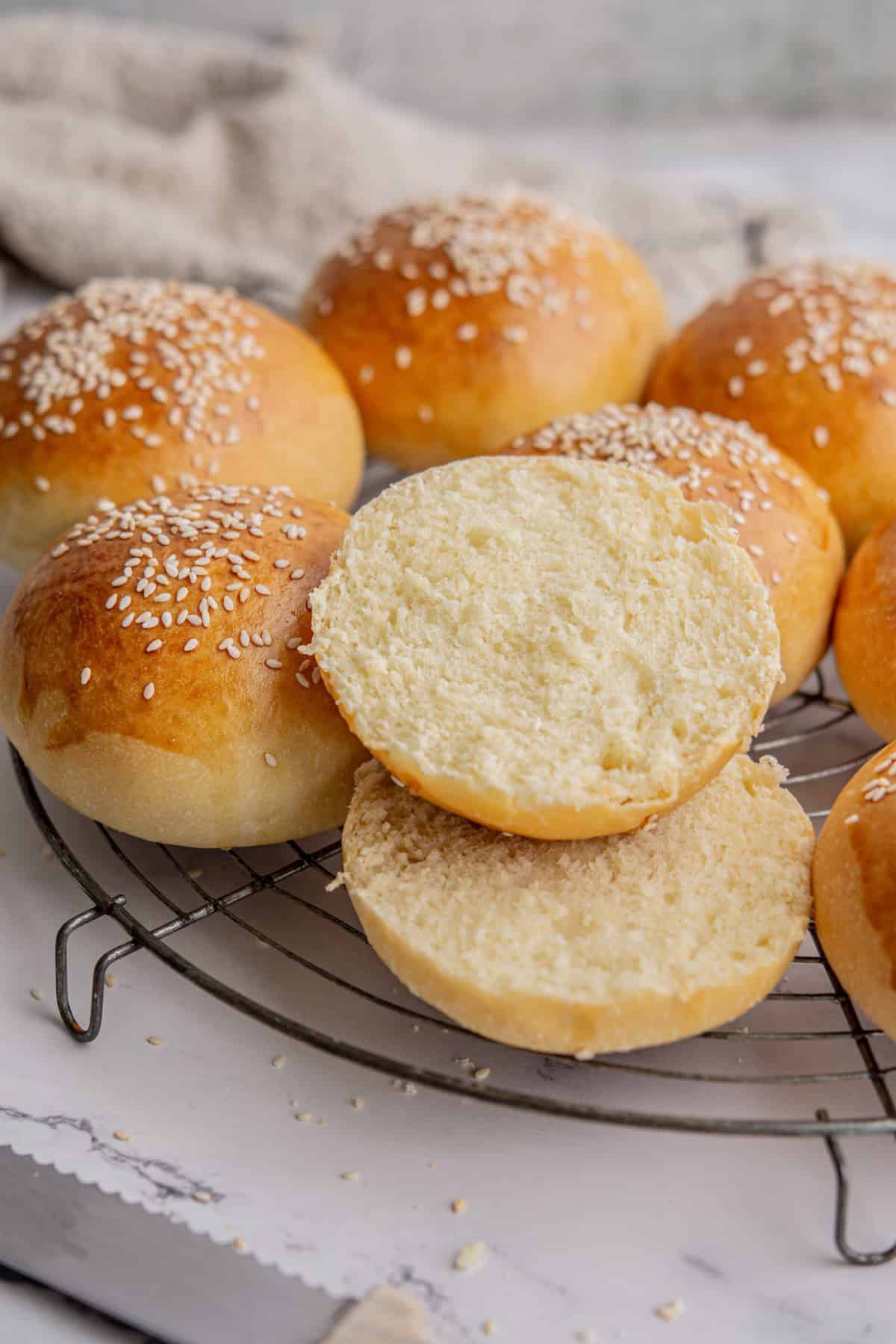
- Bake for 20-25 minutes until deep golden brown.
Storing and freezing
Store buns at room temperature in an airtight container for up to 3 days. On the following days, warm them briefly in the microwave or a low oven to restore their softness.
These buns freeze well. Let them cool completely, then freeze in a zip-top bag for up to 3 months. Thaw at room temperature and warm in the oven at 300°F (150°C) for 5 to 10 minutes before serving.
More sourdough recipes
- Sourdough dinner rolls: soft pull-apart rolls with no commercial yeast
- Sourdough ciabatta sandwich rolls: open crumb, chewy crust, great for sandwiches
- Sourdough hot cross buns: spiced and fruity, naturally leavened
- Sourdough focaccia: crispy outside, pillowy inside, ready in one pan
- Feeding sourdough starter: a complete guide: everything you need to maintain a healthy starter
Happy baking!
Sourdough Burger Buns

Ingredients
Levain
- 20 g starter
- 60 g all-purpose flour
- 60 g water
Burger bun dough
- 440 g all-purpose flour
- 20 g granulated sugar
- 8 g salt
- 180 g water
- 120 g whole milk
- all the levain around 100g (1/2 cup) active starter
- 45 g butter softened to room temperature
Egg wash
- 1 large egg
- 1 tablespoon water
- Sesame seeds
Instructions
Levain
- About 10 to 12 hours before you plan to bake, mix the starter, flour, and water until well combined. Scoop into a clean jar, cover loosely, and leave in a warm spot to double in size. Use before it collapses. 20 g starter, 60 g all-purpose flour, 60 g water
Dough
- Combine the flour, sugar, and salt in a large bowl. Add the water, milk, and all of the levain and mix until a shaggy dough forms. Transfer the dough to a work surface and use the slap and fold method to knead for about 5 minutes to begin developing the gluten. Alternatively, use a stand mixer fitted with a dough hook on low speed for 5 minutes. 440 g all-purpose flour, 20 g granulated sugar, 8 g salt, 180 g water, 120 g whole milk, all the levain
- Add the cubed butter a few pieces at a time, kneading until fully incorporated. The dough will become sticky at first, but the initial kneading helps it maintain its strength. Continue slapping and folding for another 3 to 4 minutes until the dough is smooth, though it may still be slightly sticky. This step can also be done with a stand mixer on low speed for 10-15 minutes. 45 g butter
Bulk Ferment
- Place the dough in a lightly greased bowl, cover, and let it rise in a warm spot at around 77°F (25°C) for 3 to 4 hours until bulked out by around 60-70%. For a warm, humid environment, place the bowl in a turned-off oven alongside a large cup of boiled water, replacing the water as it cools. Slow option: once risen by about 40%, cover tightly and refrigerate for up to 16 hours. Let the dough rest 10 minutes at room temperature before shaping.
Shape
- Turn the dough out onto a lightly floured surface. Weigh the total dough and divide by 9 to determine the size of each bun. Cut 9 even pieces. Use the claw-hand technique to shape each piece into a tight, smooth ball: curve your fingers over the dough, pressing gently and rotating it in small circles against the surface until smooth.
- Place on a parchment-lined baking tray. Dip your fingers in water and gently flatten each ball slightly to create a wider bun shape.
- Cover loosely and let the buns proof in a warm spot until risen by about 75 to 80%, about 2 to 4 hours. They should look puffy and spring back slowly when gently pressed with a floured or wet finger.
Bake
- Preheat the oven to 400°F (200°C). Lightly beat the egg with the tablespoon of water, then brush over the tops of the buns. Sprinkle with sesame seeds. 1 large egg, 1 tablespoon water, Sesame seeds
- Bake for 22 to 25 minutes, or until the buns are a deep golden brown. Let them cool on a wire rack before serving.
Notes
- Levain: I always use a levain for my sourdough bakes. It’s a small, fresh portion of starter that I feed and use entirely in the dough. If you feed your starter differently, all good. Just use around 100g of your active, bubbly starter. The 1:3:3 ratio is written for an average kitchen at 68 to 75°F (20 to 24°C). If your kitchen is warm overnight (above 75°F / 24°C), feed at a higher ratio like 1:4:4 or 1:5:5 so it doesn’t peak and collapse before you’re ready. If your kitchen is cool, a 1:2:2 feed will peak faster. Use the levain when it’s domed and still holding its shape. Once it flattens or looks sunken it’s past its peak.
- Sticky dough: Don’t add extra flour. A slightly tacky dough produces a softer bun. The stickiness will lessen as the gluten develops.
- Too sour? If your buns are coming out tangier than you’d like, the most likely culprit is a cool kitchen during the bulk ferment. A slow ferment at low room temperature gives the bacteria more time to produce acid. Move the dough somewhere warmer rather than just leaving it. This is different to a deliberate fridge ferment, where the temperature is cold enough to almost pause fermentation and keep the flavor controlled. Also check your rise targets: 60 to 70% for a same-day bake, and only 40% if going into the fridge overnight.
- Rising times: Times will vary depending on your levain strength and kitchen temperature. Watch the dough, not the clock.
- Even buns: Weigh the dough pieces on a kitchen scale to ensure evenly sized buns that bake at the same rate.
- Storage: Keep in an airtight container at room temperature for up to 3 days. Freeze for up to 3 months. Thaw at room temperature and warm before serving.