
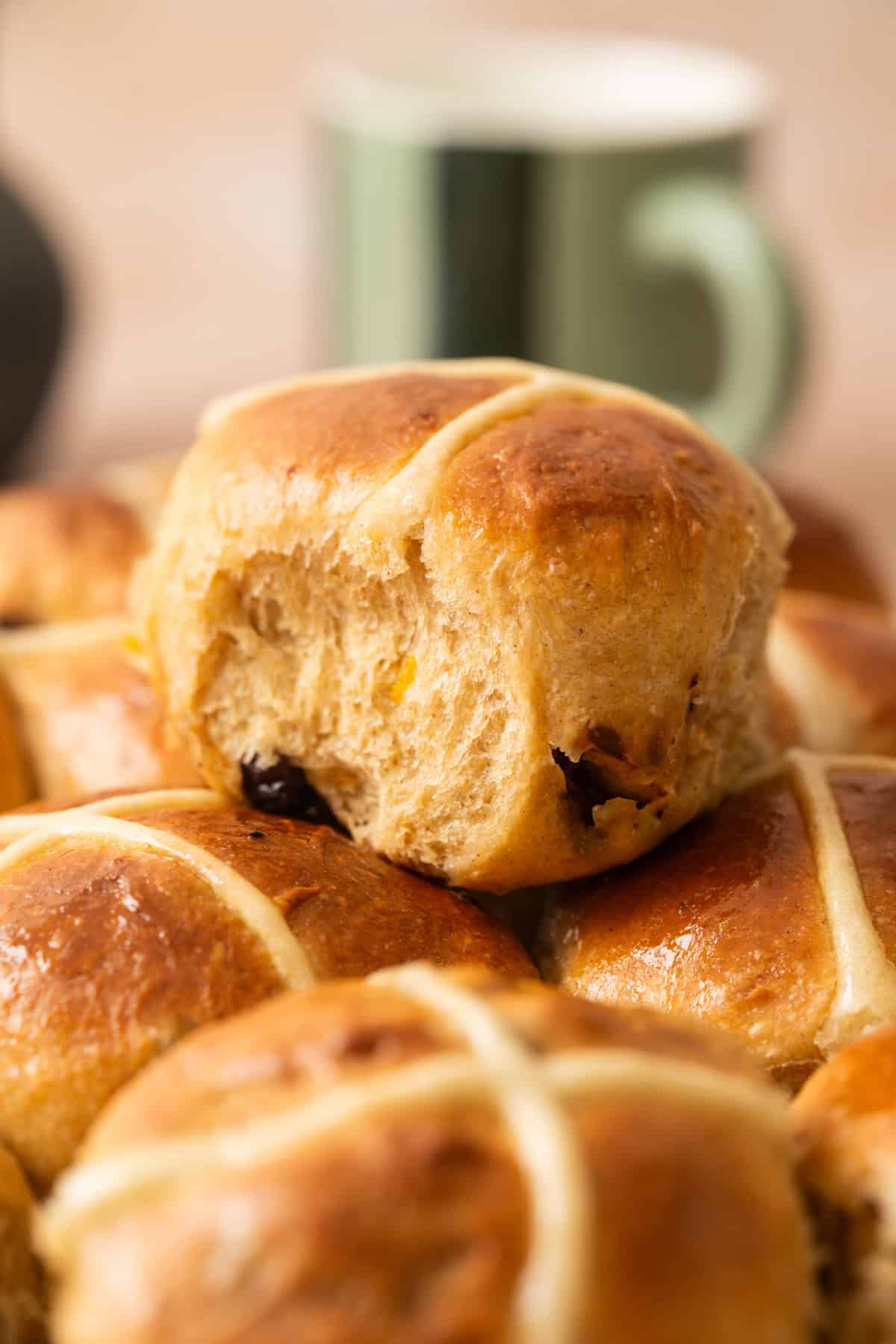

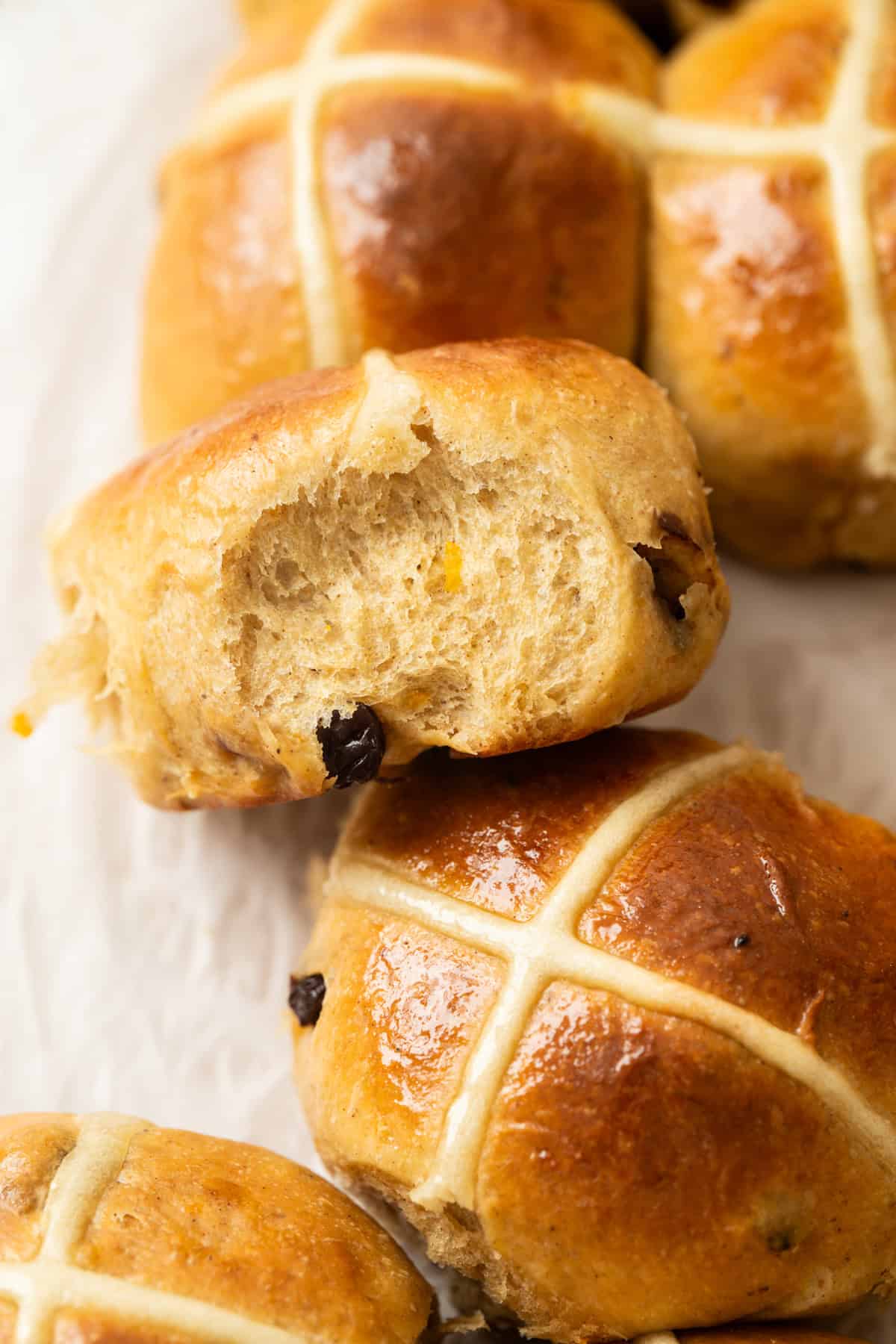
If you love hot cross buns, these brioche ones are going to be your new Easter tradition. They have the same warm spices and sticky sugar glaze as a classic bun, but the dough is richer, more tender, and deeply buttery in a way that’s hard to go back from.
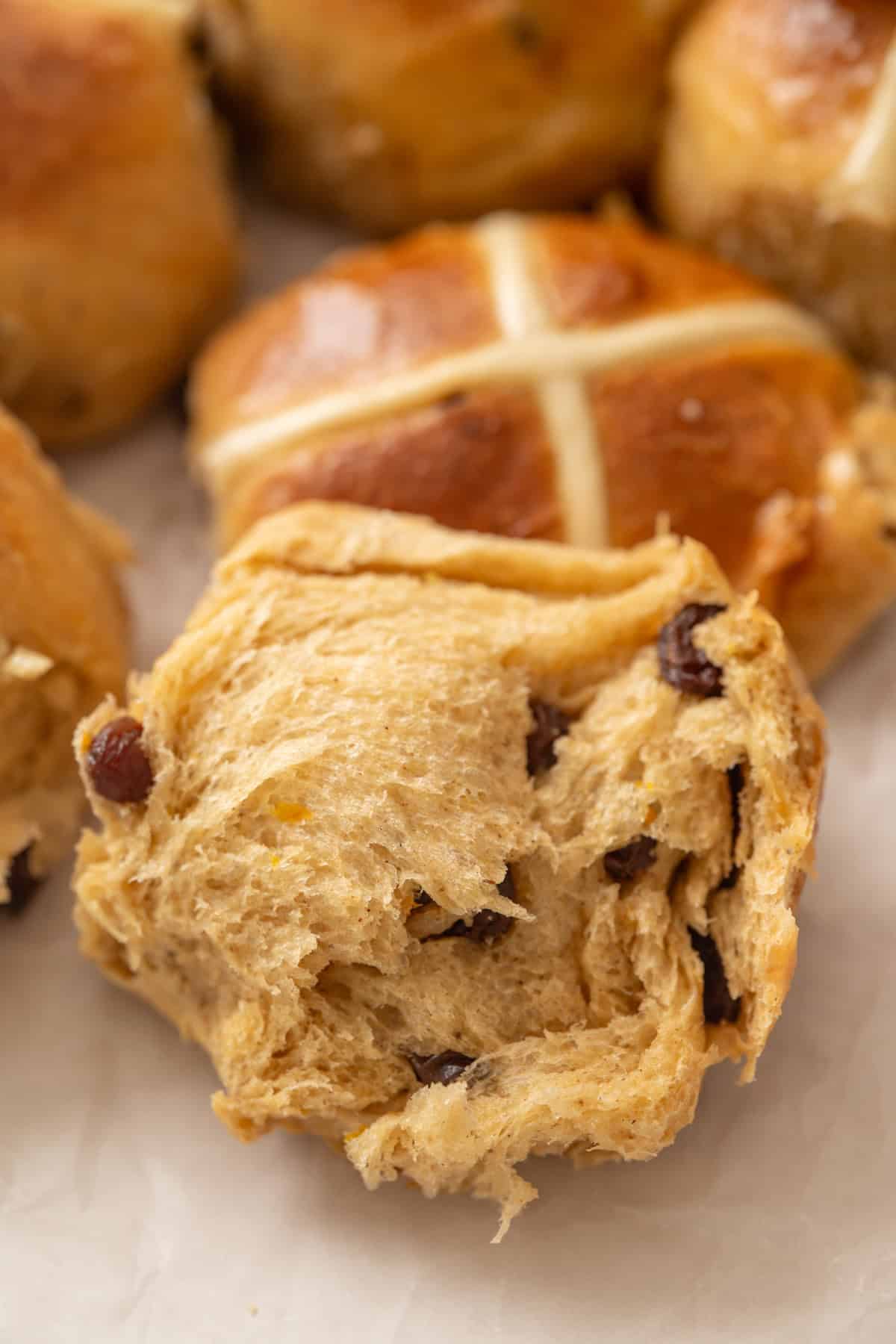
The dough here is an enriched brioche, which means a lot of eggs and a generous amount of butter worked in slowly until the dough is smooth, elastic, and almost silky. That’s what gives these brioche hot cross buns their soft, feathery crumb and the kind of richness that a standard hot cross bun just doesn’t have.
The dough is spiced with cinnamon, cloves, ginger, and nutmeg. Orange juice and zest go in with the raisins, which are soaked first so they stay plump and soft rather than drawing moisture out of the bun as it bakes. The buns are finished with a simple sugar glaze that sets into a shiny, sticky top.
You can make them all in one day, but I really recommend the overnight cold proof. The flavor is noticeably better. If you’re going to skip it, they’ll still taste great but I do recommend a short fridge rest of around 30 minutes just to slightly chill the butter in the dough before shaping so it doesn’t become greasy.
One thing to know upfront: brioche dough takes time and patience to mix. It’s sticky, it’s a little demanding, and it doesn’t always look like it’s coming together when it should. But it does. Keep going.
A look at the key ingredients
- All-purpose flour. Use a strong one with a protein level of at least 11%. All that butter in the dough puts a lot of strain on the gluten structure, so you need the extra protein to keep things together.
- Eggs. Three large eggs. They add richness, color, and help the gluten network develop. They’re also part of what gives brioche that deeply yellow, tender crumb.
- Unsalted butter. 170g, softened to room temperature. This is the ingredient that makes brioche, brioche. It goes in cube by cube after the gluten has started developing, so it emulsifies into the dough properly rather than just coating everything and making it greasy. The butter should be a cool room temp, not warm.More on this in the tips.
- Warm milk. It activates the yeast and adds a subtle richness. Aim for 95-104°F (35-40°C). Too cool and the yeast won’t wake up. Too hot and you’ll kill it.
- Instant or active dried yeast. Either works. Instant yeast is more forgiving and goes straight into the flour. Active dried needs to bloom in the warm milk for 5-10 minutes first, so you can confirm it’s alive before committing. Instant yeast can go straight into the dough without blooming, which is convenient, but that also means you won’t know it’s a dud until your dough fails to rise. If your instant yeast has been open for a while or you’re not sure how fresh it is, bloom it in the warm milk for a few minutes first just to be sure.
- Raisins soaked in orange juice. The soak is a small step that makes a real difference. Dry raisins pull moisture from the dough as it bakes, which can leave you with dry patches around the fruit. Soaked ones stay soft and juicy all the way through.
- Orange zest. Don’t skip this. The juice adds some flavor, but the zest is where most of the orange flavor actually lives.
- Spices. Cinnamon, ginger, nutmeg, and cloves. They’re balanced so the spice is warm and present without being heavy. Feel free to increase the cinnamon if you like a spicier bun.
Method
- Start by soaking the raisins in the orange juice. Give them at least 20-30 minutes to plump up while you work on the dough.
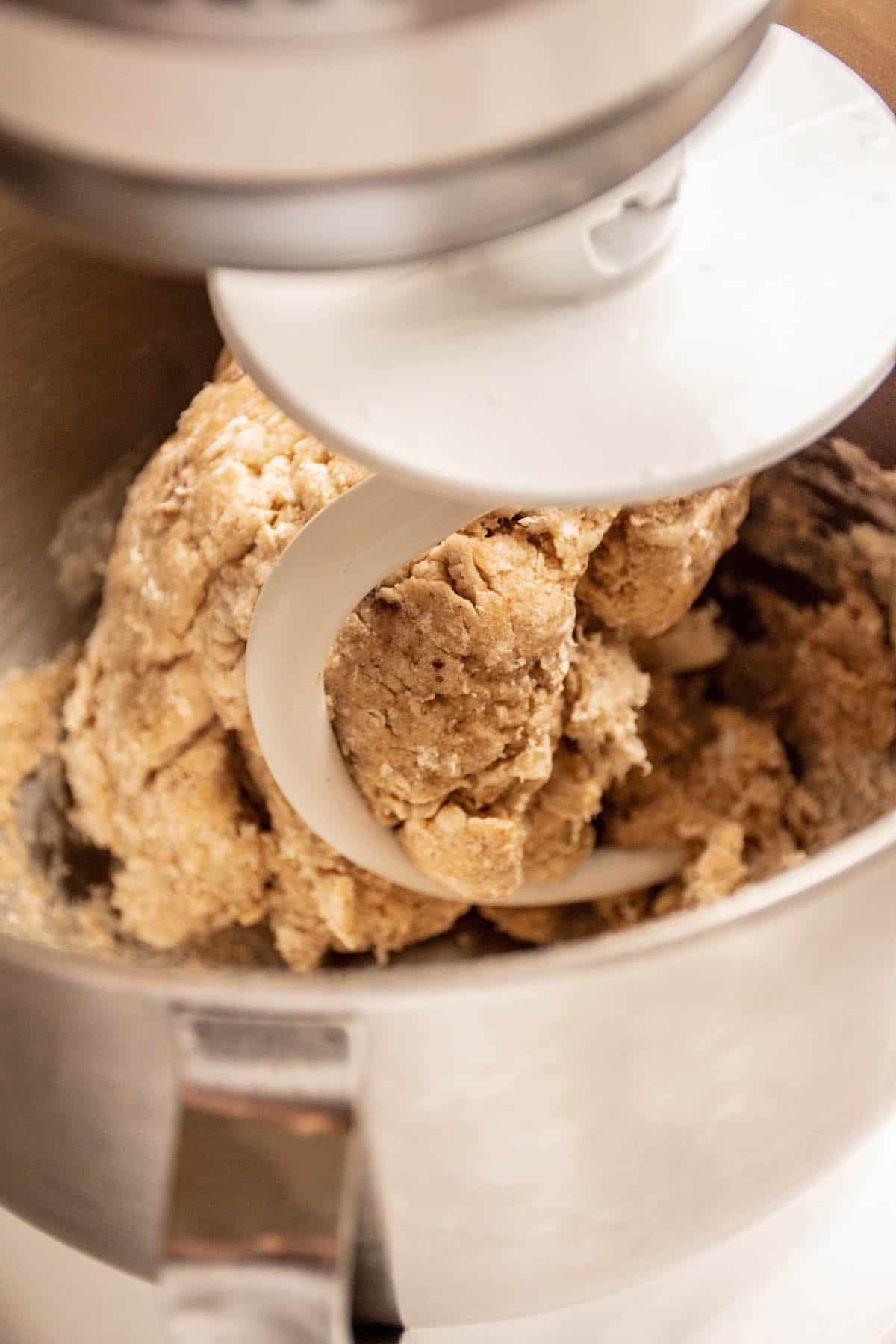
- Mix milk, yeast, flour, sugar, eggs, spice and vanilla into a thick dough
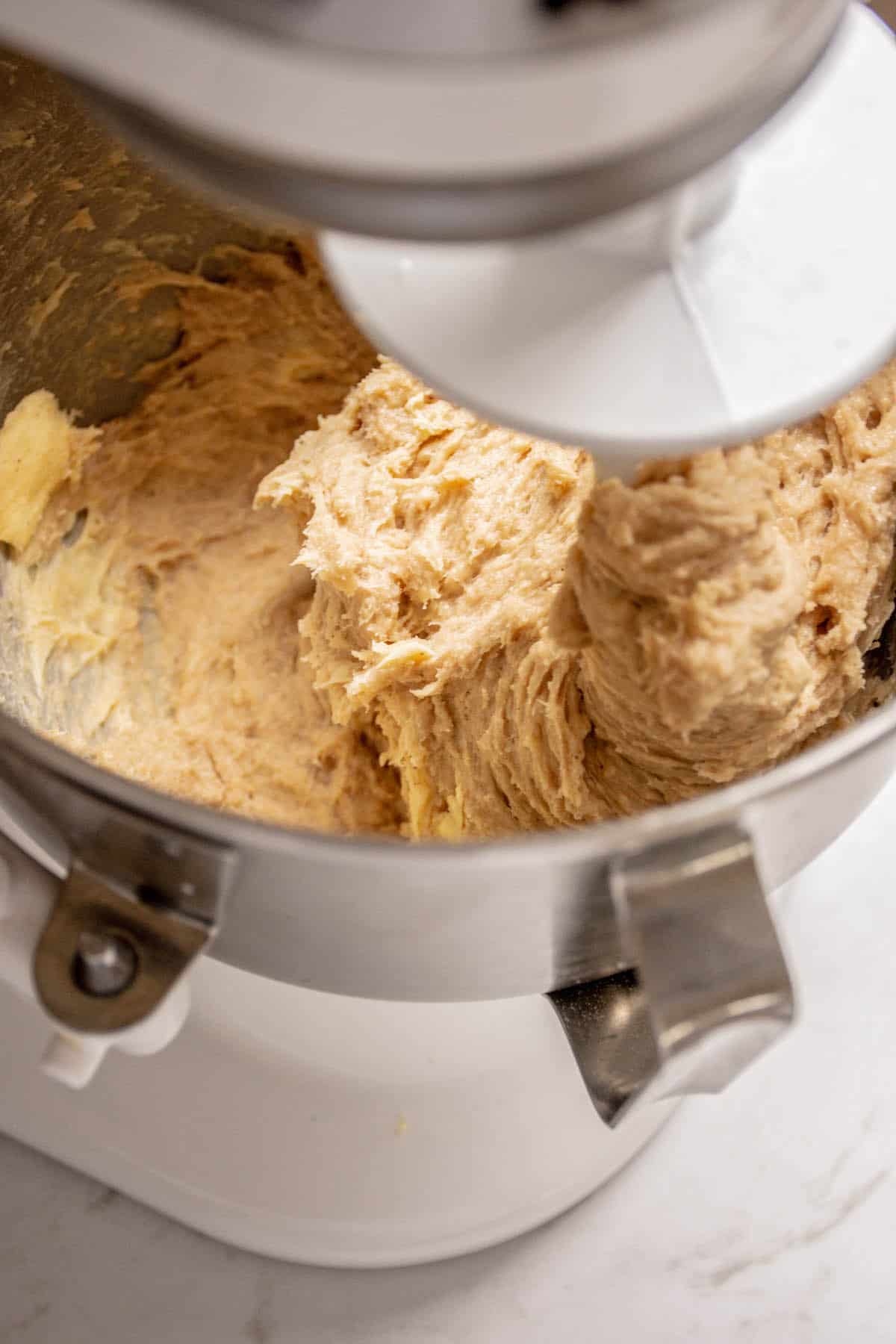
- With the mixer running, add the softened butter a few cubes at a time. Don’t rush this step. Wait for each addition to incorporate before adding more.

- Mix on low speed for at least 15 minutes. The dough will go through a rough, sticky phase before it smooths out and starts pulling away cleanly from the sides of the bowl. This is normal.

- Add the soaked raisins and all the orange juice. The dough will get sticky again. Keep mixing until everything is incorporated.
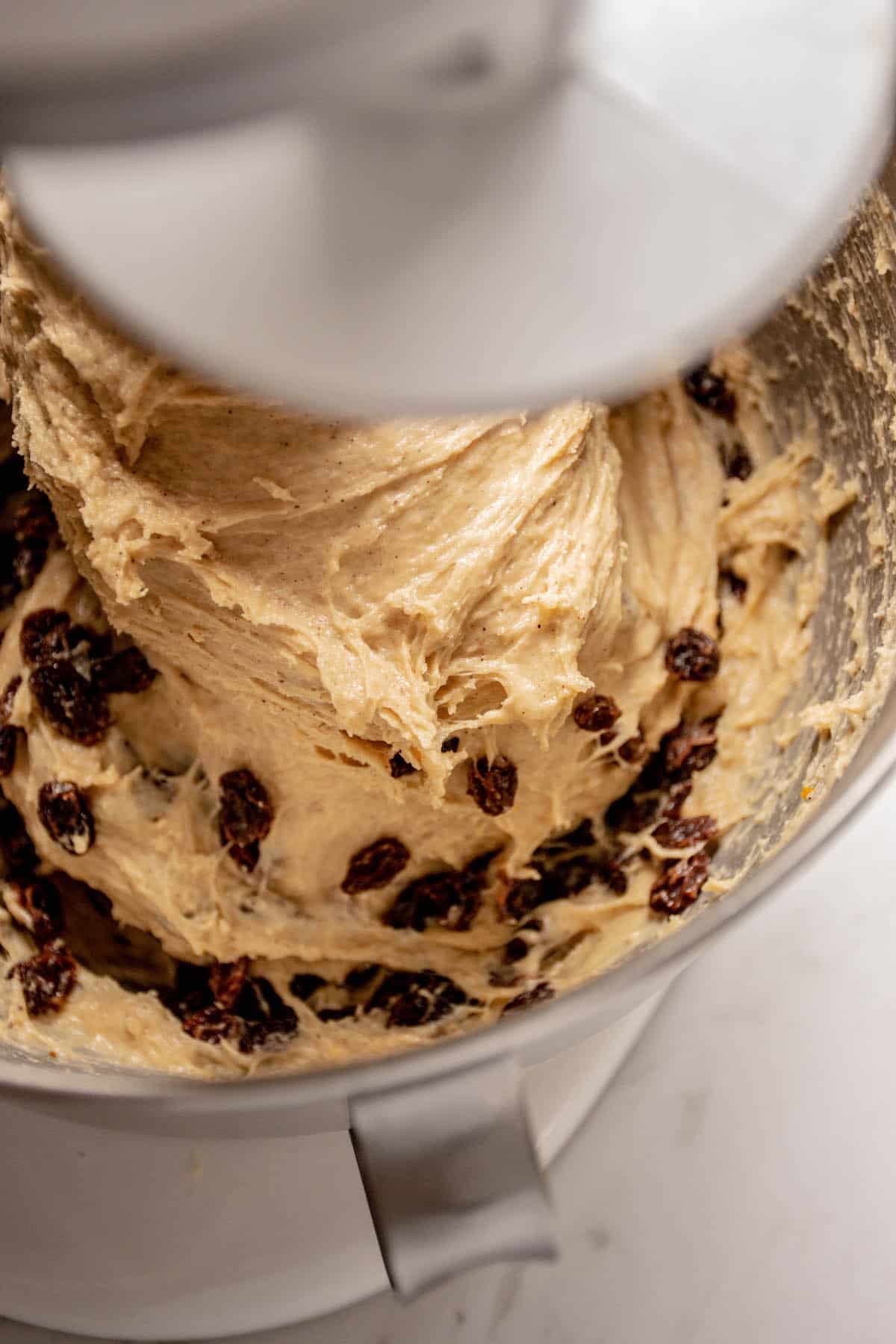
- Keep mixing until everything is incorporated.
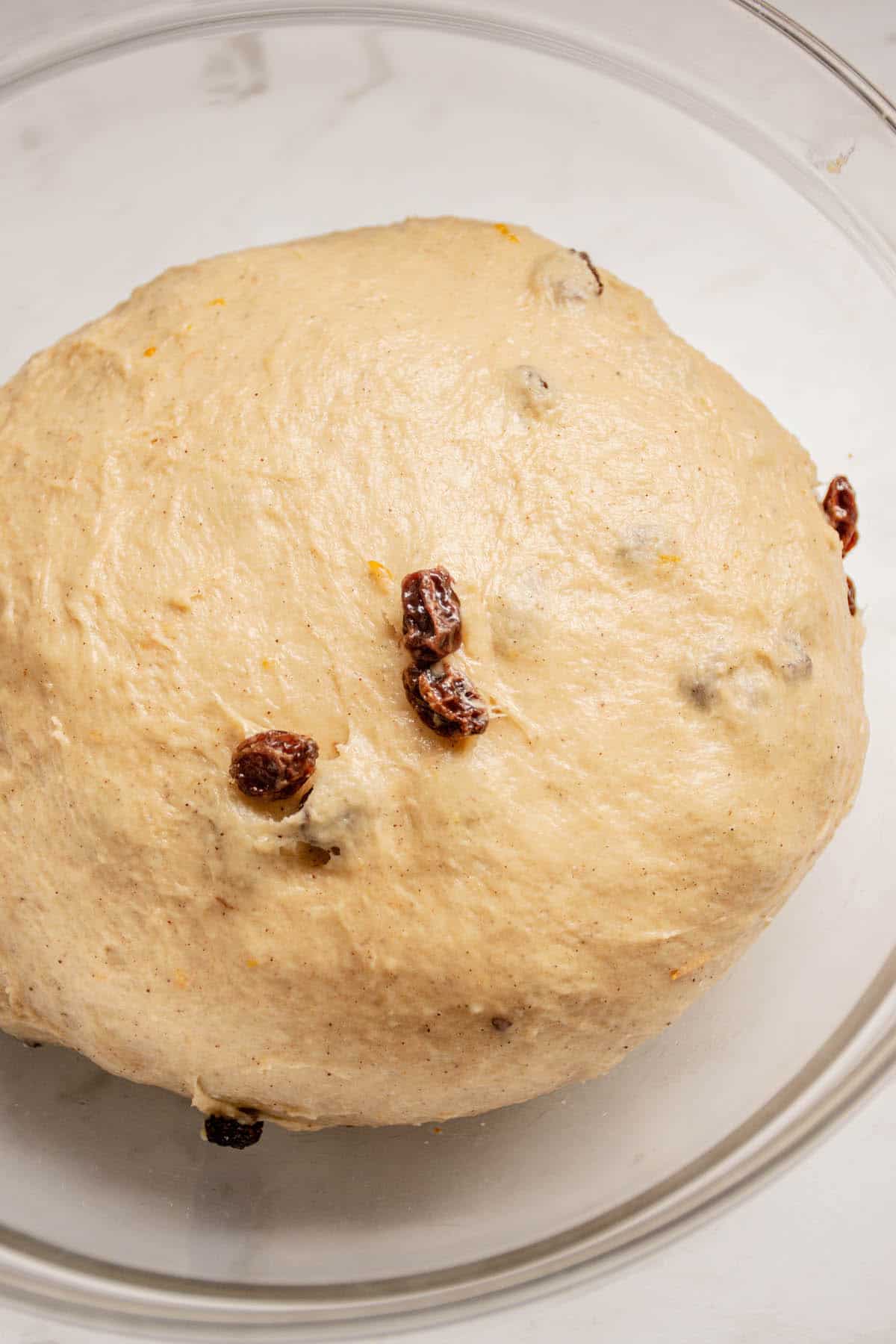
- Place the dough ball into a large greased bowl and let it rise.
- Punch down the dough and refrigerate for 8-12 hours. Or skip straight to shaping if you’re baking same-day.
Shaping

- Grease or line a 9×13-inch pan and cut the dough into 12 and shape each piece of dough into a tight ball.
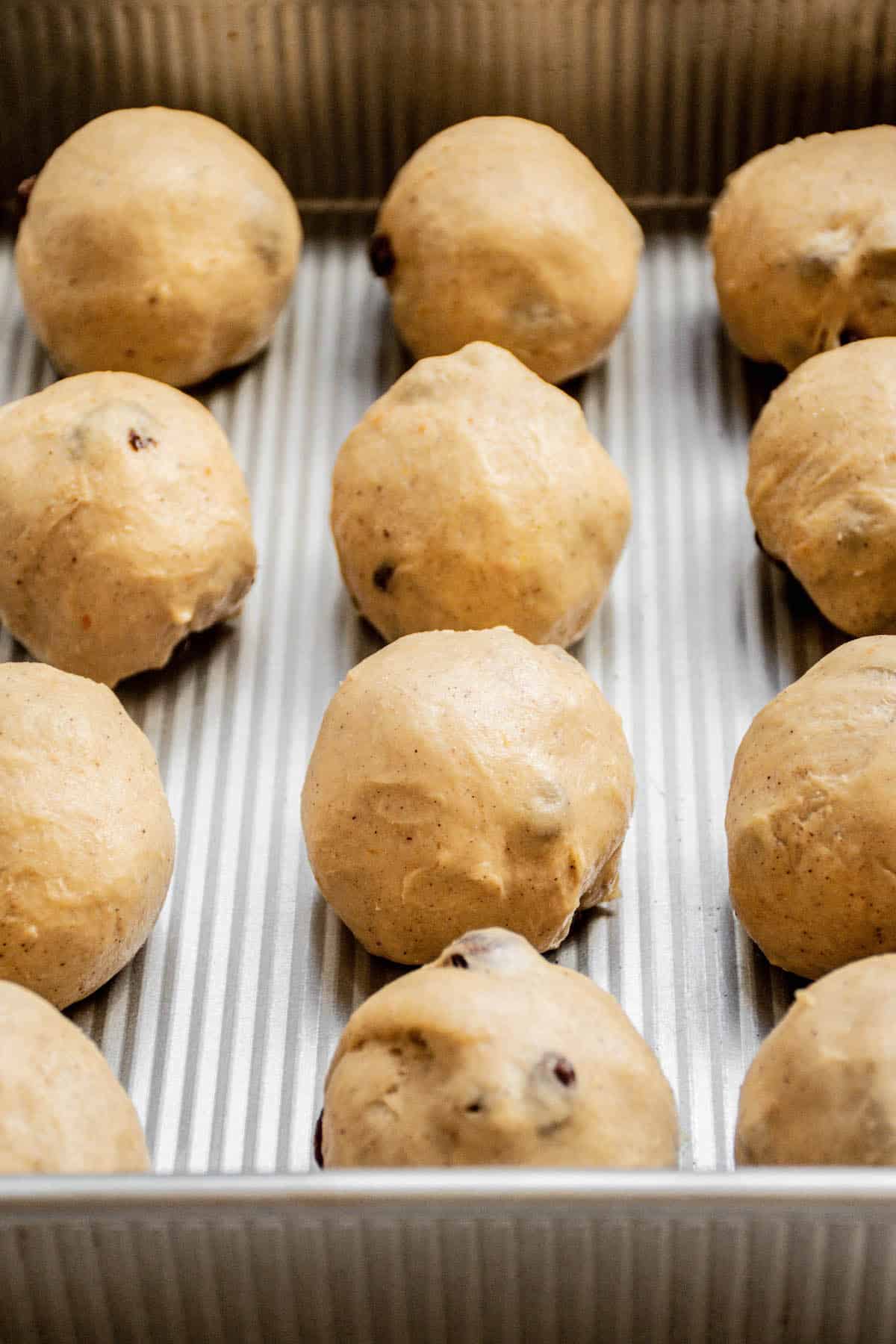
- Add them to the prepared pan. Let them rise in a warm place until doubled in size, approximately 2 hours.

- Mix together the paste for the crosses and pipe crosses onto the tops of the buns.
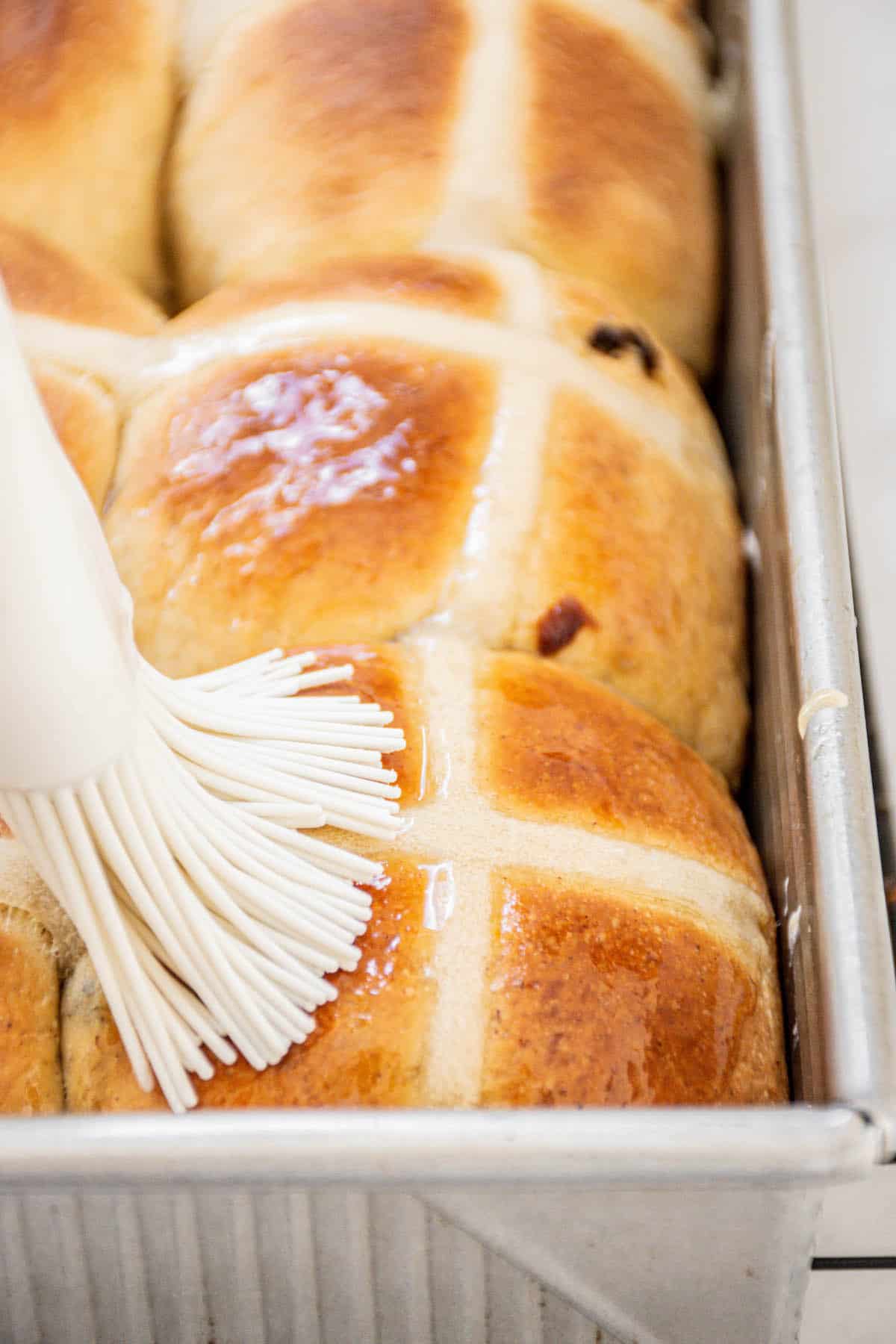
- Bake the buns for approximately 28-30 minutes until golden brown. Then brush with sugar syrup.
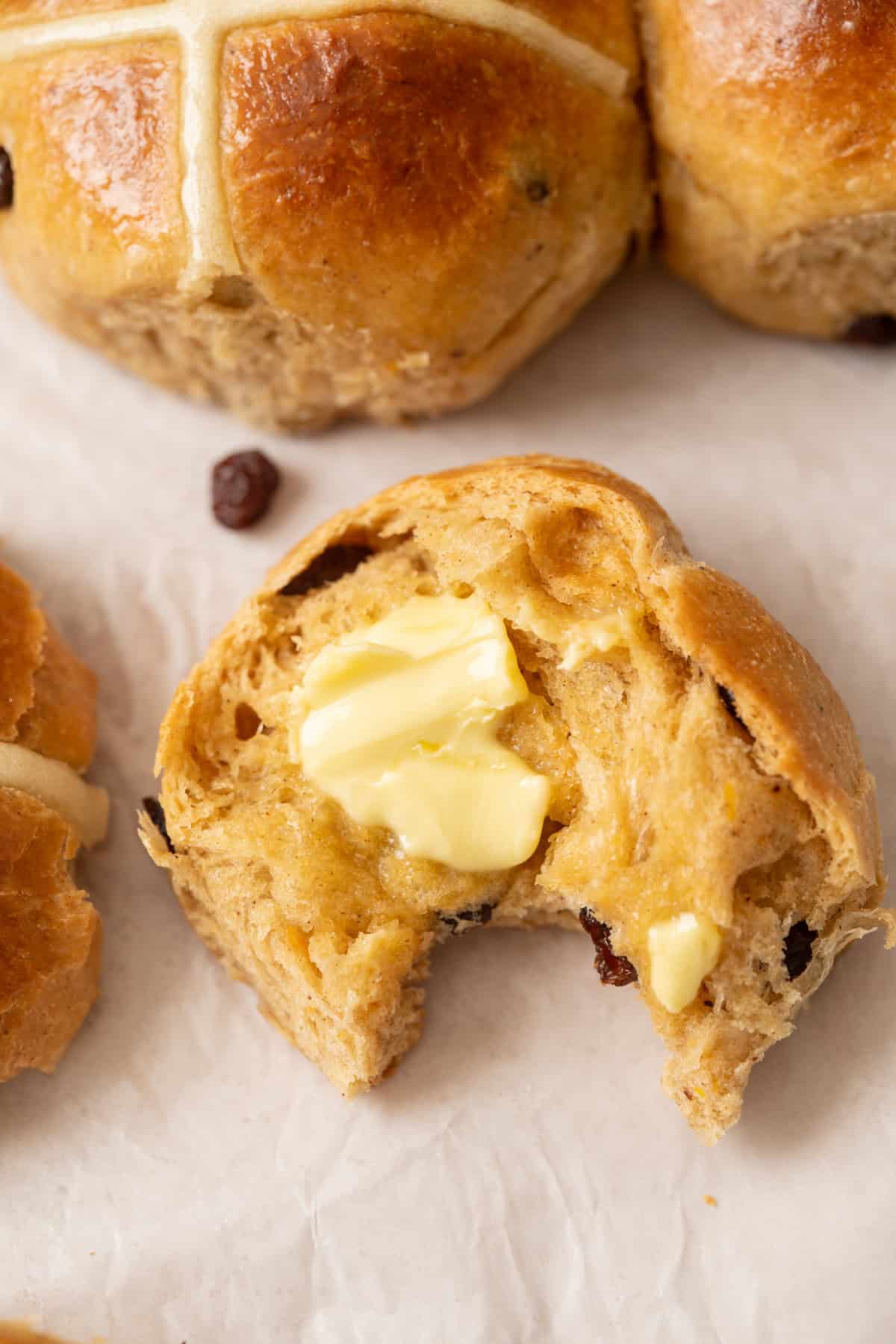
- Leave the buns to cool for about 20 minutes before eating. These are best served with a generous pat of butter.
Tips for success
Variations
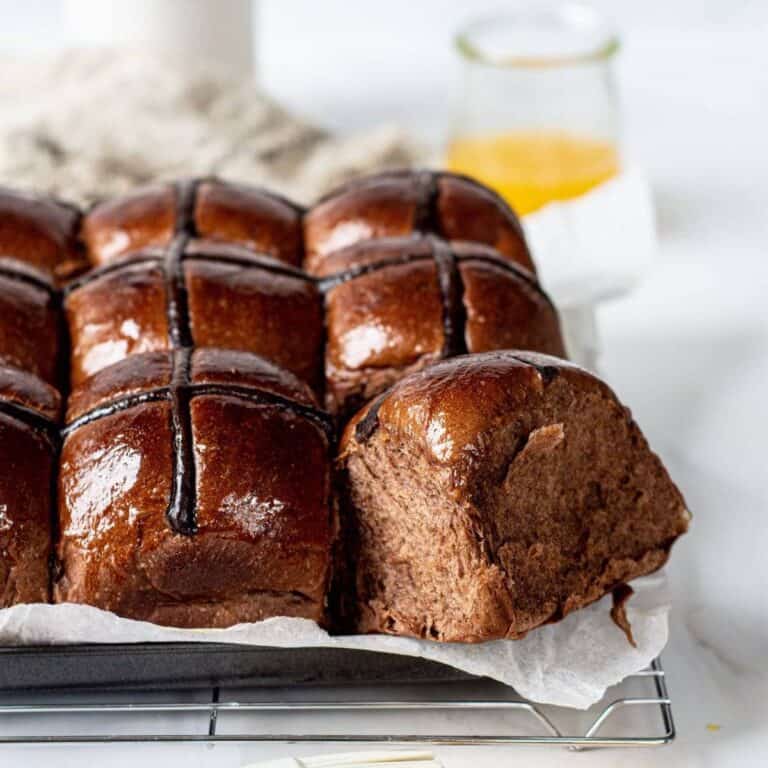
- Swap the raisins for chocolate chips for something a little different.
- Use soft brown sugar instead of granulated for a subtly deeper, more caramel-like flavor in the dough.
- Try a honey or apricot jam glaze instead of the sugar syrup for extra flavor on top.
- Want to try the sourdough version? Head to the sourdough hot cross buns recipe.
Storing
These keep at room temperature in an airtight container for up to 3 days. They firm up a little on day two and three (that’s the butter setting as they cool), but 15-20 seconds in the microwave or a few minutes in a low oven brings them back to life. They also freeze well for up to 3 months. Thaw overnight at room temperature and warm before serving.
Related recipes
- Classic Soft Hot Cross Buns
- Orange Chocolate Hot Cross Buns
- Brioche Bread
- Brioche Cinnamon Rolls
- Chocolate Chip Brioche
Brioche Hot Cross Buns
Ingredients
- 140 g raisins
- 60 g orange juice
- 1 Tbsp orange zest finely grated
- 120 g whole milk lukewarm (95-104°F / 35-40°C)
- 2 teaspoons instant yeast or active dried yeast
- 70 g granulated sugar
- 530 g all-purpose flour (at least 11% protein)
- 3 large eggs
- 1 ½ teaspoon salt
- 1 tsp vanilla extract
- 1 ½ teaspoon ground cinnamon
- ½ teaspoon ground ginger
- ¼ teaspoon ground nutmeg
- ⅛ teaspoon ground cloves
- 170 g unsalted butter room temperature but not greasy or too soft
Paste
- 32 g all-purpose flour
- 30 g water
Glaze
- 60 g water
- 50 g granulated sugar
Instructions
Dough
- Add the orange juice, raisins, and zest to a small bowl. Microwave for 30 to 40 seconds and stir. Set aside to soak while you make the dough. 140 g raisins, 60 g orange juice, 1 Tbsp orange zest
- Pour the lukewarm milk into the bowl of a stand mixer fitted with a dough hook. Stir in the yeast and one tablespoon of the sugar. If using active dried yeast, leave it to sit for 5-10 minutes until foamy. If it doesn't foam, the yeast is dead and you'll need a fresh packet. If using instant yeast, you can skip the wait, but if you're unsure how fresh your yeast is, let it sit for a few minutes anyway just to confirm it's active. 120 g whole milk, 2 teaspoons instant yeast, 70 g granulated sugar
- Add the flour, remaining sugar, spices, vanilla, salt, and eggs to the milk mixture. Fit the stand mixer with a dough hook and mix on low speed until a thick, shaggy dough forms. 530 g all-purpose flour, 3 large eggs, 1 ½ teaspoon salt, 1 tsp vanilla extract, 1 ½ teaspoon ground cinnamon, ½ teaspoon ground ginger, ¼ teaspoon ground nutmeg, ⅛ teaspoon ground cloves
- Add the cubed butter a few pieces at a time with the mixer running on low speed. Don't add the next piece until the previous one has disappeared into the dough. Once all the butter is in, continue mixing on low for a total of at least 15-20 minutes from when you started adding the butter. The dough will go through a sticky, rough-looking phase before it smooths out and starts pulling cleanly away from the sides of the bowl. To test if it's ready, let the dough rest a few minutes then pull off a small piece and stretch it gently between your fingers. If you can stretch it thin enough to almost see light through without it tearing instantly, the gluten is properly developed. This is called the windowpane test. 170 g unsalted butter
- Add the soaked raisins and all the orange juice. The dough will get sticky again but will mix in easily because the gluten is already developed. Mix on low speed for a couple of minutes until the juice is fully incorporated and the fruit is evenly distributed, then stop.
- Pull the dough onto a lightly floured surface and form it into a ball, tucking the dough under itself a few times to capture any stray raisins. Place the dough ball into a large greased bowl, cover with a lid or plastic wrap, and let it rise in a warm spot for 1½-2 hours until doubled in size.
- Punch down the dough and refrigerate for 8 to 12 hours for the best flavor. Alternatively, place the dough in the fridge for just 20-30 minutes to chill the butter slightly and then go straight to shaping.
Shaping
- Grease or line a 9×13-inch pan. Pull the dough onto a lightly floured surface. If the dough is refrigerated overnight, it will feel stiff and cold and a bit clammy. This is normal.
- Weigh the dough and divide it into 12 equal pieces, around 100g each. Shape each piece into a tight, smooth ball and place them in the prepared pan.
- Let the buns rise in a warm place until doubled in size, approximately 2 hours. They should look noticeably puffed and when gently pressed the dough springs back slowly.
- Preheat the oven to 350°F / 180°C standard oven. Mix the flour and water for the crosses into a thick paste and transfer to a piping bag with a small round tip, or a zip-lock bag with the corner snipped. Pipe crosses across the tops of the buns. 32 g all-purpose flour, 30 g water
- Bake for 28-30 minutes until deep golden brown. If you have an instant-read thermometer, the buns are done when the internal temperature reaches 190-195°F (88-90°C).
- While the buns bake, heat together sugar and water until the sugar has dissolved. Brush this sugar glaze generously over the hot buns as soon as they come out of the oven. You won't need all the glaze. Leave to cool for about 20 minutes before eating. 60 g water, 50 g granulated sugar
Notes
- Both US customary and metric measurements are provided. Use the toggle to switch between the two.
- The butter must be softened to room temperature and pliable, not warm or greasy. Take it out of the fridge 30 to 45 minutes before you start.
- Soft brown sugar can be substituted for the granulated sugar for a slightly deeper flavor.
- If the dough looks or feels greasy while mixing, refrigerate the bowl for 15 to 20 minutes and resume mixing. It should come back together. Don’t windowpane test a greasy dough, instead chill it and get it back together first, then test.
- The overnight refrigeration step is optional but recommended for best flavor and easier shaping.


This is an amazing recipe yielding soft, fragrant and fluffy HCB. The long proofing is well worth it. Mixed in some chopped apricots too and it lifted the texture to a new level.
Just a question before I begin. I notice the amount of dough is increased from the non-brioche recipe but the amount of fruit remains the same. Is it because of the richness of the dough? Or perhaps another reason?
That’s just a personal preference of mine! If you prefer more fruit, feel free to increase it 🙂
The recipe worked really well! I used chopped dates as I didn’t have raisins. The dough is very fluffy and smooth, so nice right out of the oven.
It’s an excellent, detailed recipe and worked perfectly. Thank you.
These are my go to hot cross buns every year since discovering this recipe 4 years ago. So good.
Yay that’s so lovely to hear! Thank you!