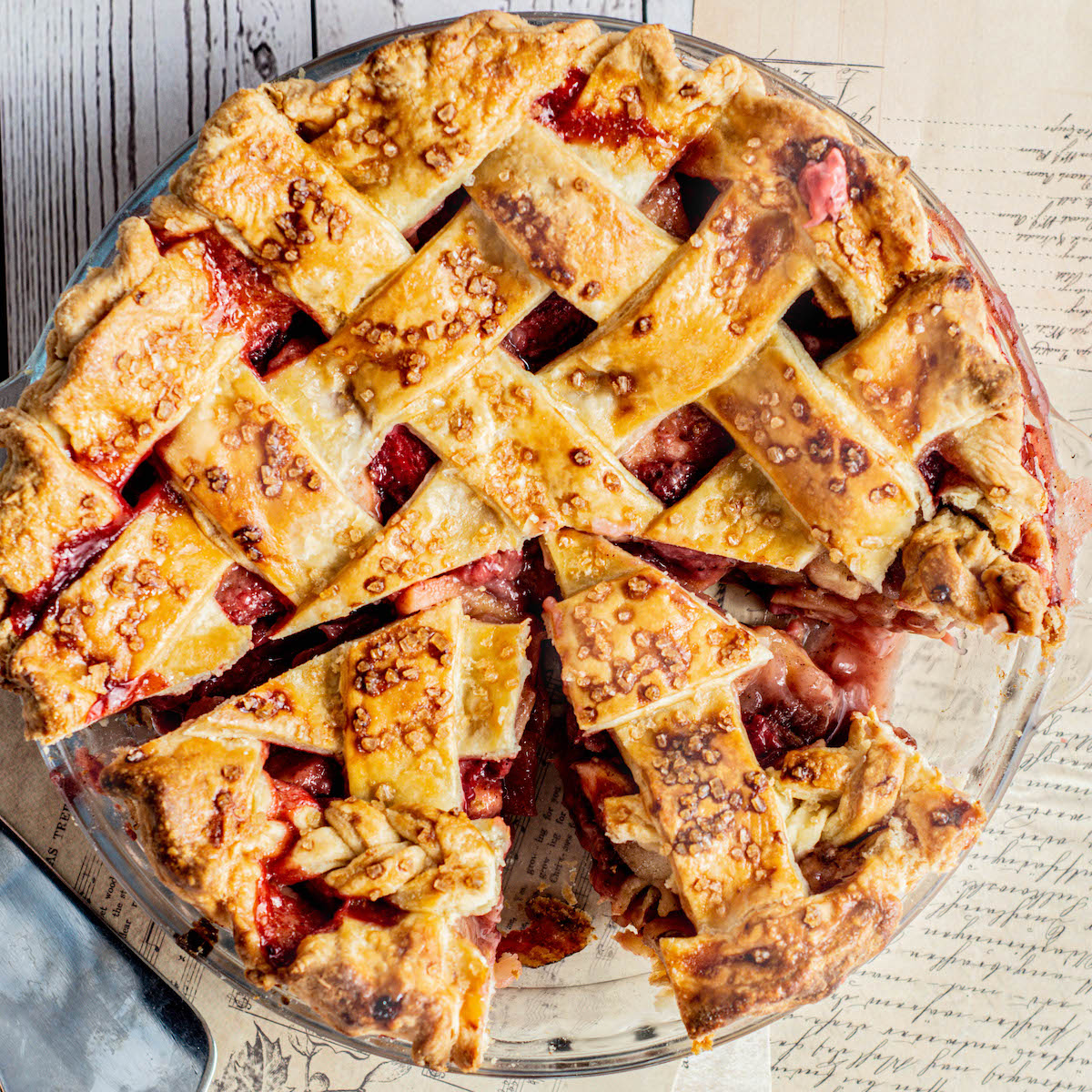

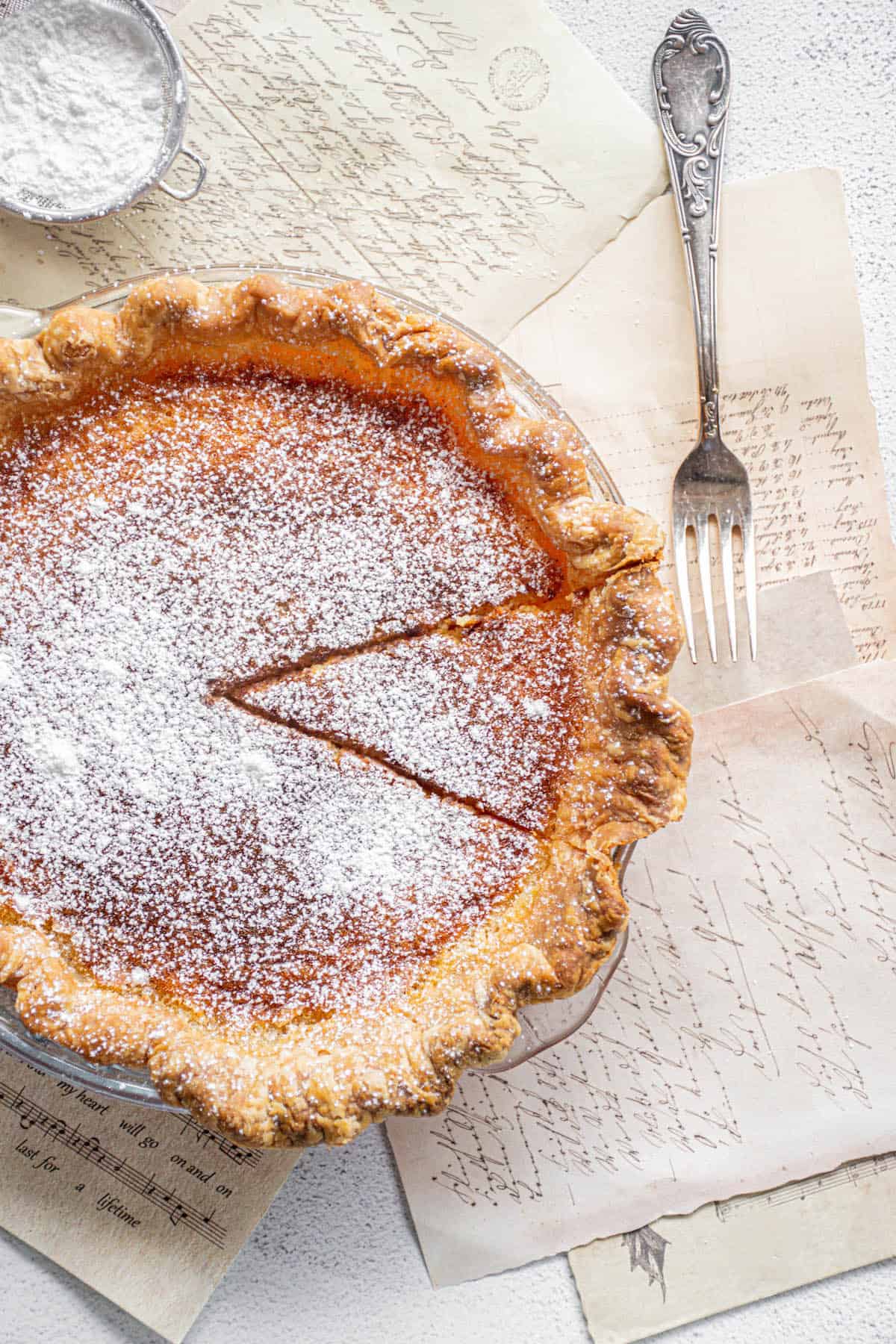

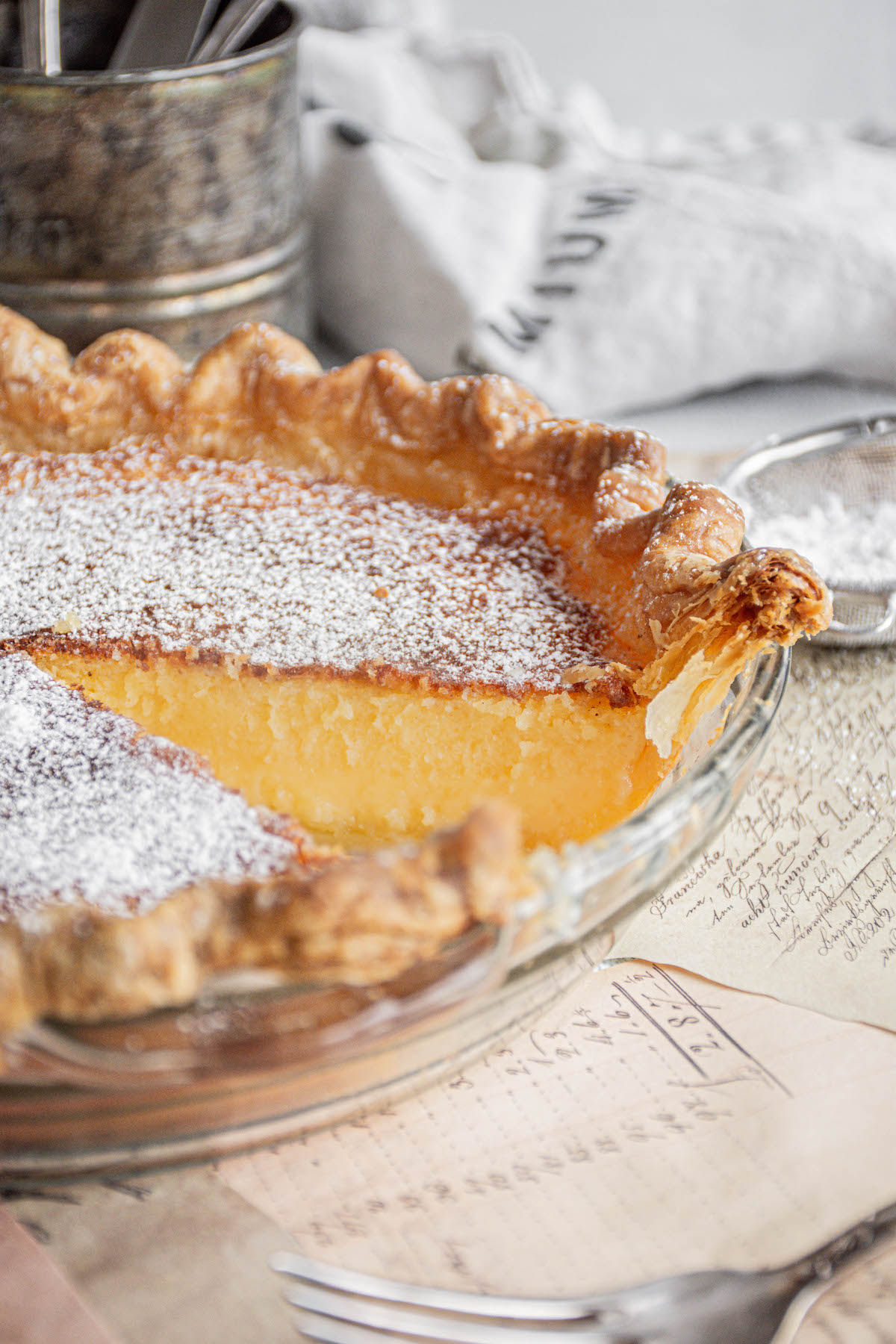
This buttermilk chess pie has a sweet, tangy custard filling with a textured top layer from the cornmeal and a flaky butter crust underneath.
About buttermilk chess pie
This is a sweet custard pie built from pantry staples (sugar, eggs, butter, a little flour and cornmeal) and the addition of buttermilk to add a bit of tang.
This is a sweeter pie than most of what I bake but chess pie is meant to be sweet, it’s the whole point of the style, and the buttermilk and lemon juice are there to balance it.
The cornmeal in the filling rises to the surface as the pie bakes and creates that signature textured top while the filling underneath stays creamy and custardy. I use my flaky pie crust for this one, which is made with buttermilk or yogurt to keep it really tender, but any solid all-butter pie crust will work beautifully.
For another custard-style pie, try this creamy old-fashioned lemon pie or lemon chess pie.
Key ingredients and why
Full quantities are in the recipe card. Here’s why each ingredient matters.
- A 9-inch unbaked pie crust. Homemade is best for a pie like this where the crust really matters. I use my flaky pie crust recipe, which has a little buttermilk or yogurt in it for tenderness.
- Granulated sugar. Chess pie is a sweet pie but the sugar also helps create that crackly top crust.
- Cornmeal. A small amount of fine cornmeal is what makes a chess pie a chess pie. It thickens the filling slightly and floats to the top during baking. Use fine cornmeal, not coarse polenta, and definitely not cornstarch (they are not interchangeable).
- All-purpose flour. Works alongside the cornmeal to thicken the custard.
- Buttermilk. Buttermilk brings tang that cuts through the sweetness and adds a slight acidity that softens the custard’s texture. Use full-fat, real cultured buttermilk if you can find it.
- Eggs. Four large eggs form the base of the custard. They give the pie its structure and that silky, set-but-still-soft middle.
- Melted unsalted butter. Adds richness and helps create the slightly crisp top. Make sure it’s cooled slightly before you mix it in so it doesn’t start to cook the eggs.
- Fresh lemon juice. Just a tablespoon, but it works with the buttermilk to brighten and balance the sweetness.
- Vanilla extract and nutmeg. Both round out the flavor. The nutmeg is subtle, more of a warm background note than a strong spice presence.
Par-bake the pie crust
- Because the chess pie filling bakes for a while at a moderate temperature, par-baking the crust is non-negotiable here. Without it, the bottom turns out pale and soggy. If you’re using my flaky pie crust recipe, follow the rolling and blind-baking instructions there.
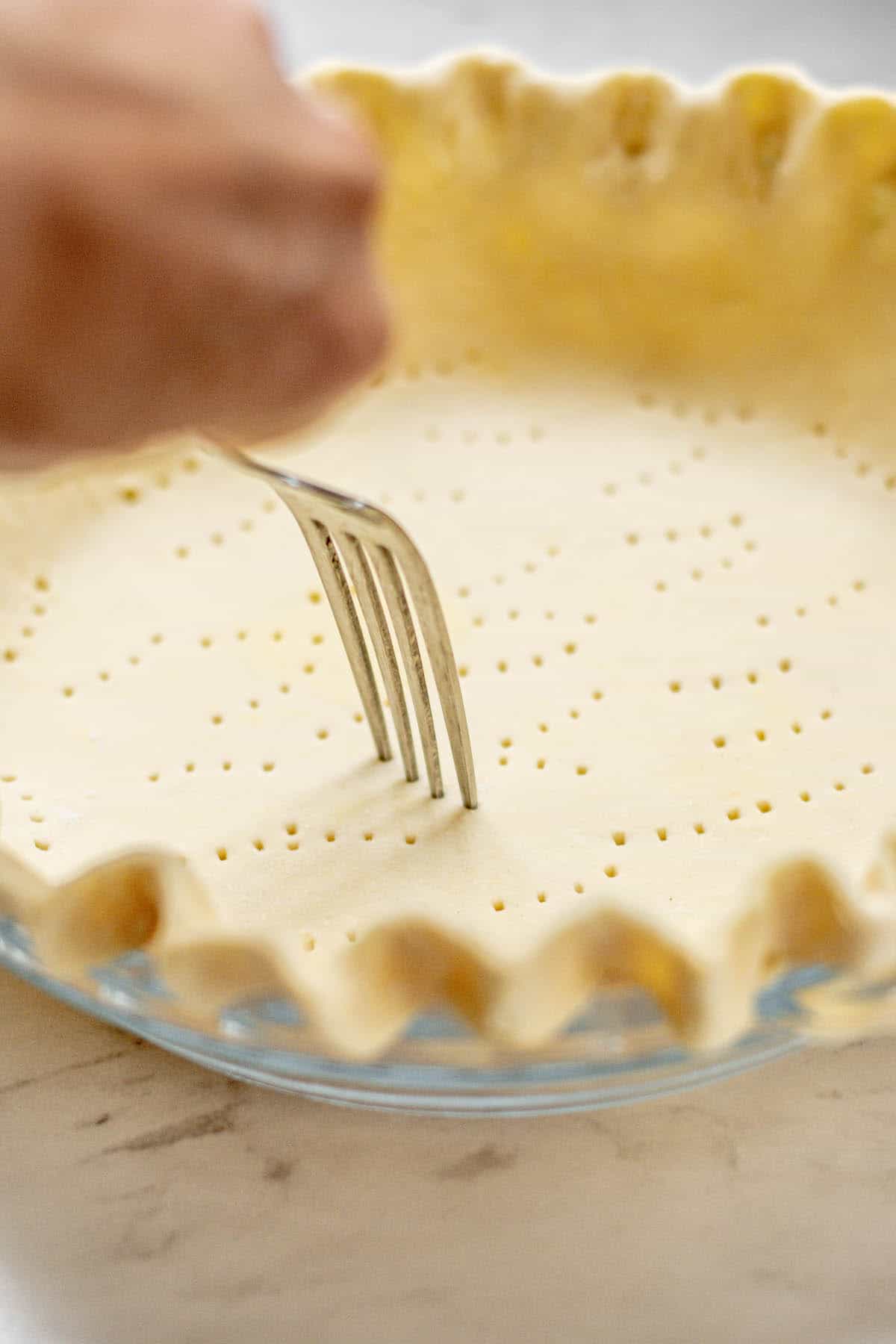
- The short version: roll the dough to an 11-inch circle, fit it into a 9-inch pie plate, crimp the edges, chill, then blind bake at 400°F/200°C with parchment and pie weights for 15 minutes.
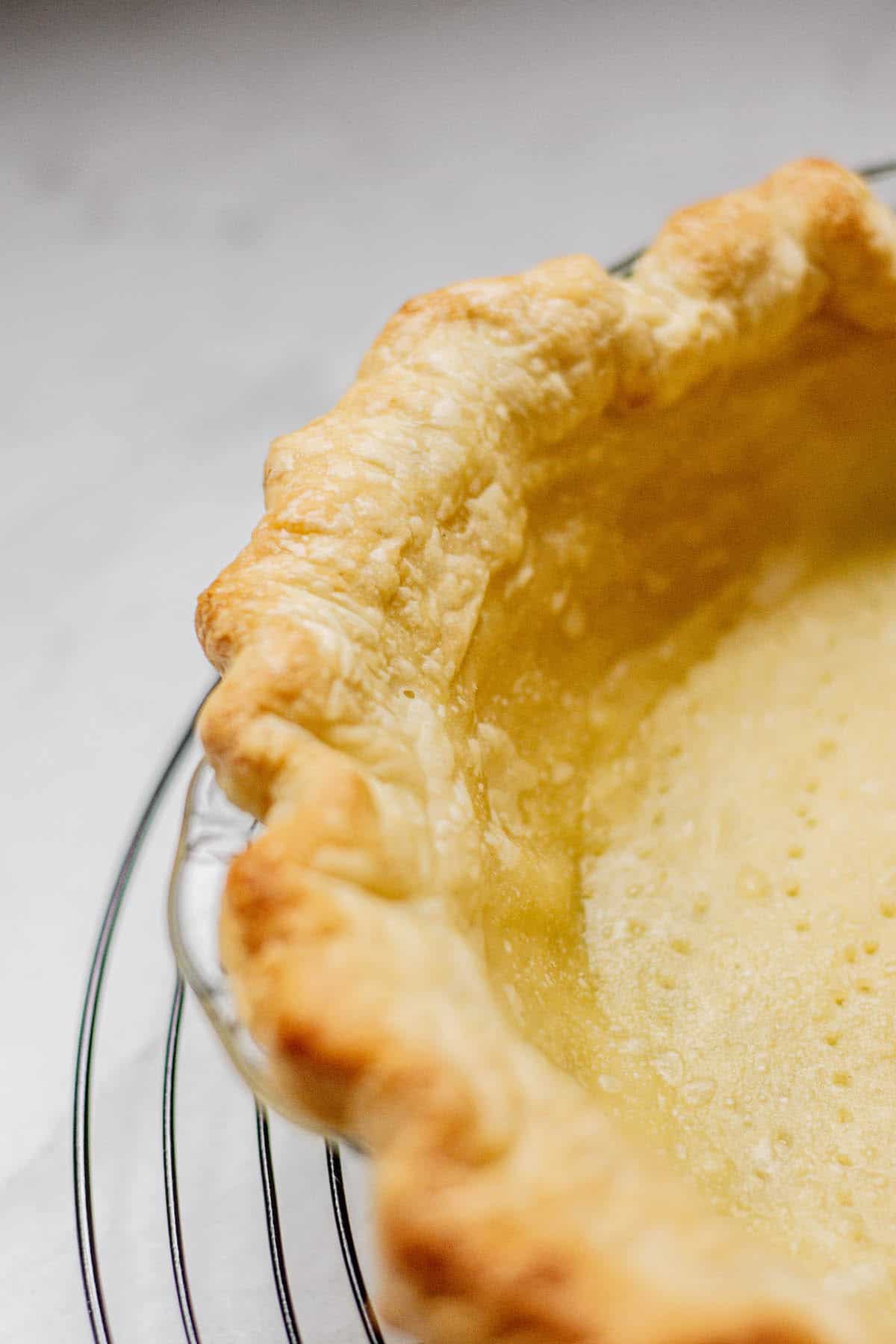
- Remove the weights and bake another 2 to 3 minutes until the base looks dry. Cool to room temperature.
Chess pie filling
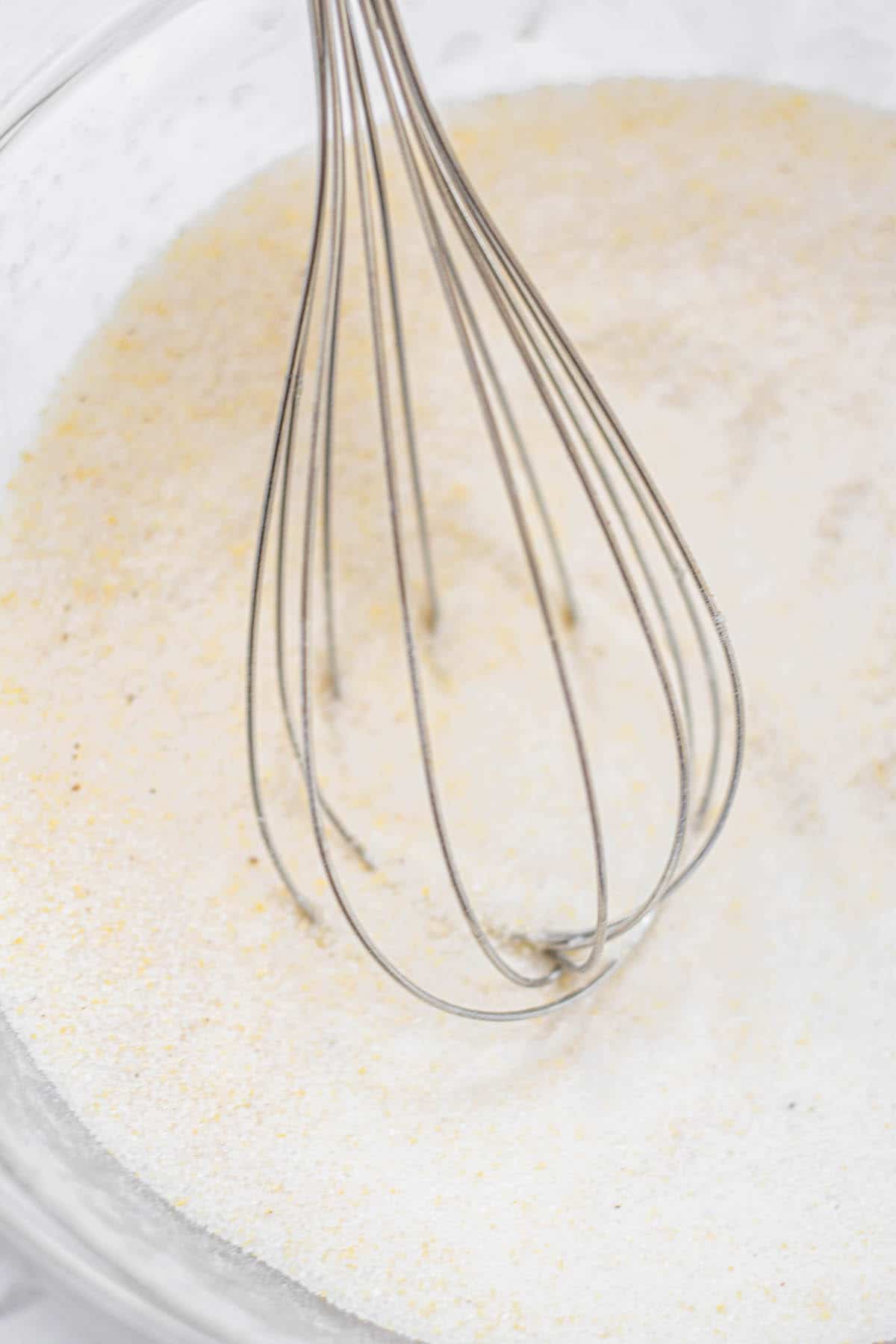
- In a large bowl, whisk together the sugar, cornmeal, flour, salt, and nutmeg until there are no lumps.
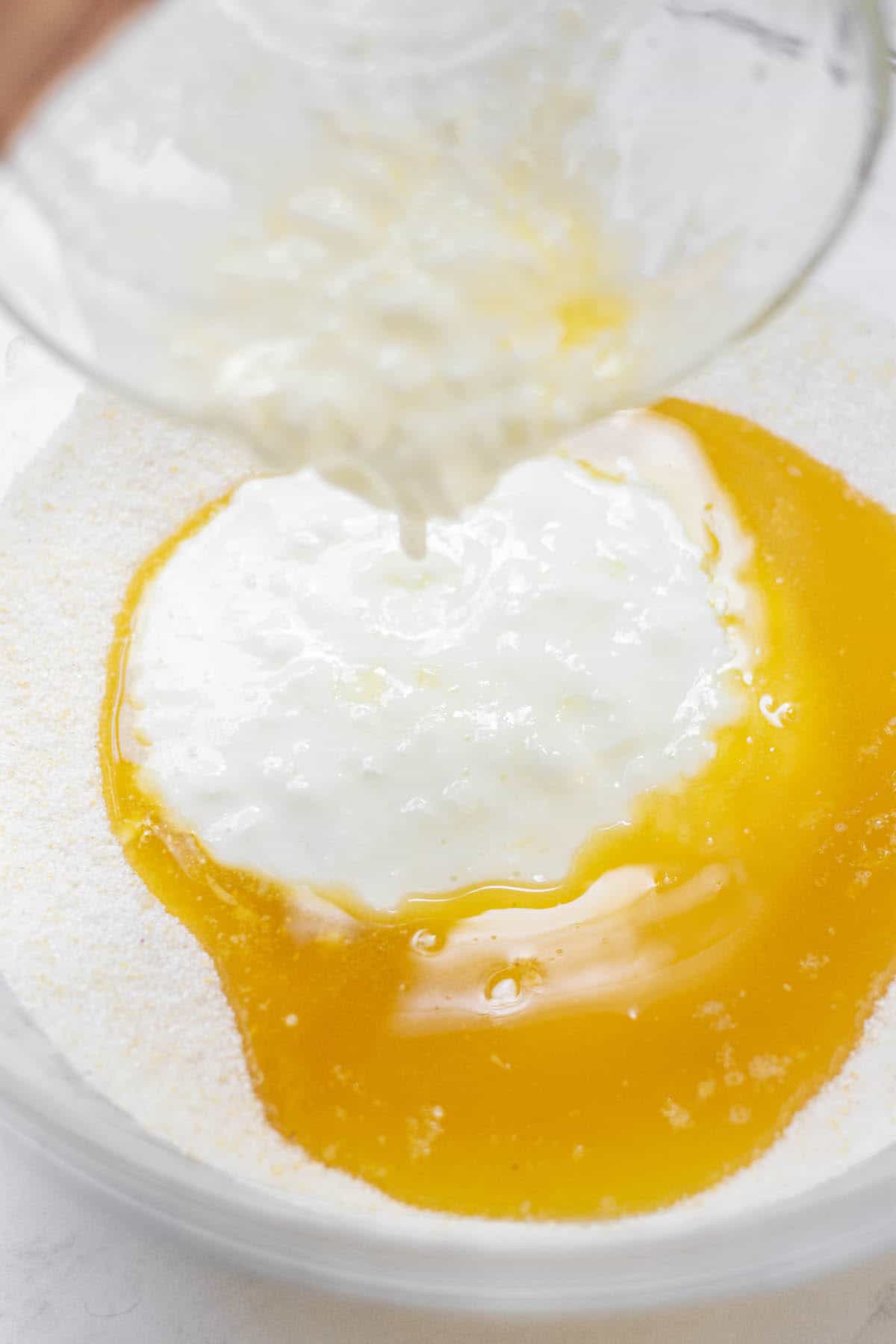
- Pour in the melted (and slightly cooled) butter, buttermilk, lemon juice, and vanilla. Stir until smooth.
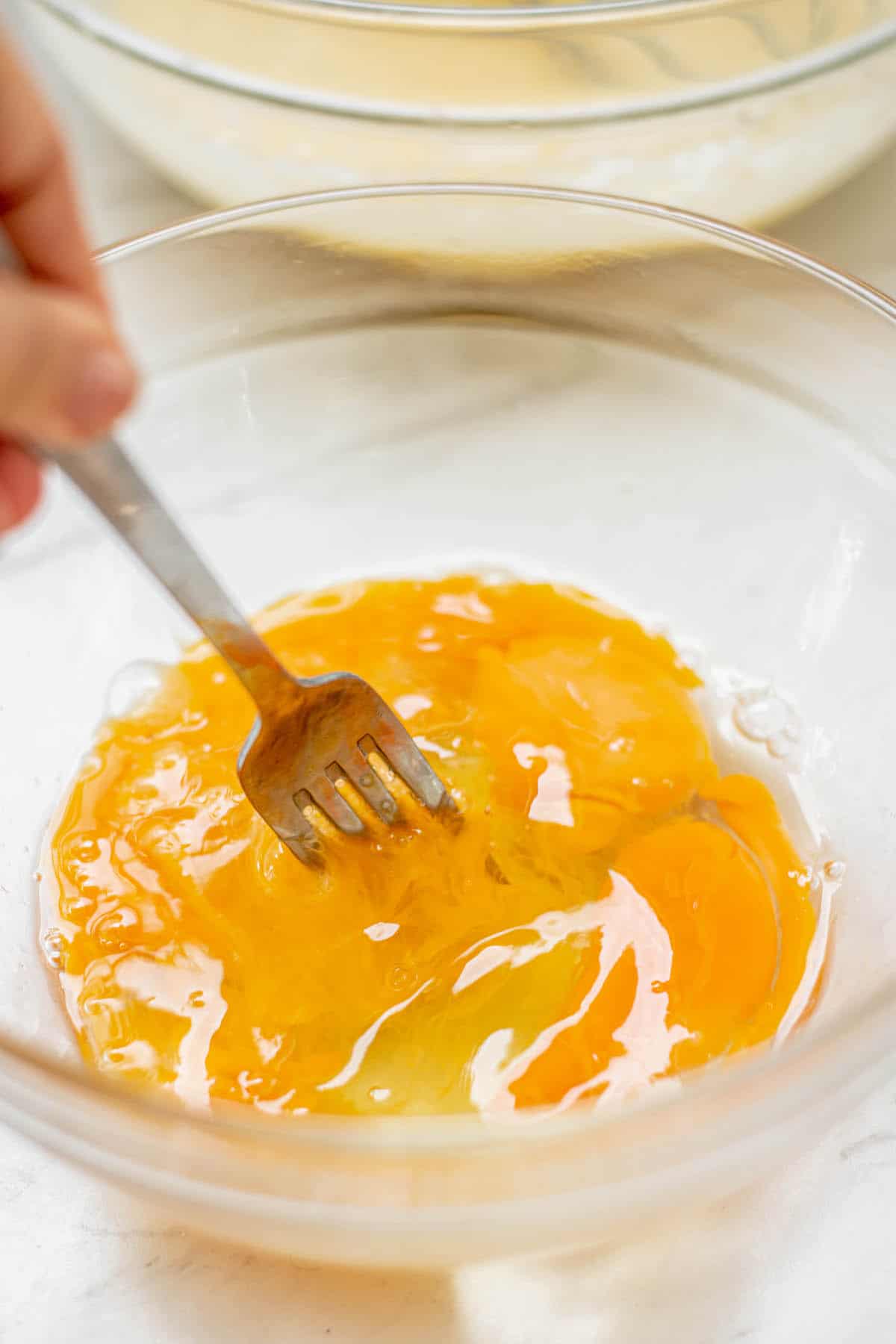
- In a separate bowl, lightly beat the eggs with a fork, then whisk them into the rest of the filling. You want everything fully combined but not foamy.
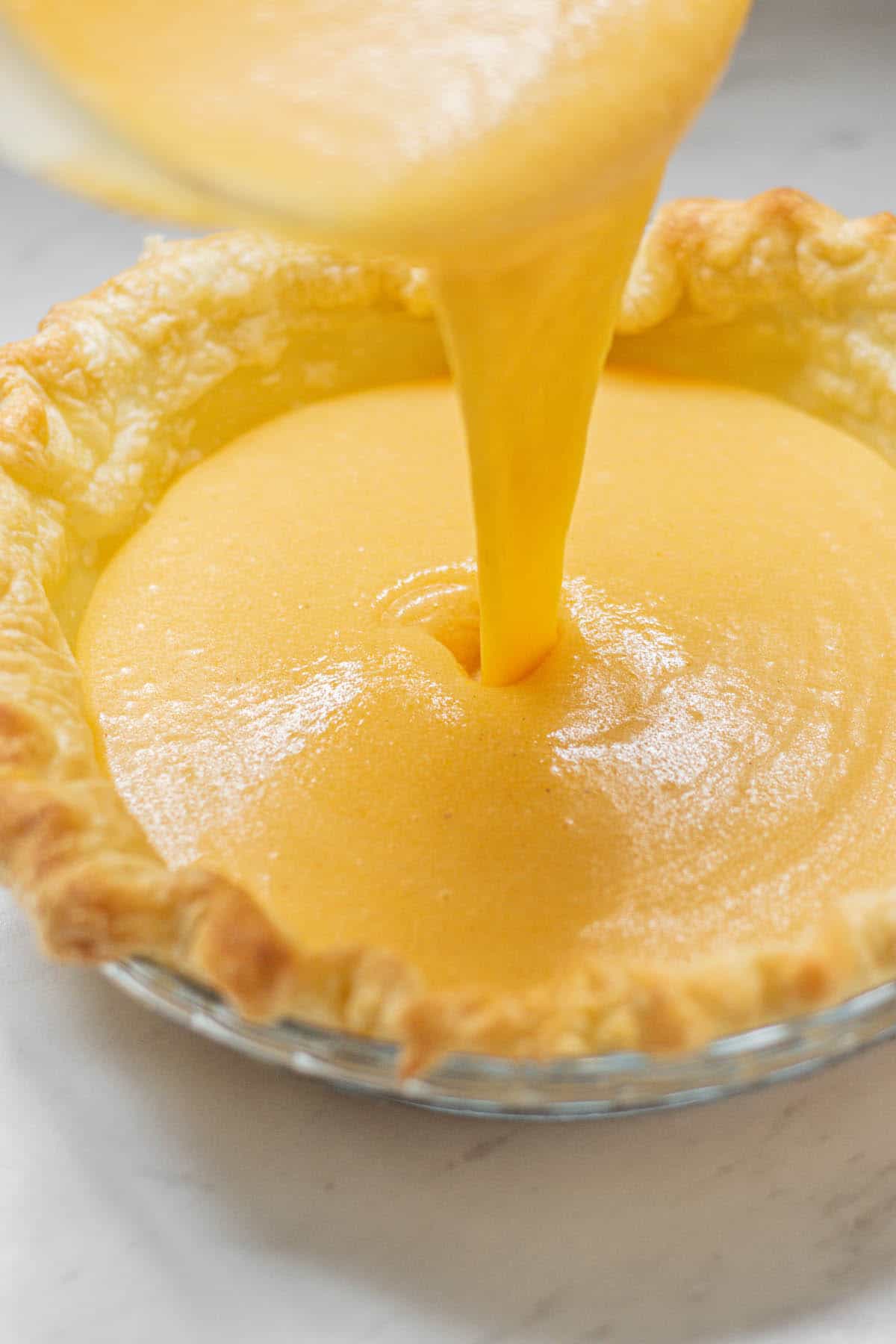
- Pour the filling into the cooled, par-baked crust.
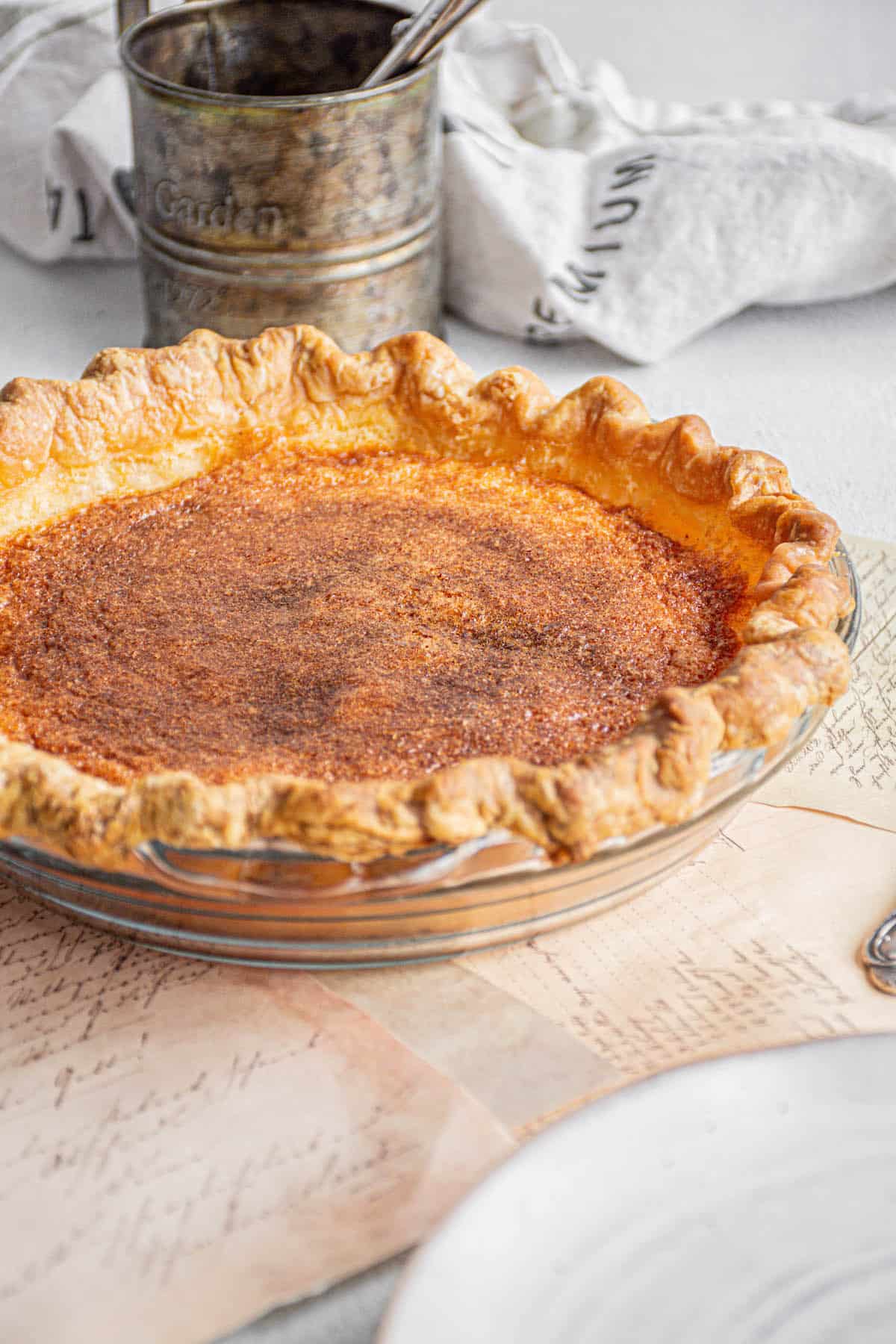
- The pie is done when the top is golden brown and the center still has a slight wobble when you nudge the pan. It will continue to set as it cools. Turn the oven off, crack the door, and leave the pie inside for 20 minutes. This slow cool-down stops the custard from sinking or cracking. Then move it to a wire rack and let it come fully to room temperature before slicing.
Tips for the best chess pie
- Use room temperature buttermilk and eggs. Cold dairy mixed with melted butter is the fastest way to a curdled, lumpy filling. Pull them out of the fridge about 30 minutes before you start.
- Don’t skip the par-bake. I know it adds a step, but a chess pie with a raw-tasting bottom is a real letdown so you need to give it the head start.
- Watch the wobble, not the clock. Oven temperatures vary, and chess pie really does set as it cools. If the center is firm to the touch when you pull it out, it’s likely overbaked. You want the center to wobble as a whole set piece when you nudge the pan, like jelly, not slosh or ripple like liquid.
Serving and storing
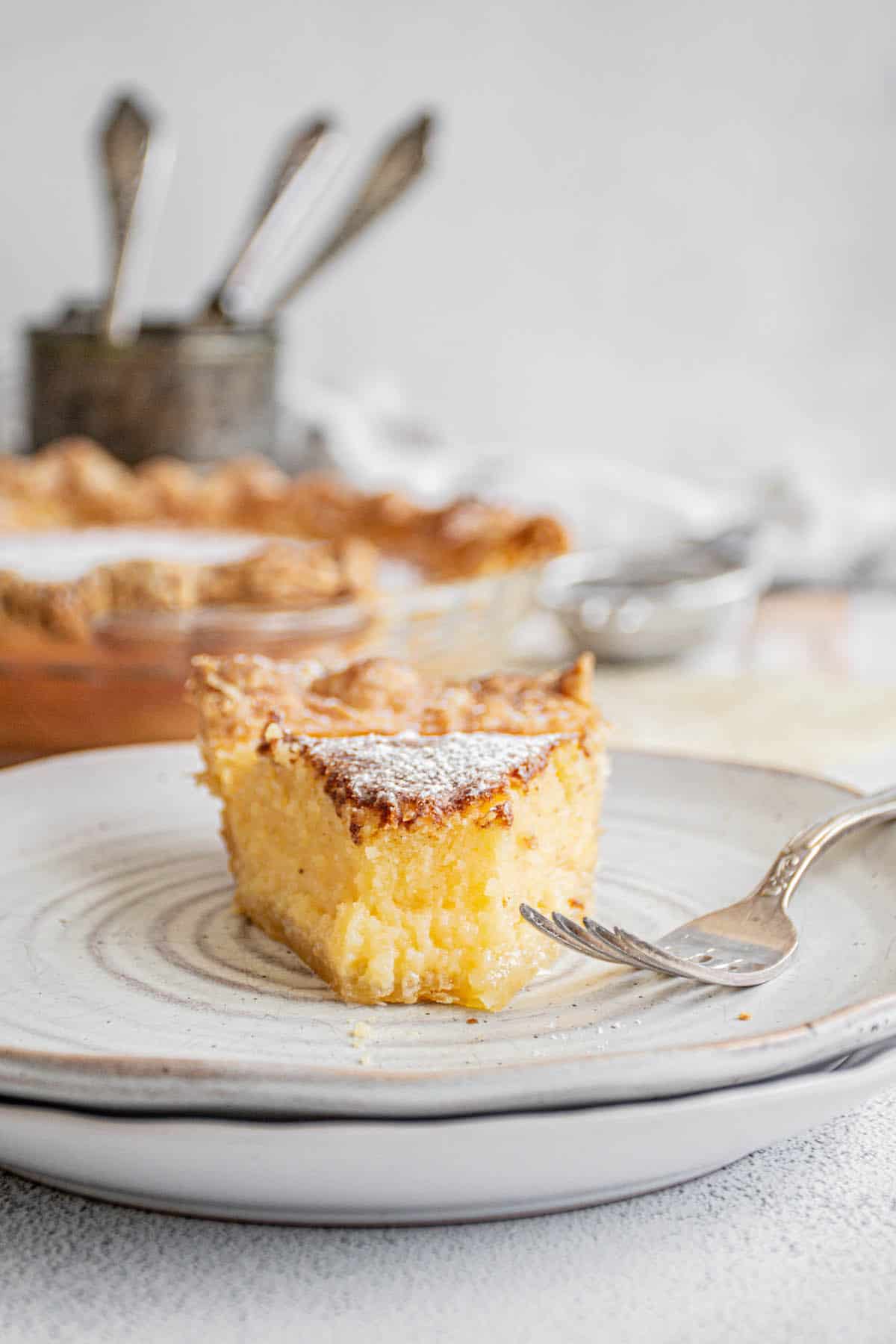
Serve slices at room temperature or lightly chilled, with a dusting of powdered sugar and a dollop of softly whipped cream. Fresh berries are a nice touch if you want to brighten things up.
Leftover pie keeps well in the fridge for up to 4 days, wrapped tightly in plastic or stored in an airtight container.
You can also freeze the whole pie or individual slices, wrapped well, for up to 2 months. Thaw overnight in the fridge.
More pie recipes you’ll love
- Peach Honey Galette
- Lemon Chess Pie
- Old-Fashioned Lemon Pie
- Flaky Butter Pie Crust
- Blueberry Custard Pie
- Fresh Peach Pie
- Blueberry Hand Pies with Pie Crust
- Apple Hand Pies with Puff Pastry
Buttermilk Chess Pie
Ingredients
- 1 x 9-inch unbaked pie crust
- 300 g granulated sugar
- 15 g cornmeal*
- 12 g all-purpose flour
- 1/2 tsp salt
- 1/4 tsp ground nutmeg
- 113 g butter melted, slightly cooled
- 113 g cultured buttermilk room temperature
- 15 g lemon juice
- 1 ½ teaspoons vanilla paste or extract
- 4 large eggs
Instructions
Par-bake the crust
- Roll out the pie pastry on a lightly floured surface into an 11-inch (28cm) circle. Transfer it to a 9-inch pie plate. 1 x 9-inch unbaked pie crust
- Trim any excess dough, leaving about ½ inch of overhang. Roll the overhanging dough under itself to make a thick border, then crimp the edges using your fingers.
- Chill the crust for at least 20 minutes while you preheat the oven to 400°F (200°C).
- Prick the bottom of the chilled crust all over with a fork. Line it with parchment paper and fill with pie weights or dried beans.
- Bake at 400°F (200°C) for about 15 minutes, until the edges are lightly browned.
- Carefully lift out the parchment and weights. Return the crust to the oven for 2 to 3 minutes, until the base no longer looks wet. Cool to room temperature.
Make the filling
- Lower the oven to 350°F (180°C).
- In a large bowl, whisk together the sugar, cornmeal, flour, salt, and nutmeg until evenly combined with no lumps. 300 g granulated sugar, 15 g cornmeal*, 12 g all-purpose flour, 1/2 tsp salt, 1/4 tsp ground nutmeg
- Add the melted butter, buttermilk, lemon juice, and vanilla. Stir until smooth. 113 g butter, 113 g cultured buttermilk, 15 g lemon juice, 1 ½ teaspoons vanilla paste
- In a separate bowl, lightly beat the eggs with a fork. Whisk the eggs into the filling until just combined but don't overmix it. 4 large eggs
Bake
- Pour the filling into the cooled, par-baked pie crust.
- Bake at 350°F (180°C) for 45 to 50 minutes. After about 20 minutes, tent the edges with foil or use a pie shield to prevent over-browning.
- The pie is ready when the top is golden brown and the center still has a slight wobble. It will continue to set as it cools. The center should jiggle as one set piece, like jelly, not slosh or ripple like liquid. It will continue to set as it cools.
- Turn off the oven, crack the door open, and leave the pie inside for 20 minutes. Then transfer to a wire rack and cool completely to room temperature before slicing.
Notes
- Both US customary and metric measurements are provided. Use the toggle to switch between the two.
- *Cornmeal is finely ground dried corn kernels. It is NOT the same as cornstarch, and they cannot be substituted for each other.
- For the cleanest slices, chill the cooled pie in the fridge for at least an hour before cutting.
- Leftover pie keeps in the fridge for up to 4 days, wrapped tightly. It also freezes well for up to 2 months.
- Use room temperature buttermilk and eggs to avoid the melted butter seizing up when you mix everything together.