

Blackberry Brioche Buns
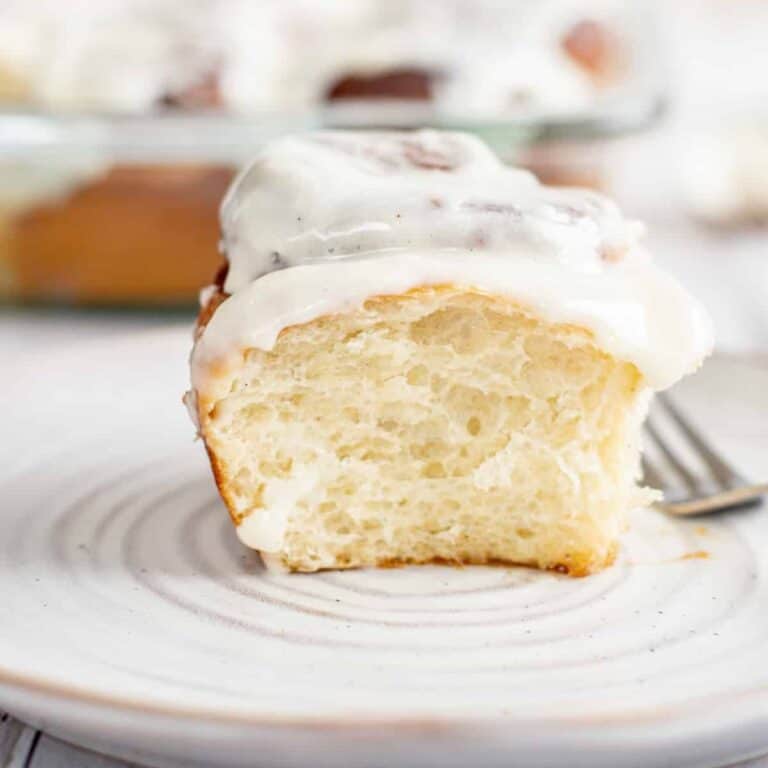
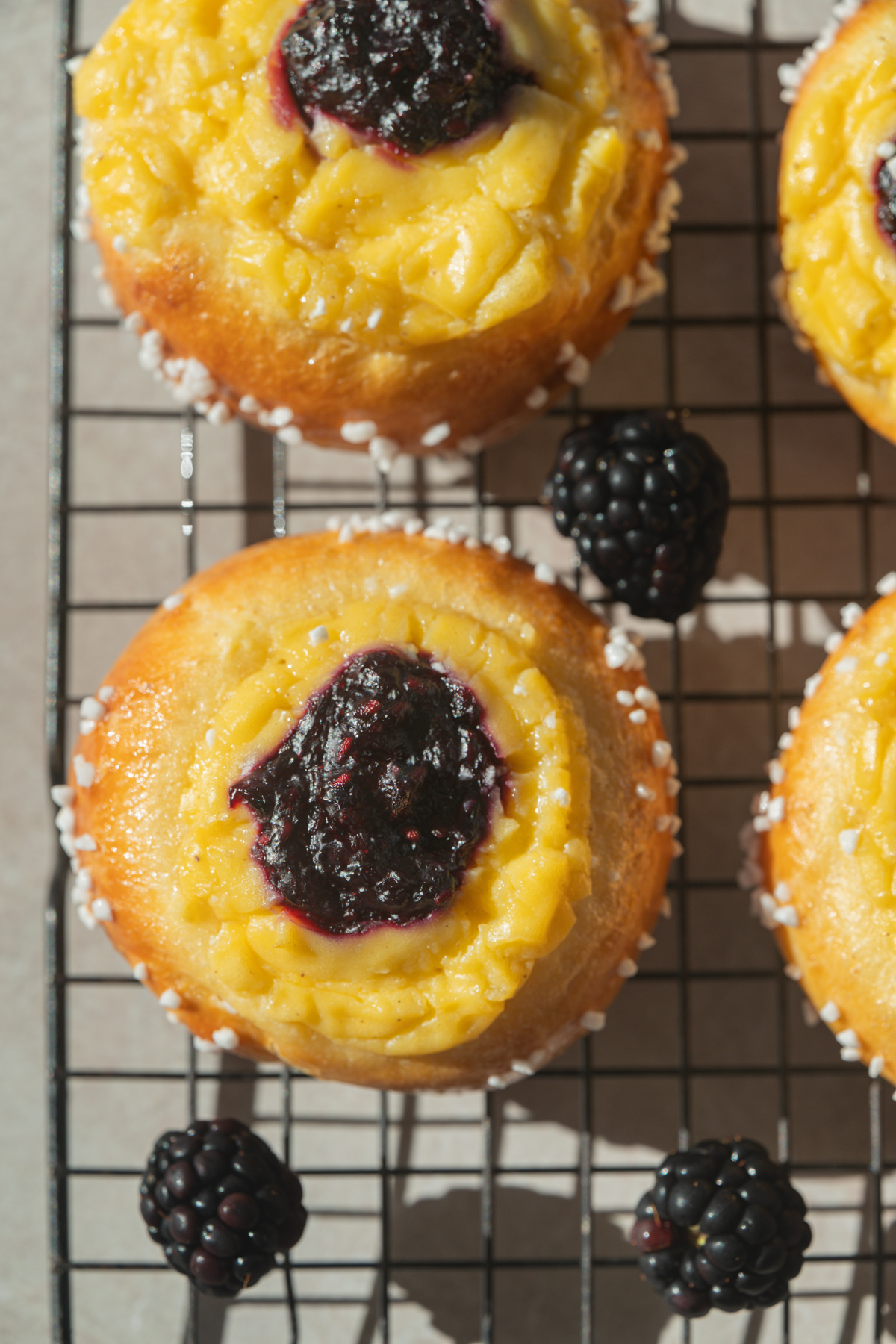
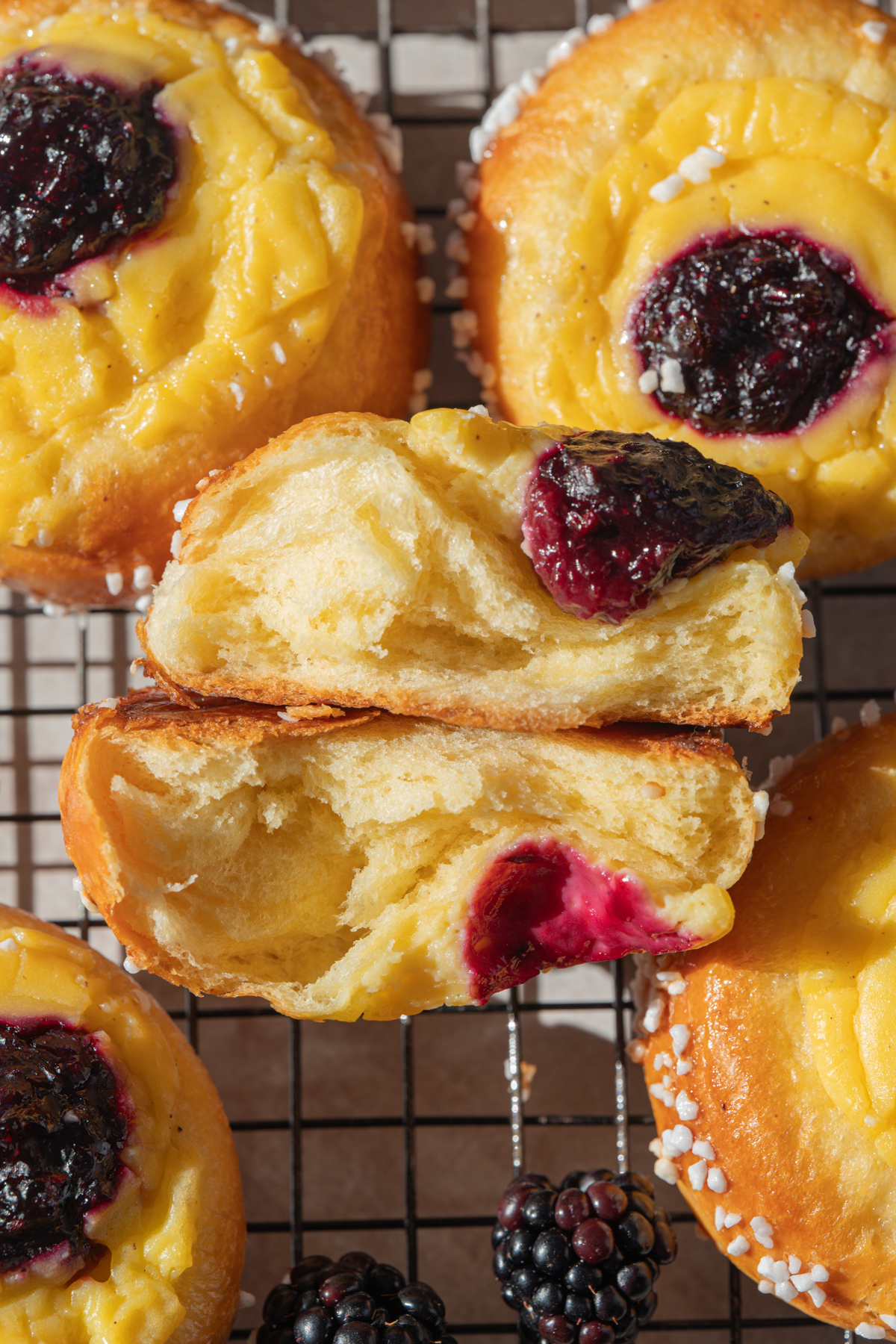
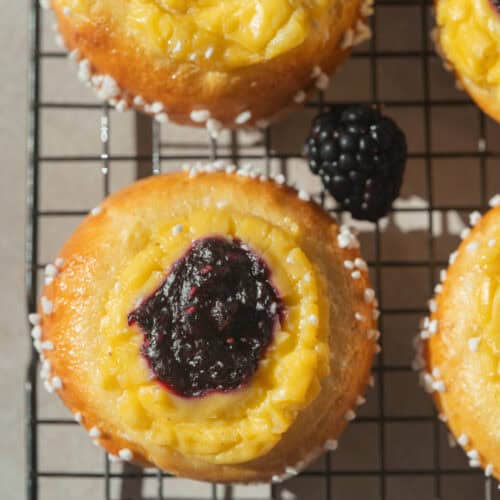
Buttery, indented brioche buns filled with a spiral of vanilla crème pâtissière and a piped pocket of blackberry compote in the middle. As the buns bake, the pastry cream relaxes across the top, leaving a creamy, custardy layer that surrounds the dark blackberry center.
About these blackberry brioche buns
These are individually shaped, open-top filled brioche buns. Each one is rolled smooth, lightly flattened, proofed until puffy, then pressed with an indent in the center. The indent holds homemade vanilla pastry cream and blackberry compote piped into the middle. The dough bakes up into a tender, golden ring around the filling. The cream relaxes and spreads across the top during baking.
The dough is scaled from my classic brioche, with around 38% butter to flour. I won’t go into the full mixing technique here because it’s covered in detail in the brioche post, but if it’s your first time making brioche, give that one a read first. It takes time and a good stand mixer. If you’ve made it before, you know what you’re in for.
The pastry cream is a half batch of my classic crème pâtissière. It’s easiest to make it the day before so it’s properly cold and thick when you come to fill the buns. The blackberry filling is cooked down with sugar, lemon, and cornstarch into a thick, glossy compote that pipes cleanly into the center of the cream. Both fillings need to be fully cold before piping.
For more brioche projects, try my brioche suisse, brioche donuts, or brioche cinnamon rolls.
Key ingredients and why
- Brioche dough: A proper brioche with around 38% butter to flour, made with all-purpose flour at 11% protein, eggs, milk, yeast, sugar, and butter worked in cube by cube.
- Crème pâtissière: A classic vanilla pastry cream made with whole milk, egg yolks, sugar, cornstarch, vanilla, and a knob of butter for shine. It’s a half batch of my standalone crème pâtissière recipe, so if you want the full breakdown on technique, troubleshooting, and flavor variations, that post has everything.
- Blackberries: Fresh or frozen both work. Frozen go straight in from the freezer with no thawing.
- Cornstarch: Used in both fillings. It thickens the pastry cream so it sets firm enough to pipe in a clean spiral, and thickens the blackberry compote so it pipes cleanly and stays put on top of the cream during baking.
- Lemon juice: Brightens the blackberry flavor.
- Pearl sugar: The small white sugar pearls used on chouquettes. It’s about 2 to 4mm across, uniform, and white. It doesn’t melt in the oven so it stays crisp on the dough rim.
Method
- Start with the pastry cream, ideally the day before.
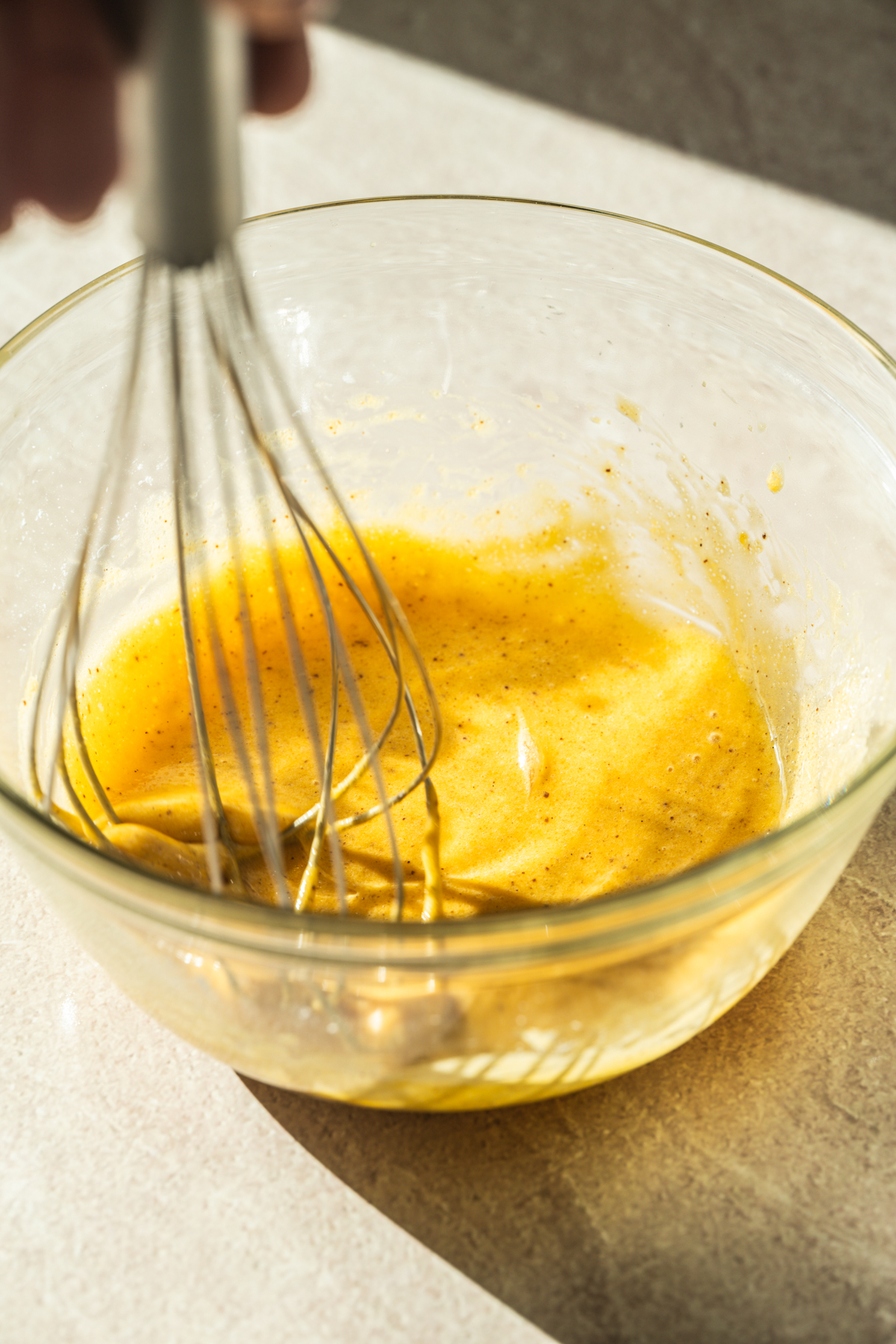
- Whisk egg yolks, sugar, vanilla, cornstarch, and salt.
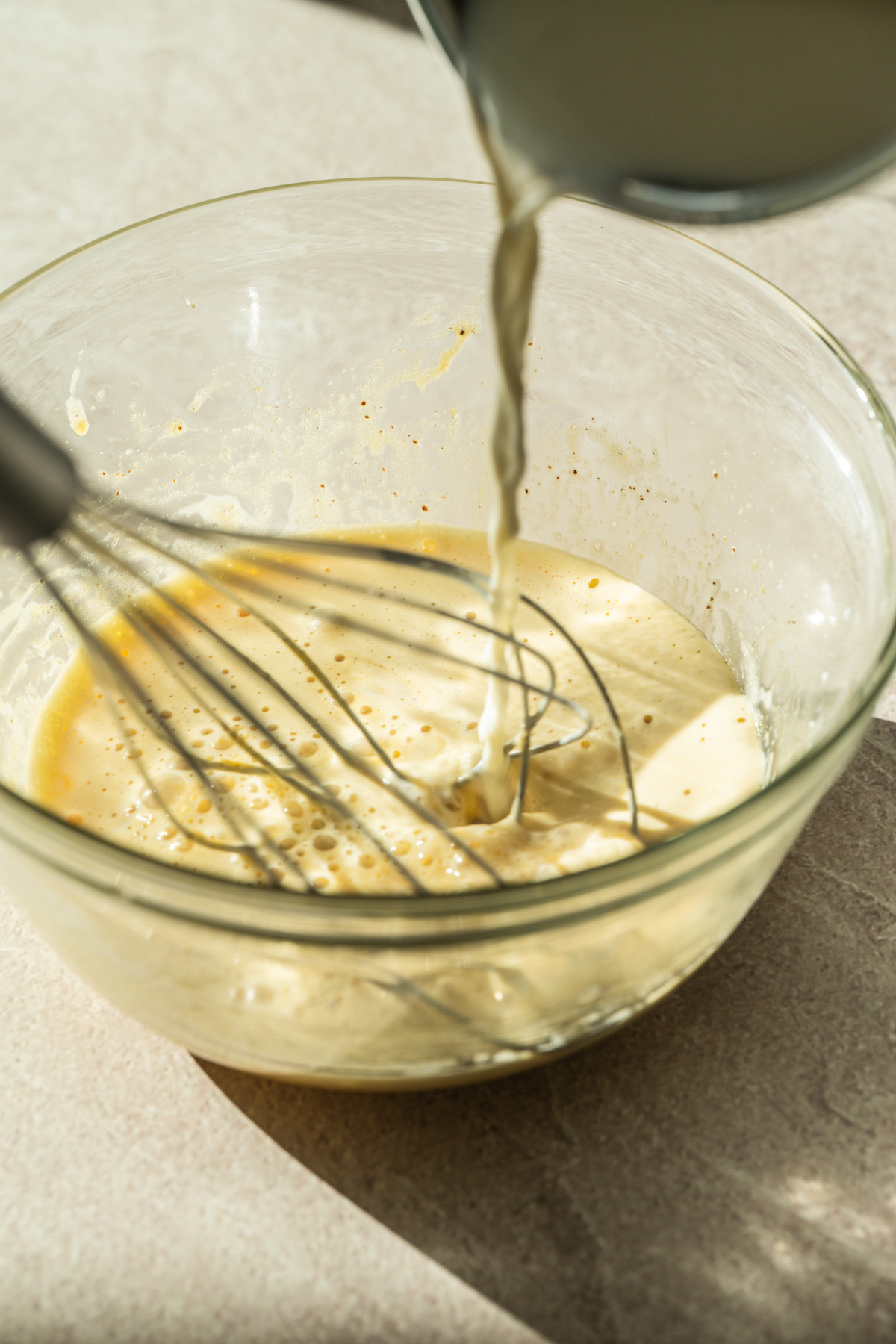
- Temper in hot milk, then cook until thick and bubbling, keeping it at a bubble for a full minute.
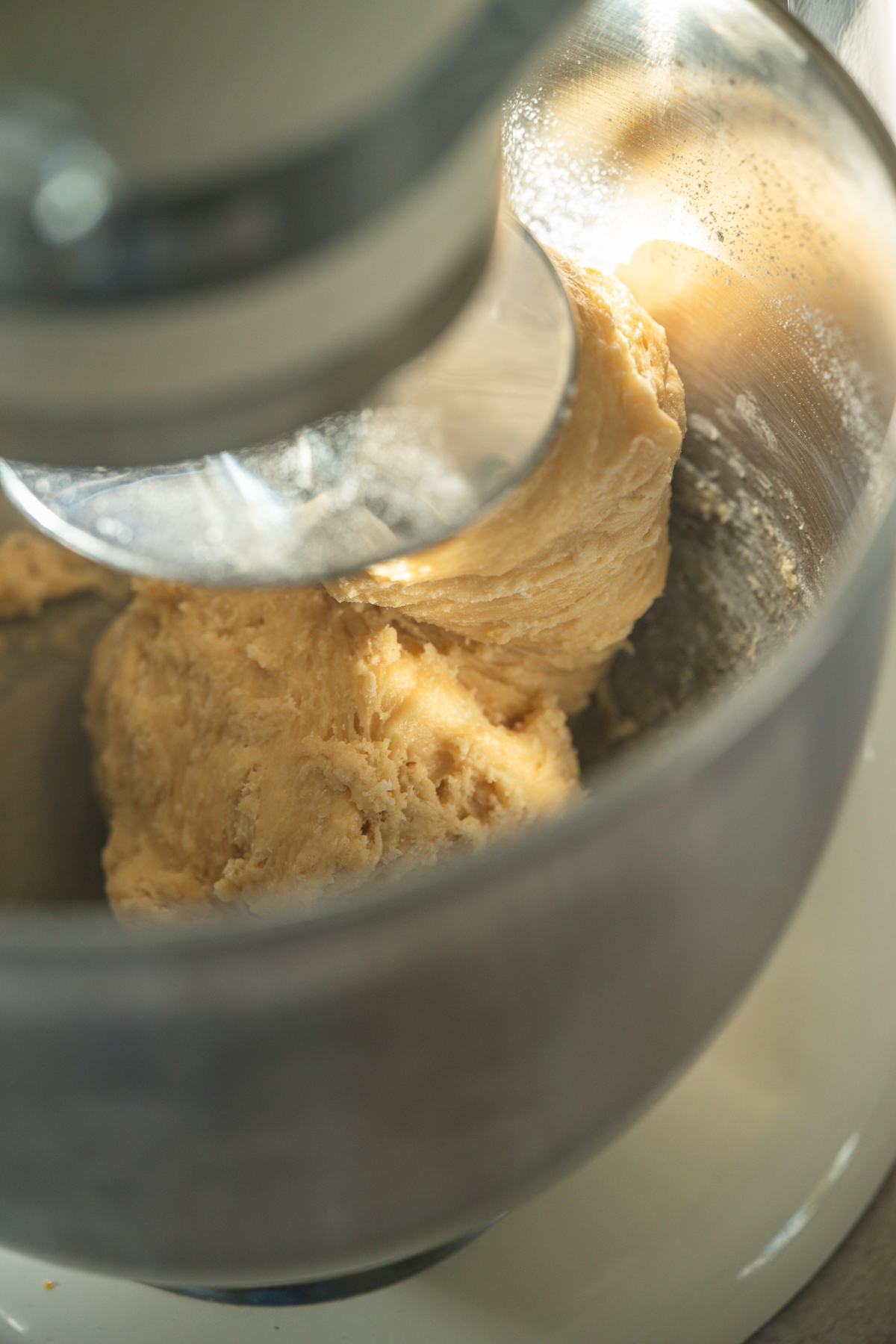
- Combine the milk, yeast, flour, sugar, eggs, and salt in a stand mixer with a dough hook. Mix on low for 5 minutes to start developing the gluten.
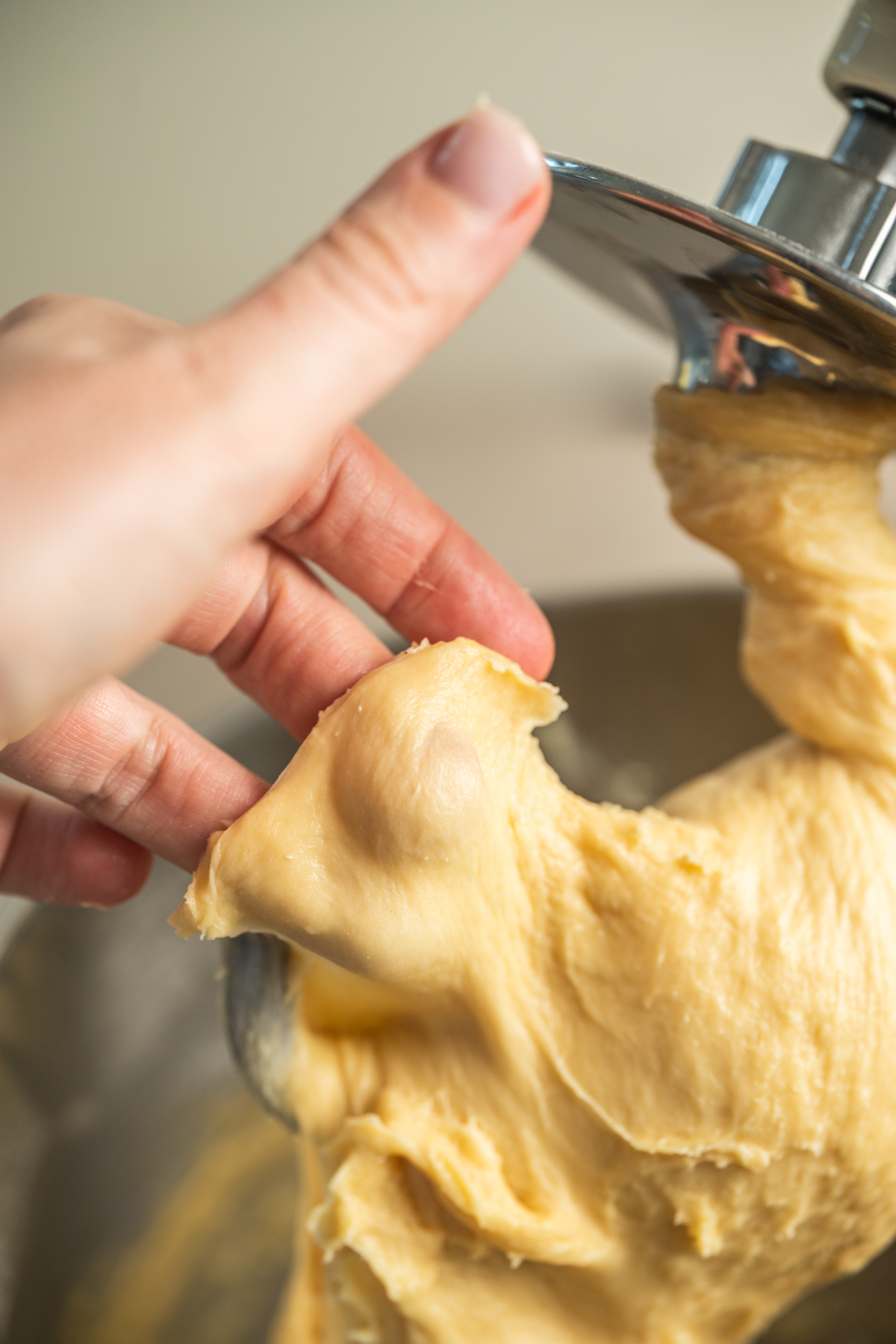
- Add the cubed butter a few pieces at a time with the mixer running. Keep mixing on low speed for 15 to 20 til the dough is glossy and strong.
- Shape into a ball, place in a lightly greased bowl, and let it rise at room temperature for 1 to 2 hours until doubled. Deflate, cover tightly, and refrigerate for at least 4 hours, or overnight.
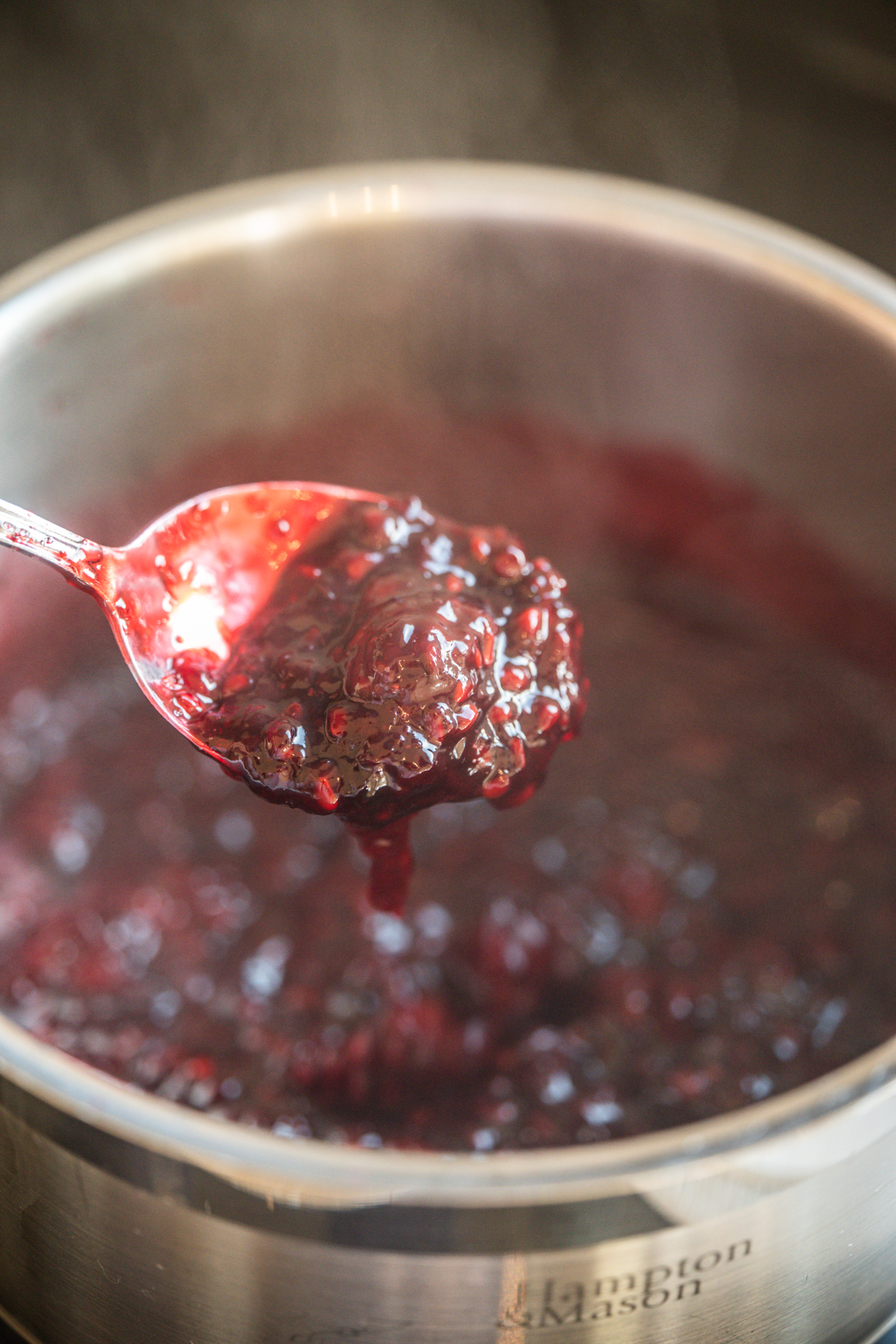
- Cook blackberries with sugar, lemon juice, and salt until they release their juices and slightly reduce. Add a cornstarch slurry and cook until thick and glossy. Cool completely.
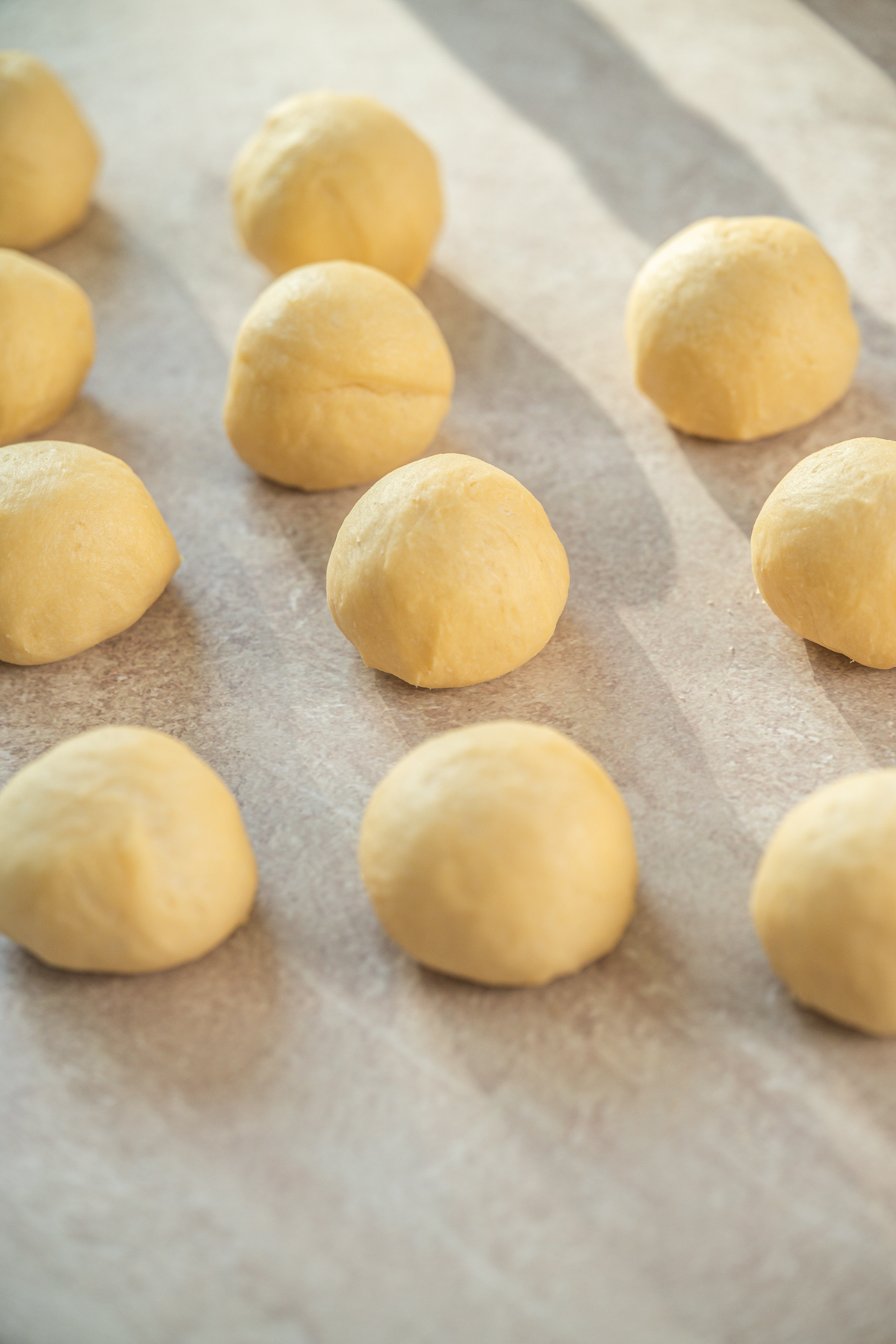
- Divide the chilled dough into 12 equal pieces. Roll each into a smooth ball.
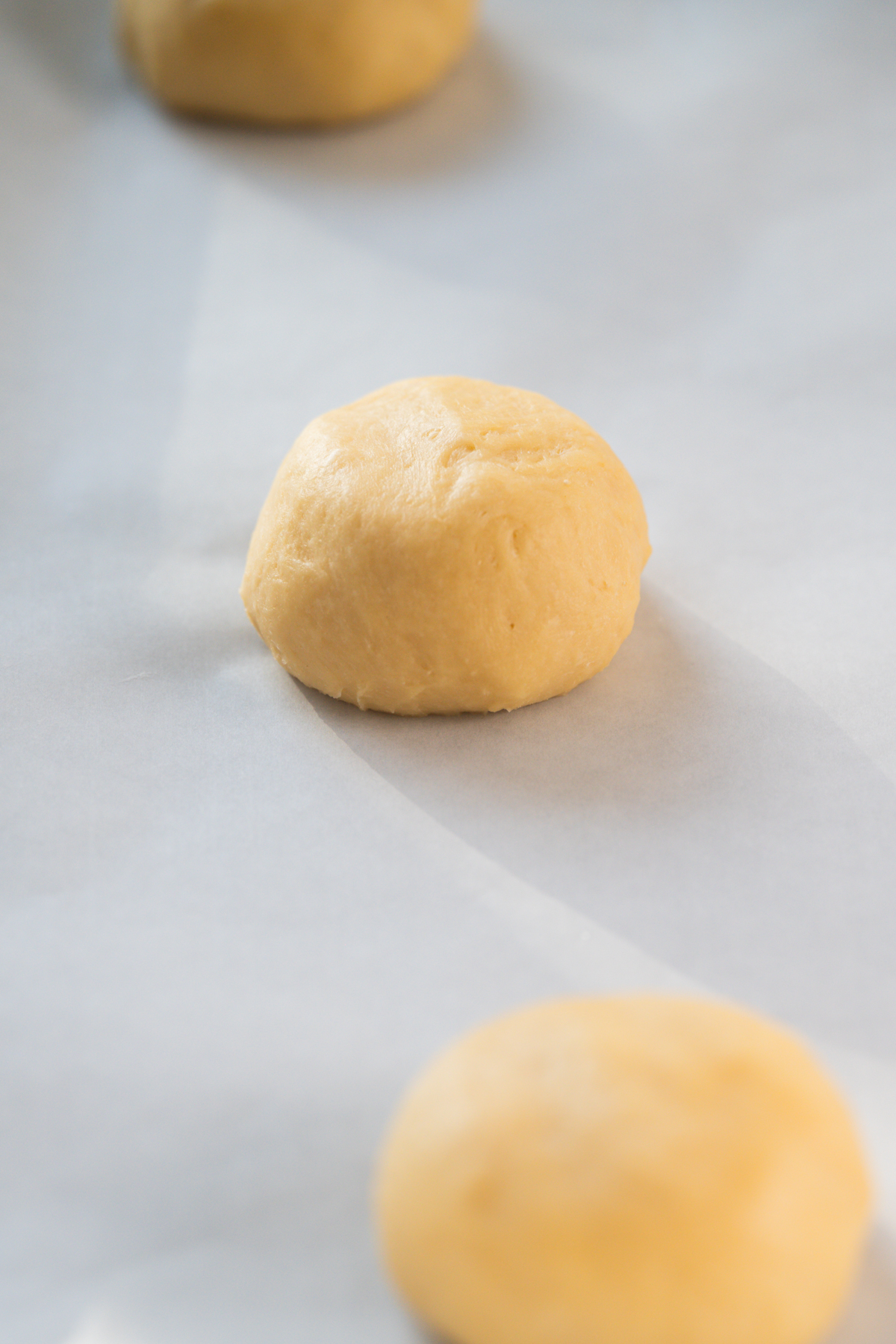
- Gently press down to slightly flatten the balls. Place 6 on each of two parchment-lined baking sheets. Cover and proof at room temperature until puffy.
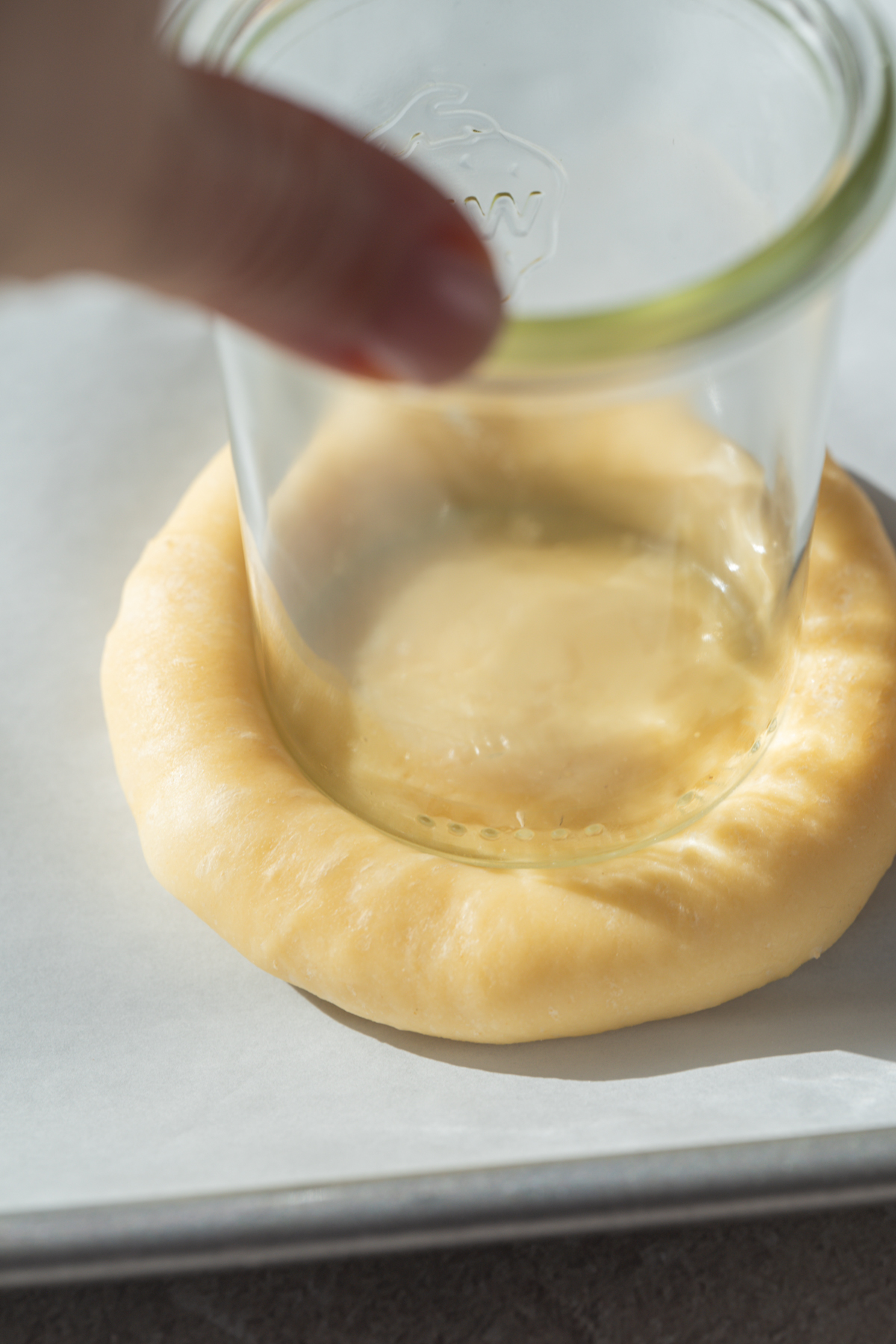
- Press a wide indent into the center of each proofed bun using a lightly greased bottom of a small glass or jar. Press firmly straight down to about halfway through the bun.
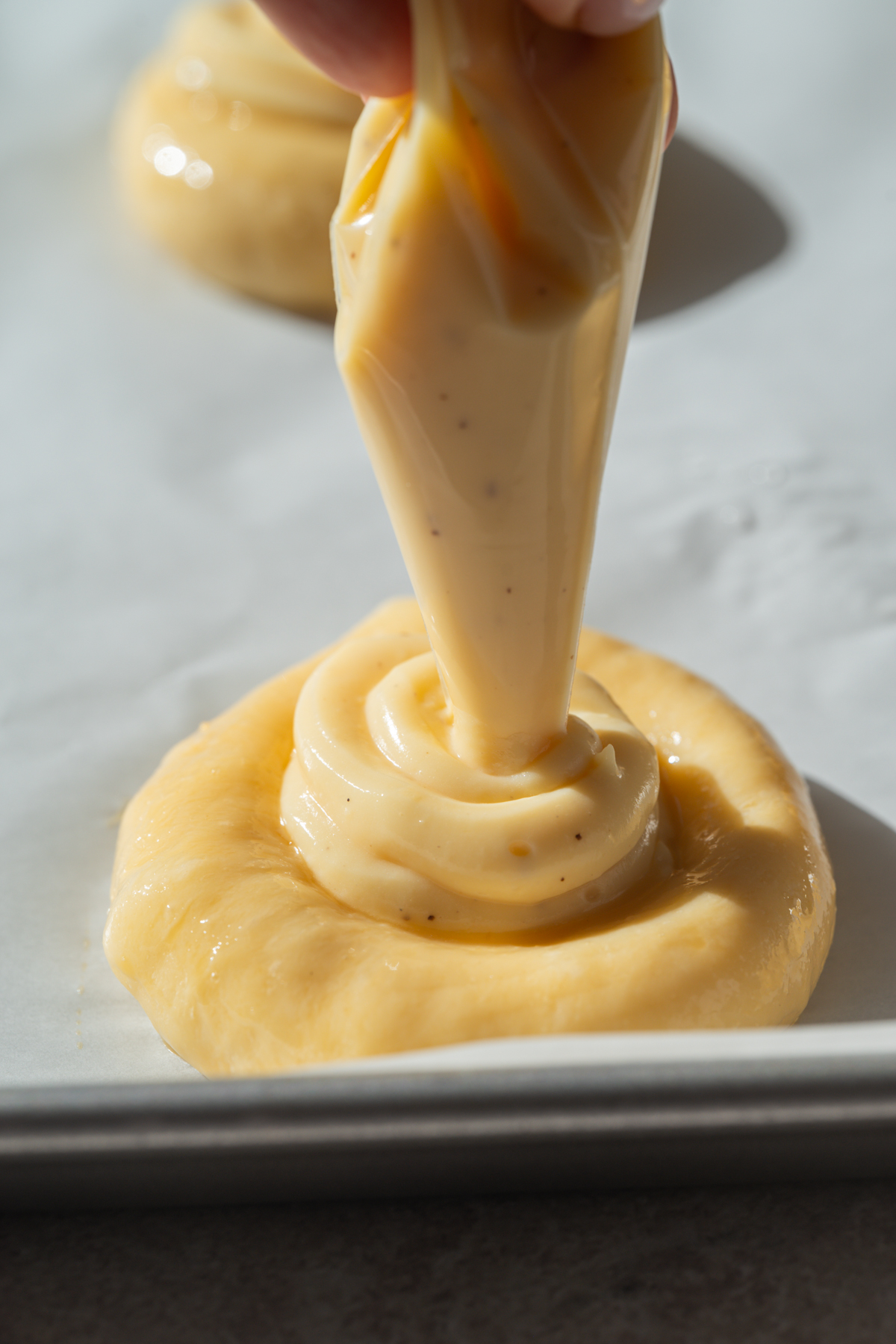
- Brush the dough rims with egg wash and sprinkle generously with pearl sugar. Pipe the pastry cream in a spiral into each indent, filling it
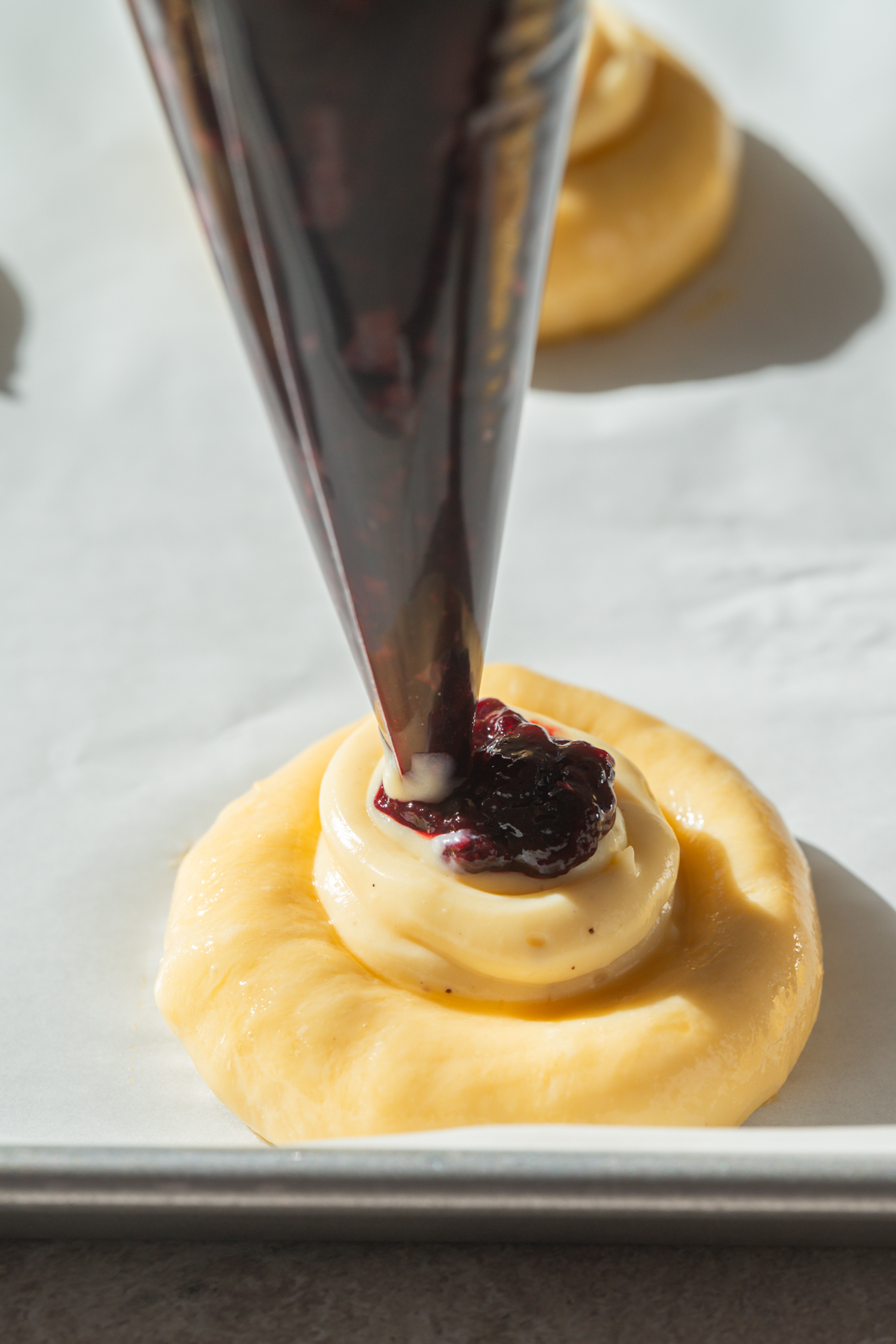
- Pipe the blackberry filling into the center of the cream to fill out the middle.
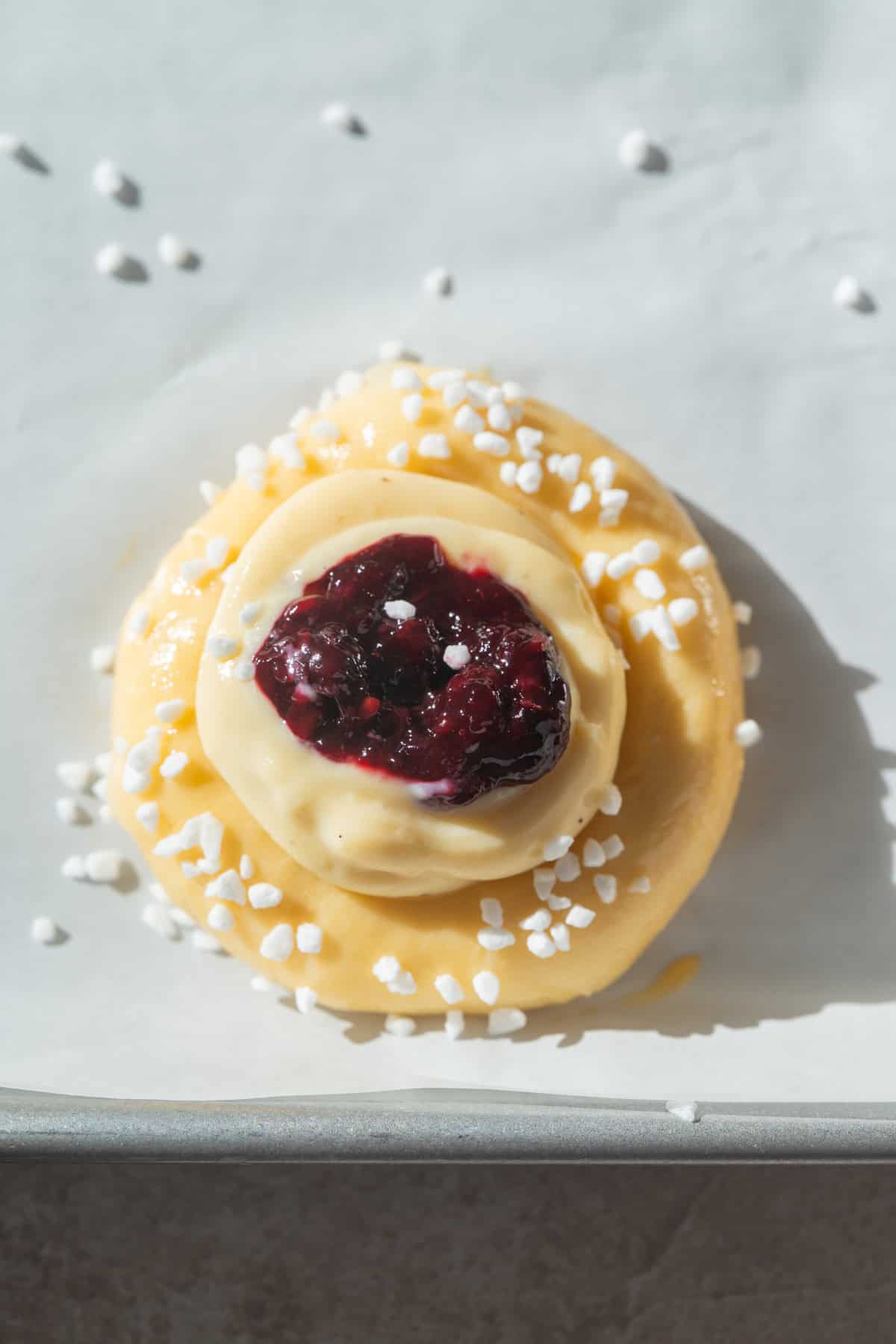
- Sprinkle the edges generously with pearl sugar.
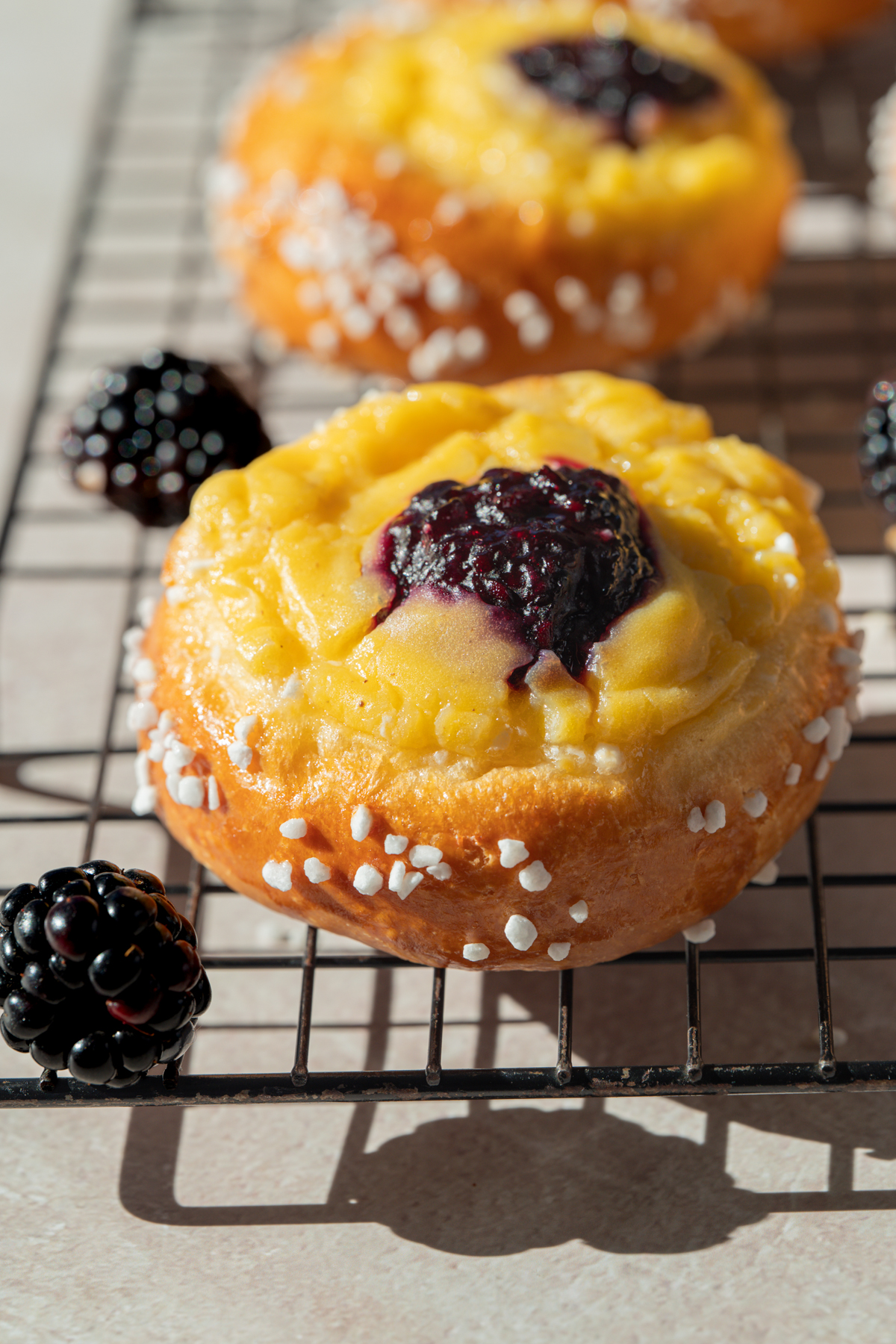
- Bake until the dough is deeply golden. Brush the dough rims with sugar syrup as soon as they come out of the oven
Tips for the best blackberry brioche buns
- Chill everything. This recipe has three components and all three need to be fully cold before you start filling. The dough needs at least 4 hours in the fridge (overnight is better), the pastry cream needs to be cold and firm, and the blackberry filling needs to be fridge-cold.
- Lightly flatten the dough balls before proofing. A round ball will proof into a tall, domed bun, and when you press the indent the whole top collapses. A pre-flattened disc proofs into a wider, lower bun that’s much easier to indent cleanly, with more surface area for the filling.
- Indent well. Press firmly straight down to about halfway through the bun, then lift straight up without twisting. A light press will spring back during baking and you’ll lose the indent.
- Pipe both fillings. Whisk the cold pastry cream briefly with a balloon whisk until smooth, then transfer to a piping bag with a 1/2 inch (1 cm) round tip. Pipe the cream in a spiral into each indent, filling it. Scoop the cold blackberry filling into a second piping bag and pipe it into the center of the cream to fill out the middle.
- Don’t overfill the indent. A spiral of pastry cream filling the indent and a piped pocket of blackberry filling in the middle is the sweet spot. The pastry cream will relax and spread slightly across the top of the bun during baking, which is what you want. If the fillings overflow before baking, they’ll bubble out and burn on the parchment.
Storing
Filled brioche buns are best the day they’re baked, when the brioche is at its softest and the fillings are at their best. Because they contain pastry cream, leftovers need to be refrigerated. Store in an airtight container in the fridge for up to 2 days. Warm gently in a low oven (300°F / 150°C) for 5 minutes or pop it quickly in the microwave to soften the brioche back up before serving.
Filled buns don’t freeze well because of the pastry cream, which can split on thawing. If you want to get ahead, the dough and pastry cream can both be made a day or two in advance and refrigerated separately, then assembled and baked fresh.
Related recipes
Blackberry Brioche Buns
Ingredients
Pastry Cream (half batch of my classic creme patissiere)
- 240 g whole milk
- 30 g granulated sugar
- 15 g cornstarch
- 2 large egg yolks
- 1 tsp vanilla bean paste or 1/2 vanilla pod, split and scraped, or 1 tsp vanilla extract
- pinch of salt
- 22 g unsalted butter
Brioche Dough
- 80 g whole milk lukewarm
- 1 1/2 tsp instant yeast or active dry yeast
- 40 g granulated sugar
- 375 g all-purpose flour around 11% protein
- 1 tsp salt
- 3 large eggs room temperature
- 140 g unsalted butter cool room temperature, cubed
Blackberry Filling
- 250 g blackberries fresh or frozen
- 50 g granulated sugar
- 1 tsp lemon juice
- 1/4 tsp salt
- 12 g cornstarch
- 25 ml cold water
Finishing
- 1 large egg + 1 Tbsp water, beaten, for egg wash
- 2-3 tbsp pearl sugar
- 40 g granulated sugar for syrup
- 45 g hot water for syrup
Instructions
Make the Pastry Cream (ideally the day before)
- In a medium saucepan, heat the milk over medium heat until just at a simmer. Don't let it boil. 240 g whole milk
- While the milk is warming, in a separate bowl, whisk the egg yolks, vanilla, sugar, cornstarch, and salt together until glossy and smooth. Place the bowl on a damp kitchen towel to stop it slipping. 30 g granulated sugar, 15 g cornstarch, 2 large egg yolks, 1 tsp vanilla bean paste, pinch of salt
- Once the milk is hot, pour it into the egg mixture in a steady stream while whisking vigorously to temper the eggs. Return the mixture to the saucepan over medium heat, whisking constantly until it starts to bubble.
- Once it starts bubbling, keep it at a bubble and don't stop whisking for a full minute. This is essential to deactivate the amylase enzyme in the egg yolks so the custard stays thick once cooled.
- Take it off the heat and whisk in the butter until completely combined. Pour into a clean shallow bowl, lay plastic wrap directly on the surface to prevent a skin forming, and chill in the refrigerator until completely cold, at least 4 hours or overnight. 22 g unsalted butter
Make the Brioche Dough
- Pour the lukewarm milk into the bowl of a stand mixer fitted with a dough hook. Stir in the yeast and one tablespoon of the sugar. If using active dried yeast, leave it to sit for 5 to 10 minutes until foamy. If using instant yeast, you can proceed straight to the next step. 80 g whole milk, 1 1/2 tsp instant yeast, 40 g granulated sugar
- Add the remaining sugar, flour, eggs, and salt to the milk mixture. Turn the mixer on low and combine until a thick, slightly sticky dough forms. Mix on low for 5 minutes to begin developing the gluten. 375 g all-purpose flour, 1 tsp salt, 3 large eggs
- Add the cubed butter a few pieces at a time with the mixer running on low speed. Don't add the next piece until the previous one has disappeared into the dough. Continue mixing on low speed for a total of 15 to 20 minutes from when you started adding the butter. The dough will go through a sticky, rough-looking phase before it smooths out and starts pulling cleanly away from the sides of the bowl. If the dough starts to feel really greasy rather than just sticky, the butter has gotten too warm and is starting to separate out instead of emulsifying in. Stop the mixer, transfer the dough to a bowl, and chill it in the fridge for 15 to 20 minutes before continuing. To test if it's ready, let the dough rest for a few minutes, then pull off a small piece and stretch it gently between your fingers. If you can stretch it thin enough to almost see light through without it tearing instantly, the gluten is properly developed. 140 g unsalted butter
- Shape the dough into a ball, place in a lightly greased bowl, cover, and let rise at room temperature for 1 to 2 hours until doubled. Deflate gently, cover tightly, and refrigerate for at least 4 hours, or overnight for best flavor.
Make the Blackberry Filling
- Combine the blackberries, sugar, lemon juice, and salt in a small saucepan over low-medium heat. Stir as the blackberries release their juices, then bring to a simmer for around 5 minutes until slightly reduced. 250 g blackberries, 50 g granulated sugar, 1 tsp lemon juice, 1/4 tsp salt
- Whisk the cornstarch and cold water into a slurry. Add to the simmering blackberries and cook, stirring constantly, for 1 minute until thick and glossy. Transfer to a bowl and refrigerate until completely cold. 12 g cornstarch, 25 ml cold water
Shape and Proof
- Line two large baking sheets with parchment paper. Tip the chilled brioche dough onto a lightly floured surface and divide into 12 equal pieces (about 60 g each). Roll each piece into a smooth ball, then gently press down with the palm of your hand to slightly flatten them. Place 6 on each lined sheet, spaced about 2 inches (5 cm) apart.
- Cover loosely and let proof at room temperature for 1 1/2 to 2 hours until puffy and visibly increased in size. Preheat the oven to 350°F (180°C) about 30 minutes before the end of the proof.
Indent and Fill
- Very lightly grease or flour the bottom of a small glass or jar (about 1 1/2 to 2 inches / 4 to 5 cm wide). Press firmly straight down into the center of each proofed bun to about halfway through, then lift straight up without twisting.
- Brush the dough rims gently with beaten egg (whisked with 1 Tbsp water) working around the indents. Sprinkle the egg-washed rims generously with pearl sugar. 1 large egg, 2-3 tbsp pearl sugar
- Whisk the cold pastry cream briefly by hand with a balloon whisk until smooth and silky. Transfer to a piping bag with a 1/2 inch (1 cm) round tip or snip a corner. Transfer the cold blackberry filling to a second piping bag and snip a smaller opening. Pipe the pastry cream in a spiral into each indent, filling it. Then pipe the blackberry filling into the center of the cream, filling out the middle.
Bake and Finish
- Bake for around 20 minutes until the dough rims are deeply golden, but this will depend on your oven. If browning too quickly, loosely tent with foil for the last 5 minutes. If baking both sheets at once, swap their positions and rotate each 180° halfway through for even browning.
- While the buns bake, stir together the granulated sugar and hot water until dissolved to make the sugar syrup glaze. 40 g granulated sugar, 45 g hot water
- As soon as the buns come out of the oven, brush the dough rims and sides generously with the sugar syrup, working around the filling. Let cool on the trays for 10 minutes before transferring to a wire rack.