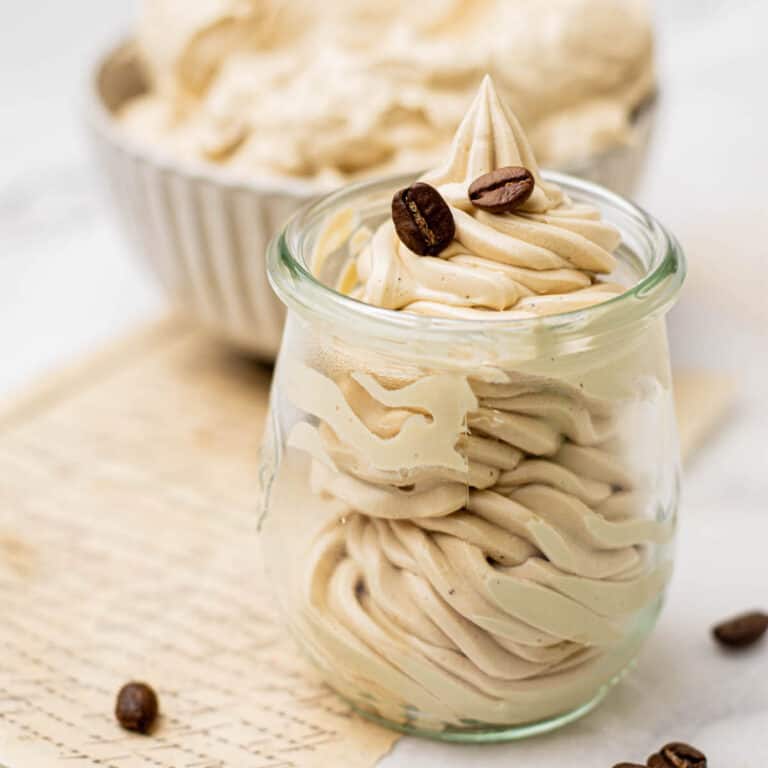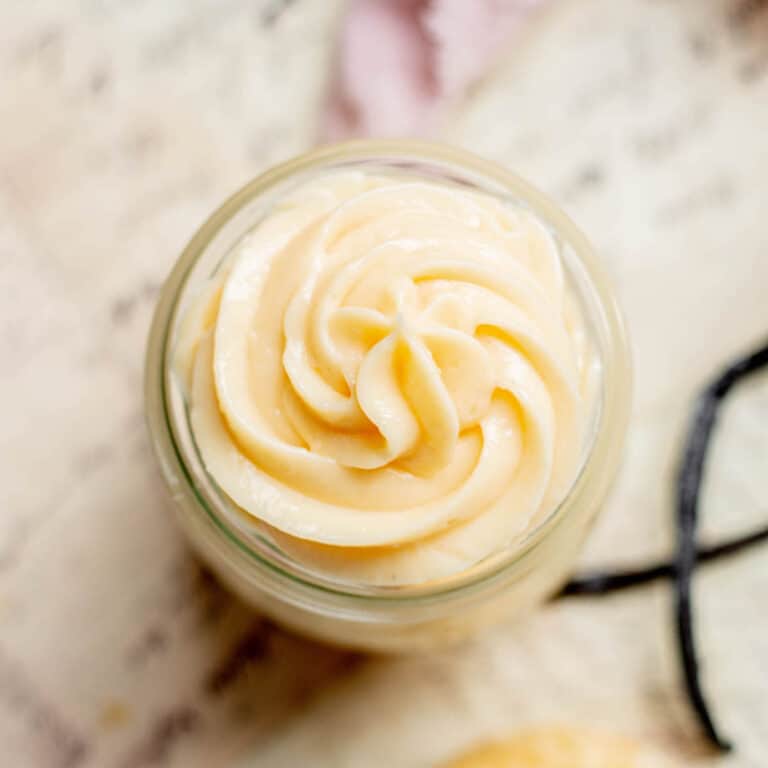



Crème mousseline is the richer relative of standard pastry cream. It’s crème pâtissière enriched with whipped butter, which gives it a decadent, velvety texture. This guide gives you everything you need to make the perfect mousseline cream.
About this crème mousseline recipe
Crème mousseline is also known as German buttercream. The addition of whipped butter to a crème pâtissière base results in a thicker consistency and a silky smooth texture that holds its shape beautifully, even when piped. It’s a super versatile cream, but it’s most known for being the filling in classic French pastry desserts like Paris-brest (a choux ring), tarte Tropézienne, and Fraisier cake.
All three of these need a pastry cream that can hold its shape, and since crème mousseline has so much butter in it, it firms up well, especially when cooler.
If you’re not familiar with crème pâtissière yet, I’d start with my crème pâtissière recipe on its own first. Once you’re comfortable with the base custard, you can build it into different creams. Crème mousseline adds whipped butter for richness, while chiboust cream adds meringue for something lighter and airier. You can also flavor the base with pistachio paste or other additions.
Just a few ingredients
Method
- Add the milk and vanilla to a saucepan over medium heat.

- Heat until it is just at a simmer, but don’t let it boil.

- While the milk is warming, in a separate bowl, add the egg yolks, sugar, salt and cornstarch. Whisk them together until shiny.

- Once your milk is hot, add the milk mixture in a steady stream to the eggs while whisking vigorously.
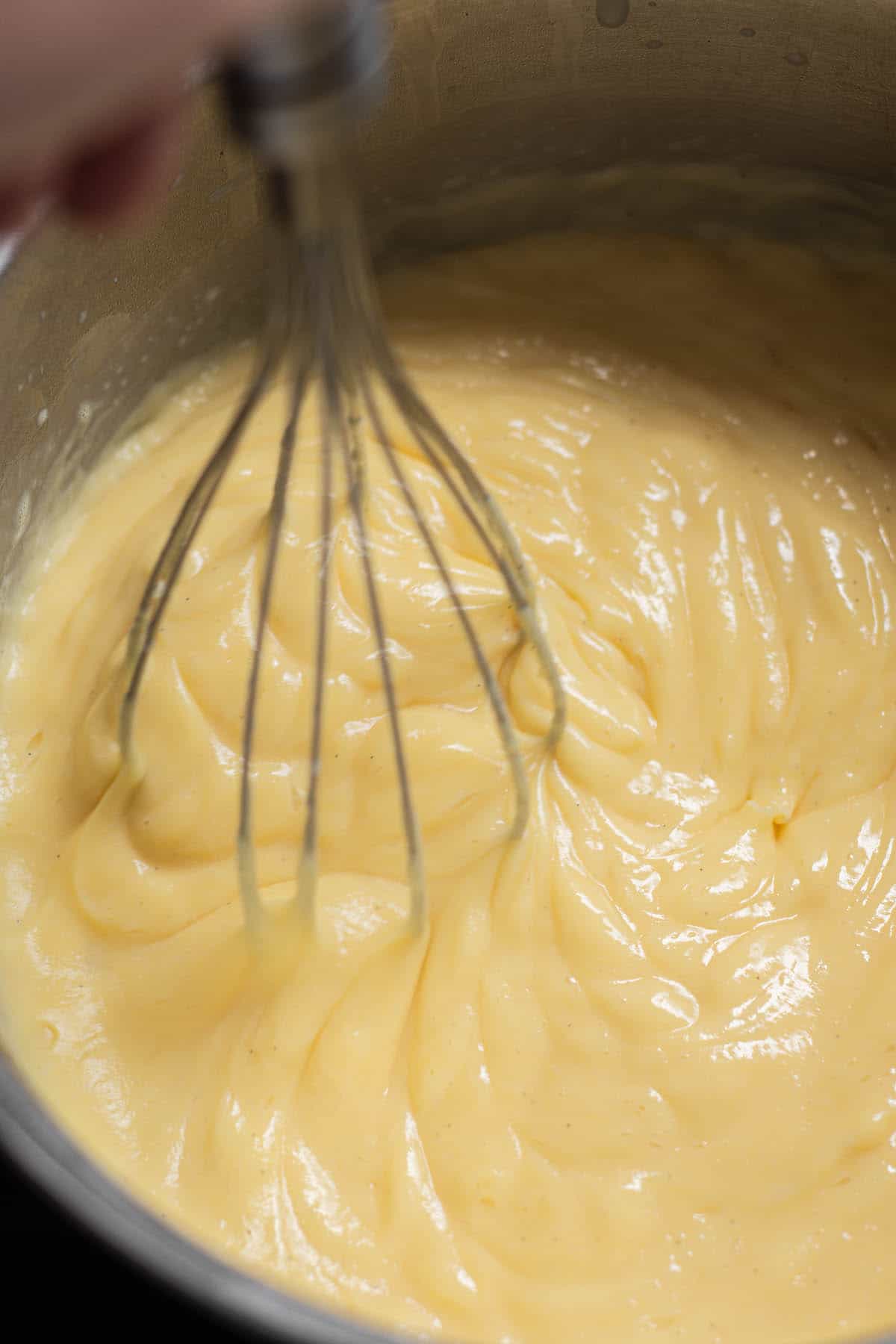
- Return the mixture to the saucepan and cook over medium heat, whisking constantly until it bubbles and thickens.
- Once it starts bubbling, keep it at a boil and don’t stop whisking for a full minute. This is essential for deactivating the amylase enzyme so the custard stays thick as it cools.
- Whisk in the butter off the heat until smooth, then pour into a clean bowl. Lay plastic wrap directly on the surface and let it cool completely to room temperature.

Adding the butter
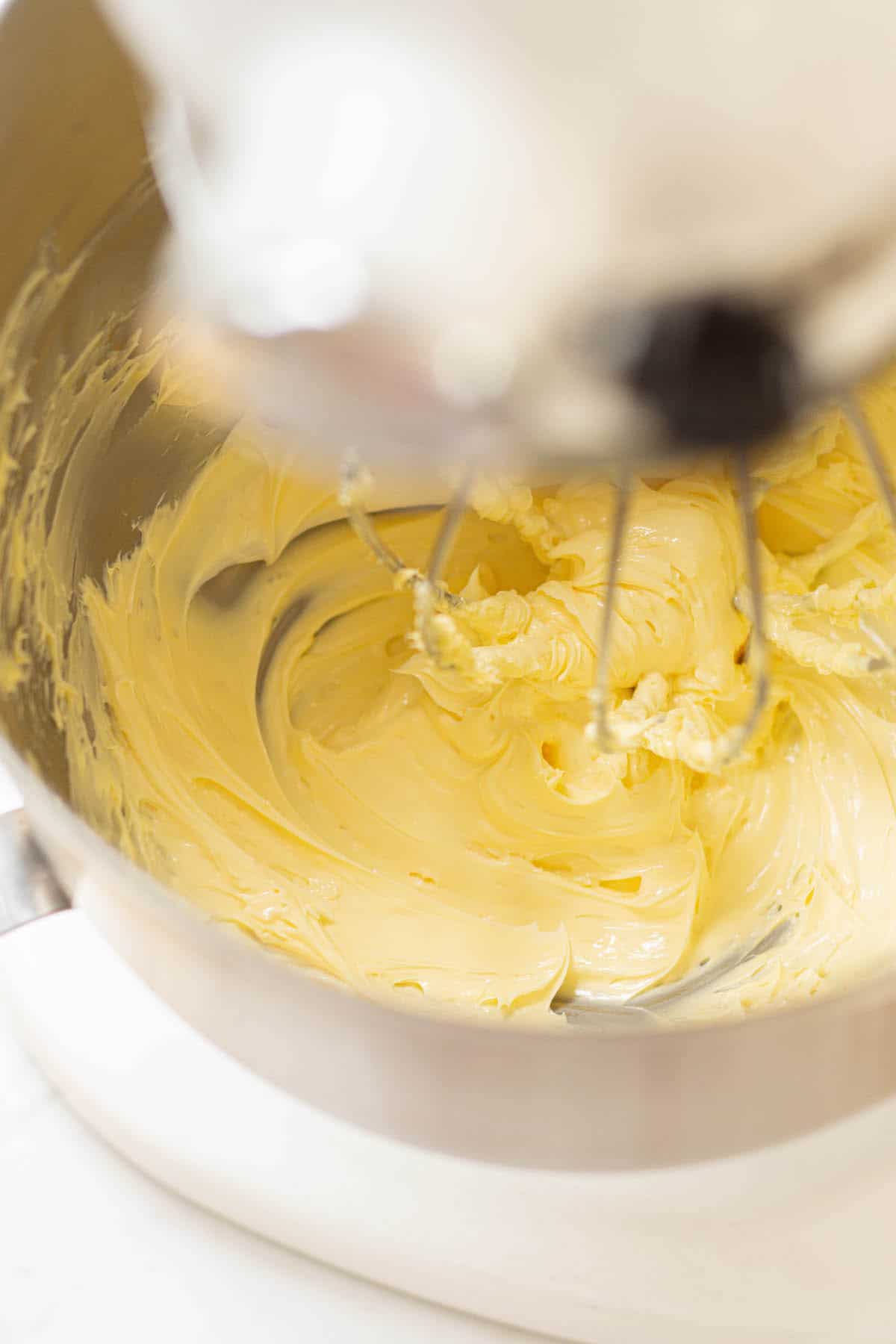
- Whip softened butter in a stand mixer with the whisk attachment at high speed until it’s smooth, creamy, and a lighter color.

- Add the cooled pastry cream to the butter a bit at a time, whipping at medium speed until you have a smooth, airy mousseline cream.

Ways to use crème mousseline
Crème mousseline is incredibly versatile. It’s the traditional filling for Paris-brest, tarte Tropézienne, and Fraisier cake, but it works beautifully in lots of other ways too. Try it as a filling for layer cakes or sponge cakes, piped into éclairs or cream puffs, spooned into a strawberry custard tart, sandwiched between macaron shells, or used as a less-sweet alternative to buttercream for frosting cupcakes (similar to ermine frosting).
You can also flavor your crème mousseline with chocolate, fruit purees, praline paste, or liqueurs. Just mix your flavoring in after the cream is fully combined. Keep in mind that additions with high moisture (like purees and liqueurs) will loosen the cream, so don’t add too much. If it gets too soft, refrigerate it for 20-40 minutes to firm up before using.
Tips and troubleshooting
This can happen if the pastry cream is too cold when added which causes the butter to get too cold and the mixture will split. To fix this, grab a couple of tablespoons of the mixture and heat it in the microwave. Add this back to the mixture and beat it again until smooth. Alternatively, warm the whole bowl of cream gently over a hot water bath for a few seconds until the edges just begin to melt. Then whip it until creamy.
It’s likely too warm. To fix this it needs to cool down. Refrigerate the bowl of custard for around 30-60 minutes (depending on how soupy it was) until the edges of in the bowl harden up. Then whip it again.
It should be stored in an airtight container in the refrigerator and used within 2 days for the best quality. Do note that it will harden in the fridge. Bring the chilled mixture back to to room temperature and whip it again before using.
I don’t recommend freezing it. If you do, it takes a little bit of work to bring it back to life and the texture can affected by freezing. Sometimes the custard can become soupy even when chilled. If you do freeze it, thaw it to room temperature and whip it. If the mixture splits, warm up a tablespoon or two, and add it back in while whipping.
Yes you can make reductions or increase it according to taste.
Related recipes
If you enjoyed making this crème mousseline, here are some other custard and filling recipes you might like.
- Crème Pâtissière – the classic vanilla pastry cream that forms the base of this recipe.
- Chiboust Cream – crème pâtissière folded with meringue for a lighter, airier filling.
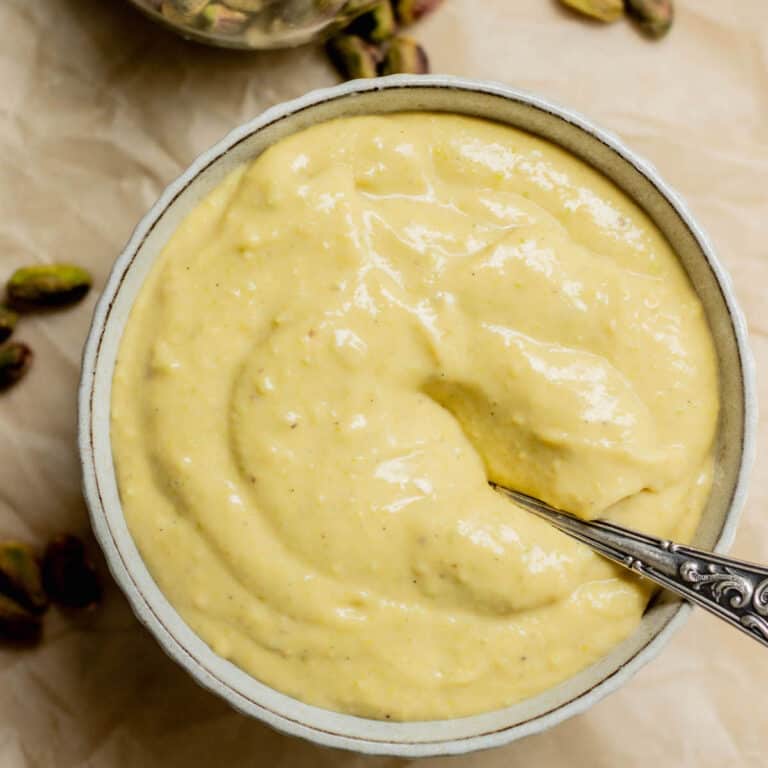
- Pistachio Pastry Cream – a beautiful pistachio version of crème pâtissière.
- Strawberry Custard Tart – a classic French tart with a crème pâtissière filling and fresh strawberries.
- Ermine Frosting – another custard-based frosting, made by whipping a cooked flour and milk base into butter.
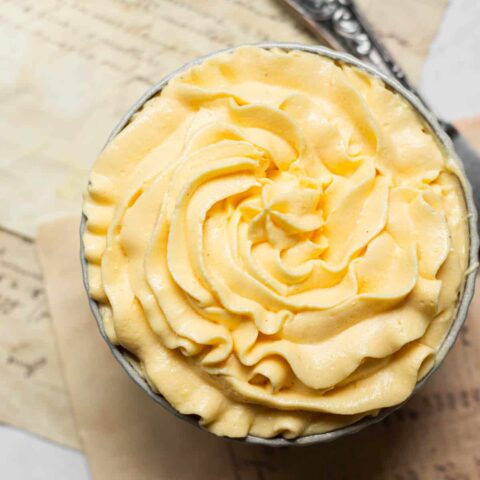
Crème Mousseline (Mousseline Cream)
Ingredients
Custard
- 480 g whole milk
- 1 vanilla bean scraped, or 2 teaspoons vanilla paste or extract
- 4 large egg yolks
- 100 g granulated sugar
- 30 g cornstarch
- 1/4 teaspoon salt
- 45 g unsalted butter
Mousseline
- 170 g unsalted butter room temperature
Instructions
- In a medium saucepan, heat the milk and vanilla on medium heat until it is just at a simmer. Don't let it boil.
- While the milk is warming, add the egg yolks, sugar, salt, and cornstarch to a separate bowl. Whisk them together until glossy and smooth. Place the bowl on a dampened kitchen towel to stop it from slipping. 100 g granulated sugar 4 large egg yolks, 100 g granulated sugar, 30 g cornstarch, 1/4 teaspoon salt
- Once the milk is hot, pour it in a steady stream into the egg mixture while whisking vigorously.
- Return the combined mixture to the saucepan over medium heat. Cook the custard, whisking constantly, until it starts boiling. Once it starts bubbling, keep it at a boil and whisk for a full minute.
- Take it off the heat and whisk in the butter until completely combined. 45 g unsalted butter
- Pour the pastry cream into a clean bowl (push it through a fine-mesh sieve first for extra smoothness). Lay plastic wrap directly onto the surface of the custard and let it cool to room temperature. The custard must be at room temperature before continuing, or the butter in the next step will melt. You can refrigerate the custard, but bring it back to room temperature before using.
The butter
- When the pastry cream is cool, beat the softened butter in a stand mixer with the whisk attachment at high speed until it's smooth, creamy, and a lighter color. 170 g unsalted butter
- Add the cooled pastry cream to the butter a bit at a time, whipping at medium speed until you achieve a smooth, airy mousseline cream. Once it reaches that consistency, stop mixing.
- If it’s too soft for piping, refrigerate for 20-40 minutes to firm up slightly. Don’t chill it too long or the butter will harden too much. If it does become too firm, gently warm the edges of the bowl over a bain-marie and whip it again.
Notes
- Measurements: Both grams and US cup sizes are provided. Use the toggle on the recipe card to switch between the two.
- Cook it long enough. When making the custard, cook it at a boil for a full minute. This deactivates amylase, an enzyme in egg yolks that can break down starch and cause the custard to become soupy as it cools.
- Temperature matters. Both the pastry cream and the butter must be at room temperature, around 68-72°F (20-22°C), when you combine them. If either is too cold, the cream will curdle. If too warm, it will be soupy.
- Storing. Store in an airtight container in the refrigerator for up to 2 days. It will harden in the fridge, so bring it back to room temperature and whip again before using. I don’t recommend freezing.
- If it curdles or looks grainy: The pastry cream is likely too cold. Heat a couple of tablespoons of the mixture in the microwave for a few seconds, add it back in, and beat until smooth. Alternatively, hold the bowl briefly over hot water to soften the edges, then whip again.
- If it’s soupy: It’s too warm. Refrigerate for 20-30 minutes until the edges firm up, then whip again.
- Make-ahead. The custard base can be made up to 2 days in advance and refrigerated. Bring it to room temperature before whipping into freshly beaten butter.
- Flavoring. You can flavor crème mousseline with chocolate, fruit purees, praline paste, or liqueurs. Mix in your flavoring after the cream is fully combined. High-moisture additions will loosen the cream, so add a little at a time.
- Crème pâtissière is the base of this recipe. See that post for a full guide on making the custard on its own.