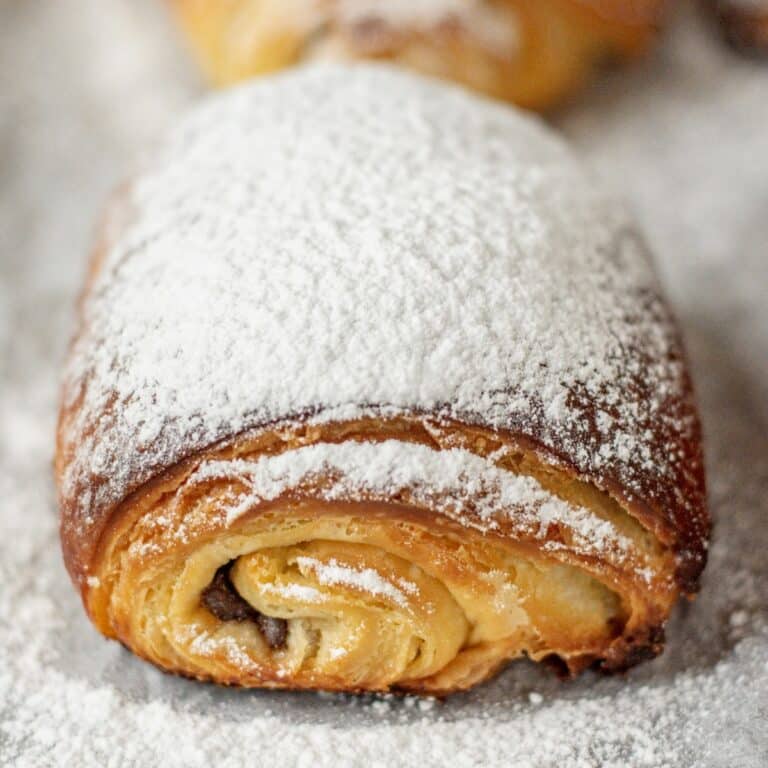



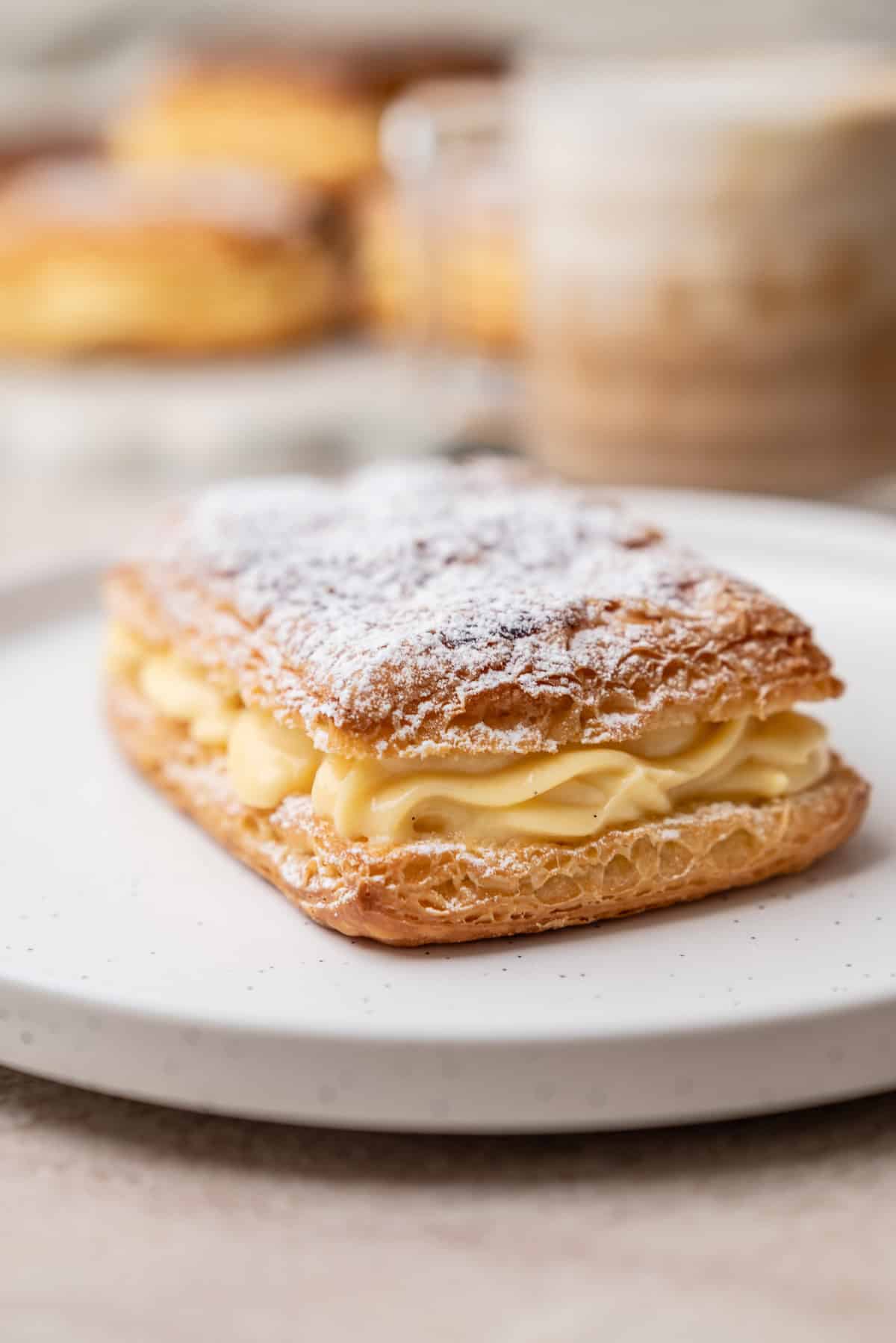
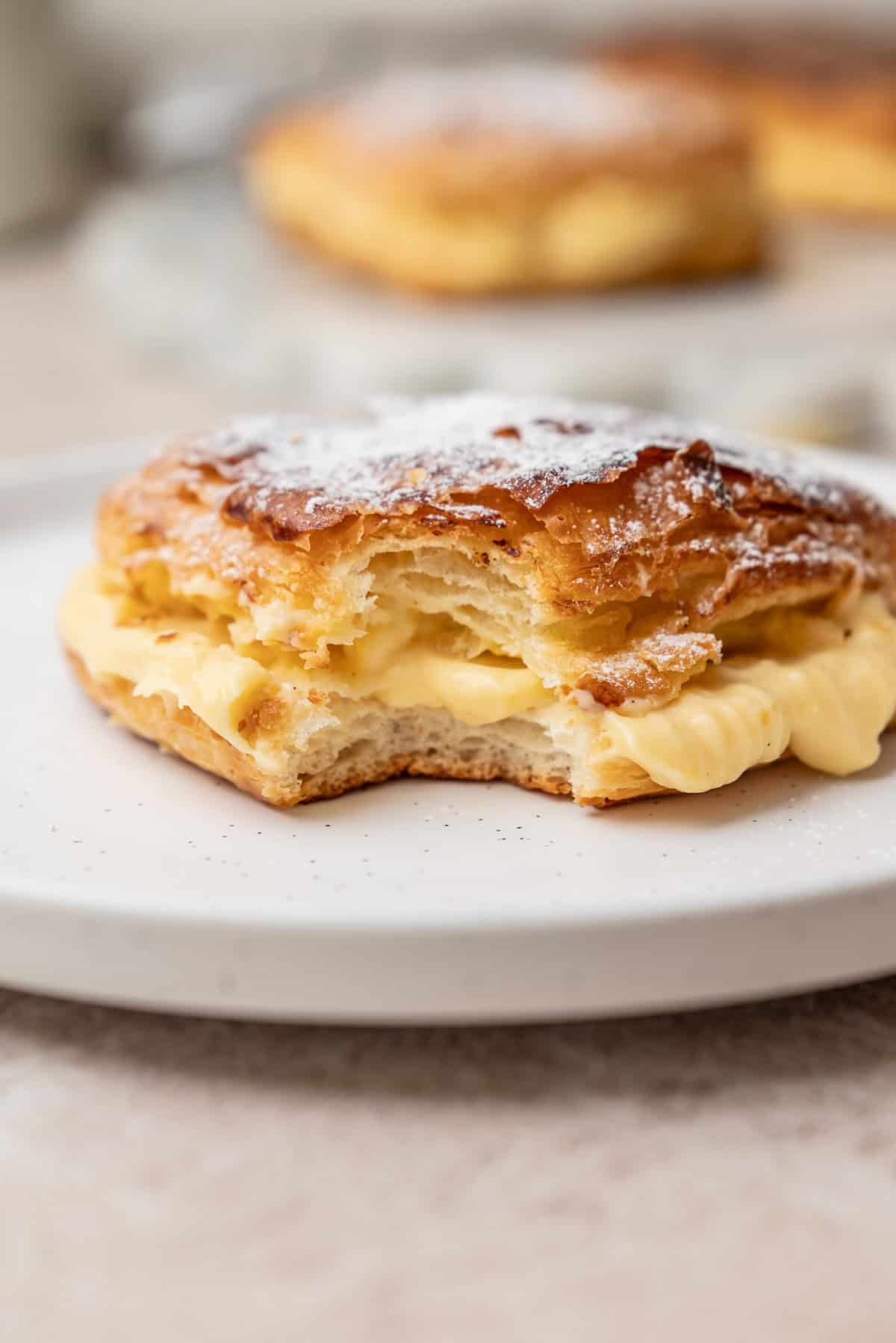
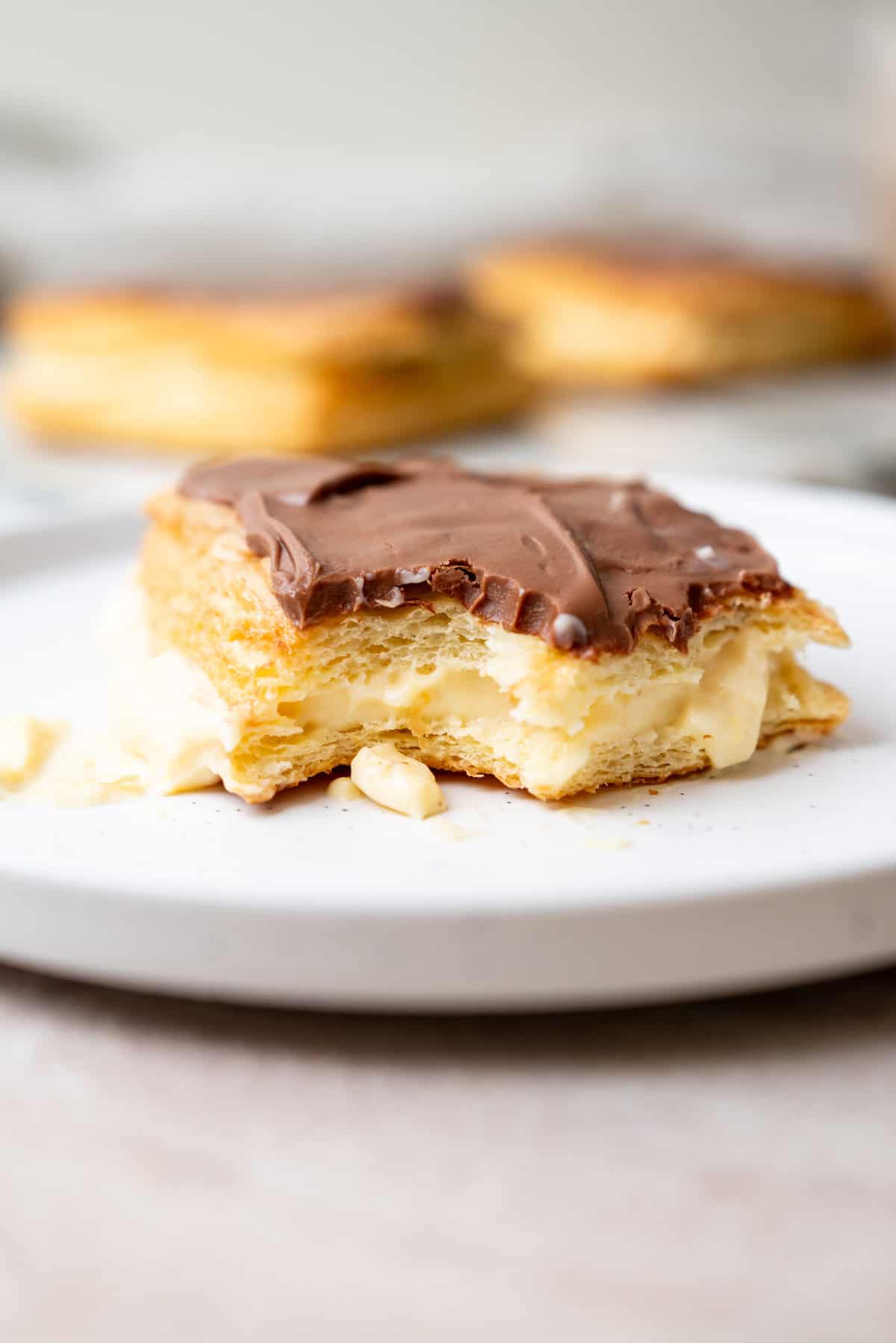
These Belgian crèmekoeken are made with buttery laminated croissant dough, baked until golden, then split and filled with homemade vanilla pastry cream. You can finish them with powdered sugar or a layer of Belgian chocolate on top.
About these crèmekoeken
Crèmekoeken are a classic in Belgium and I’ve been wanting to add them to the blog for a while! I think they’re hands down one of the best pastries ever. I have made these using my homemade croissant dough. The pastry is cut into squares and baked as is, then, once baked and cooled, the squares are sliced through the middle and filled with a thick layer of crème pâtissière. I’ve got a lot of photos in this post so be prepared! I wanted to make sure I could show the full step-by-step process.
You can top them with powdered sugar which is great, but an even more delicious version has chocolate on top. I think the main thing that makes this Belgian version of pastry and custard so so good is that the topping is made with proper Belgian chocolate. Not like an icing or glaze so it gives the crèmekoek a real chocolate flavour and a lovely contrast with the vanilla pastry cream underneath. You can use milk or dark chocolate. Milk chocolate gives a sweeter, softer finish, while dark chocolate gives a little more contrast. I melt Callebaut milk chocolate with a small amount of butter so it sets softly enough to bite through without cracking.
The full batch makes 12 large crèmekoeken. If you want a smaller batch, you can use half a batch of laminated croissant dough instead.
How to make crèmekoeken
For more detail: This is a shortened overview of the lamination process. See my full homemade croissant recipe for step-by-step photos, folding details, dough temperatures and troubleshooting.
- Mix together the croissant dough and knead until smooth and elastic.
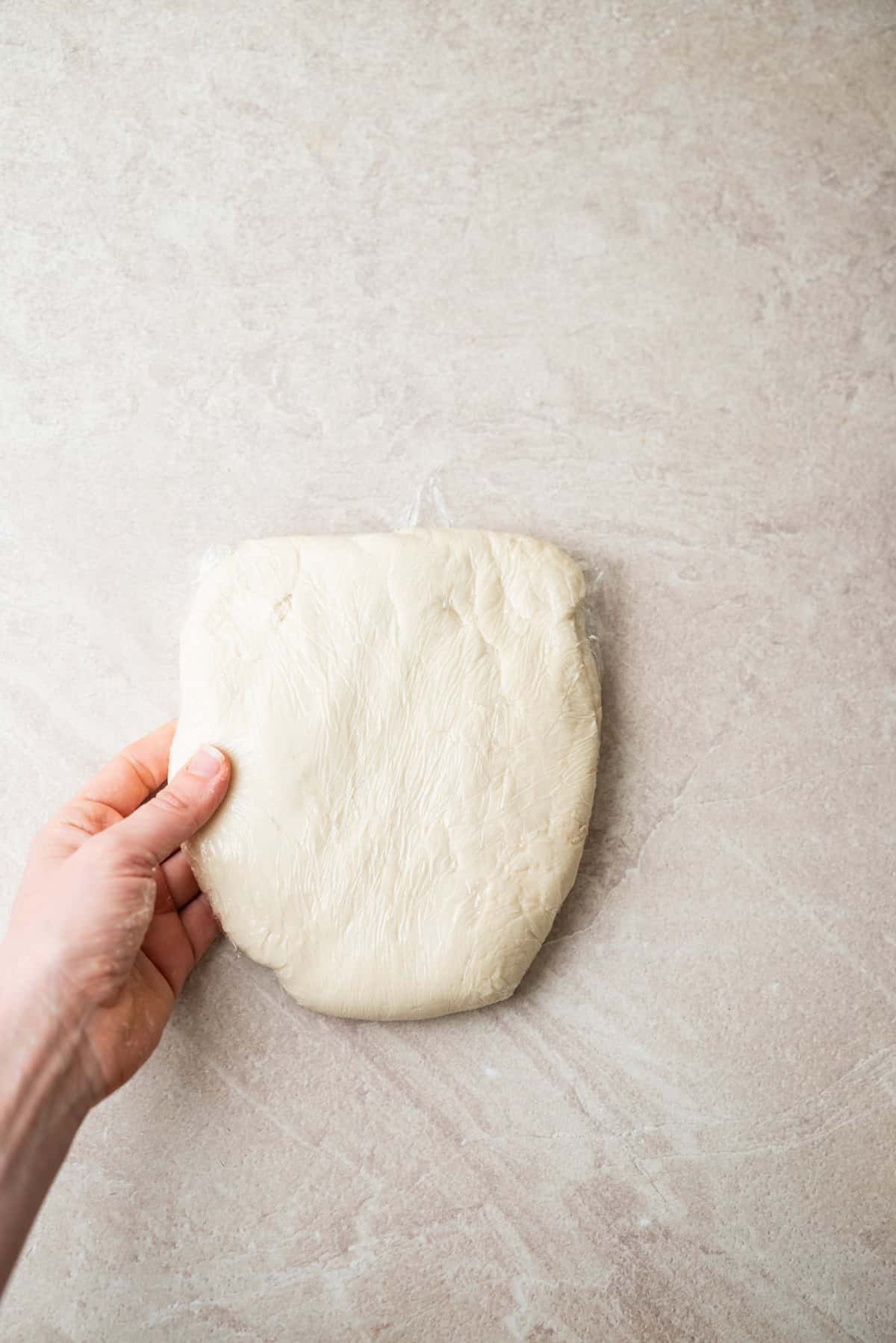
- Shape it into a rectangle, cover and chill in the fridge for at least 2 hours, or overnight.
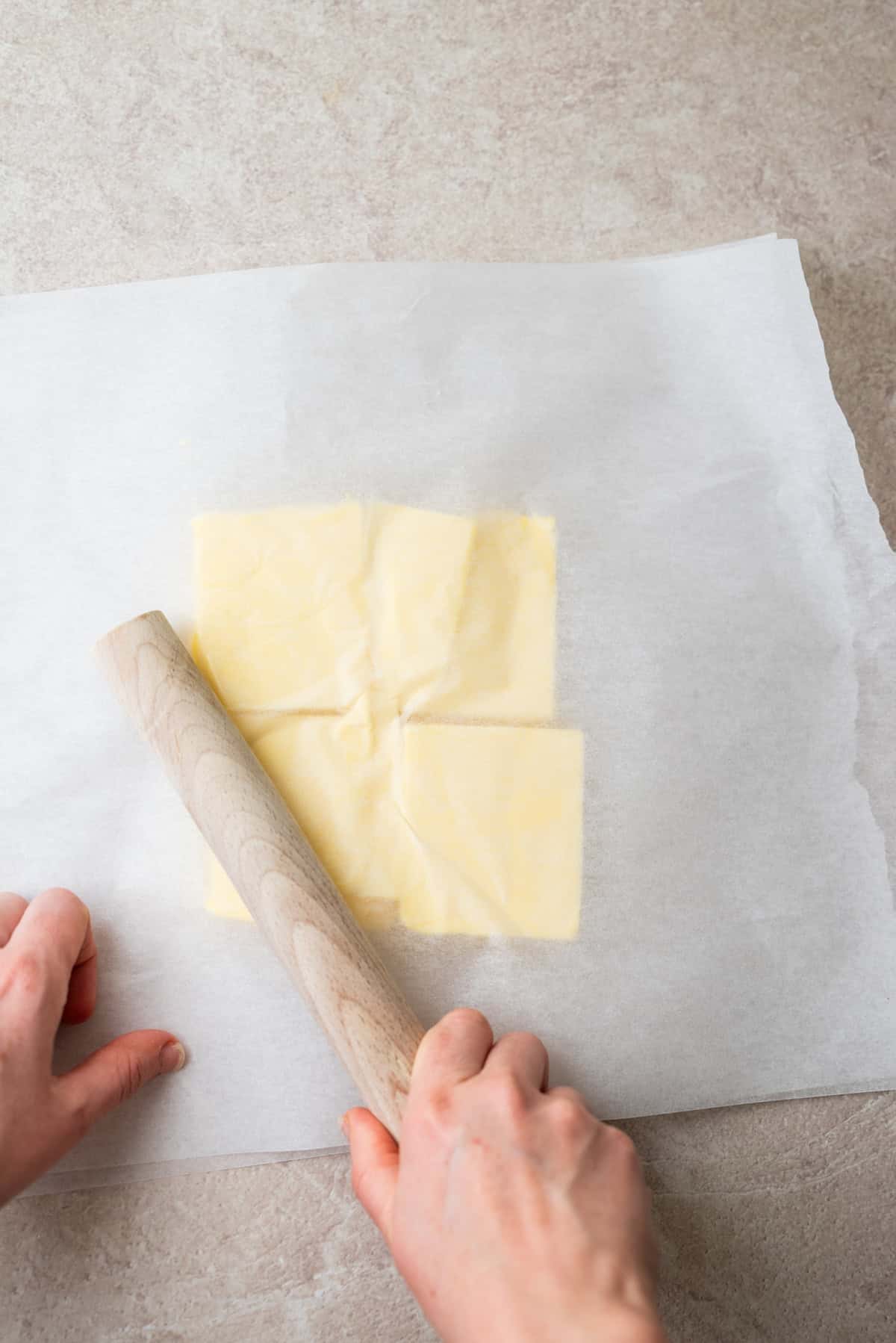
- Make the butter block by pounding and rolling the butter into a flat rectangle between sheets of parchment paper. Chill until cold.

A note on the butter block
I used to mix a little flour into the butter when making the butter block, but these days I prefer to leave out the flour. I cut the butter into 4 even slices, put them together in a square between sheets of parchment paper, then pound and roll them until they join into one smooth, even block.
This gives cleaner butter layer and it’s quicker too. The important thing is to get the butter evenly flattened and pliable before laminating. After chilling, I give the butter block another gentle pounding with the rolling pin before using it, just until it bends without cracking.
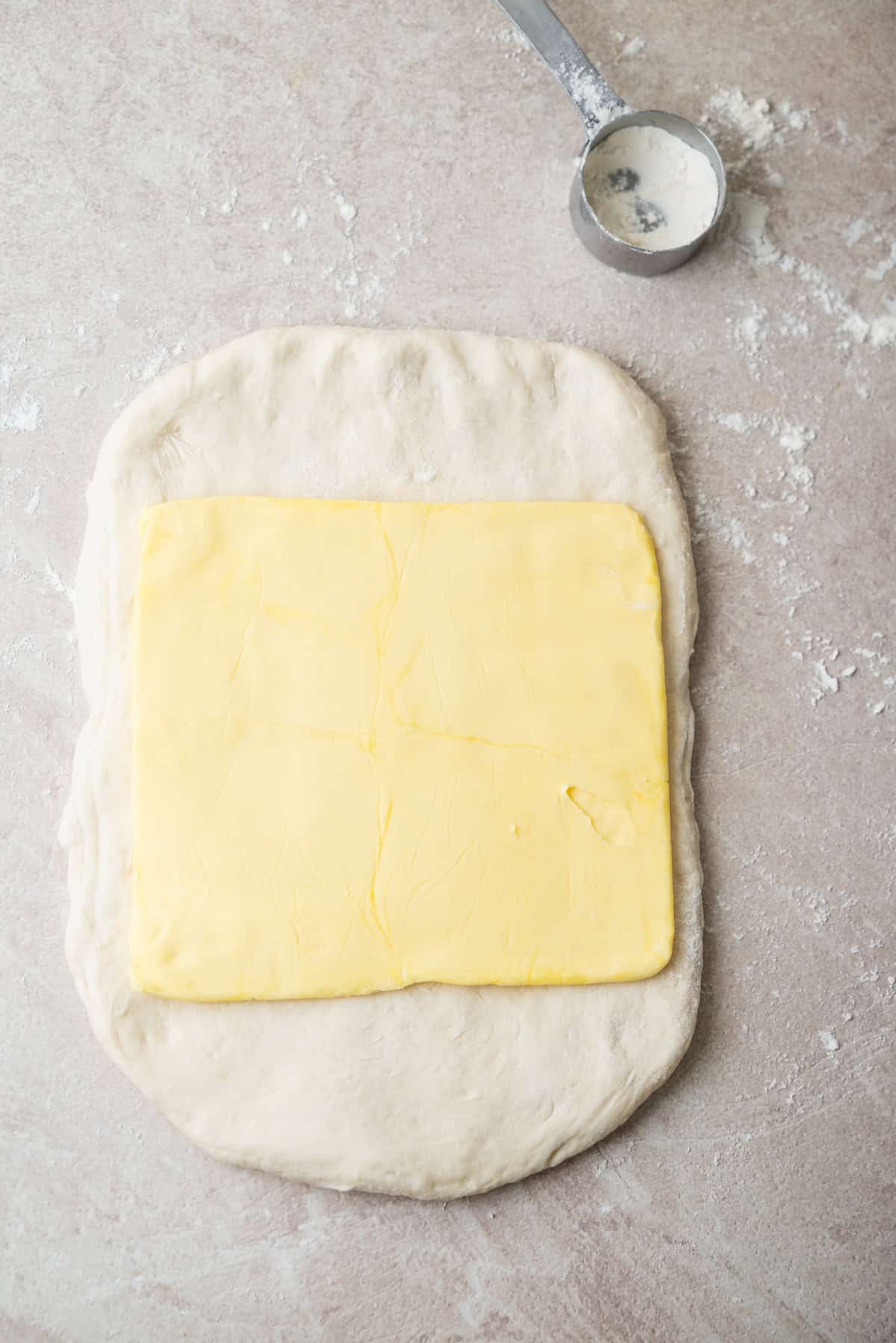
- Roll out the chilled dough, place the butter block in the centre and fold the dough around it to completely enclose the butter.
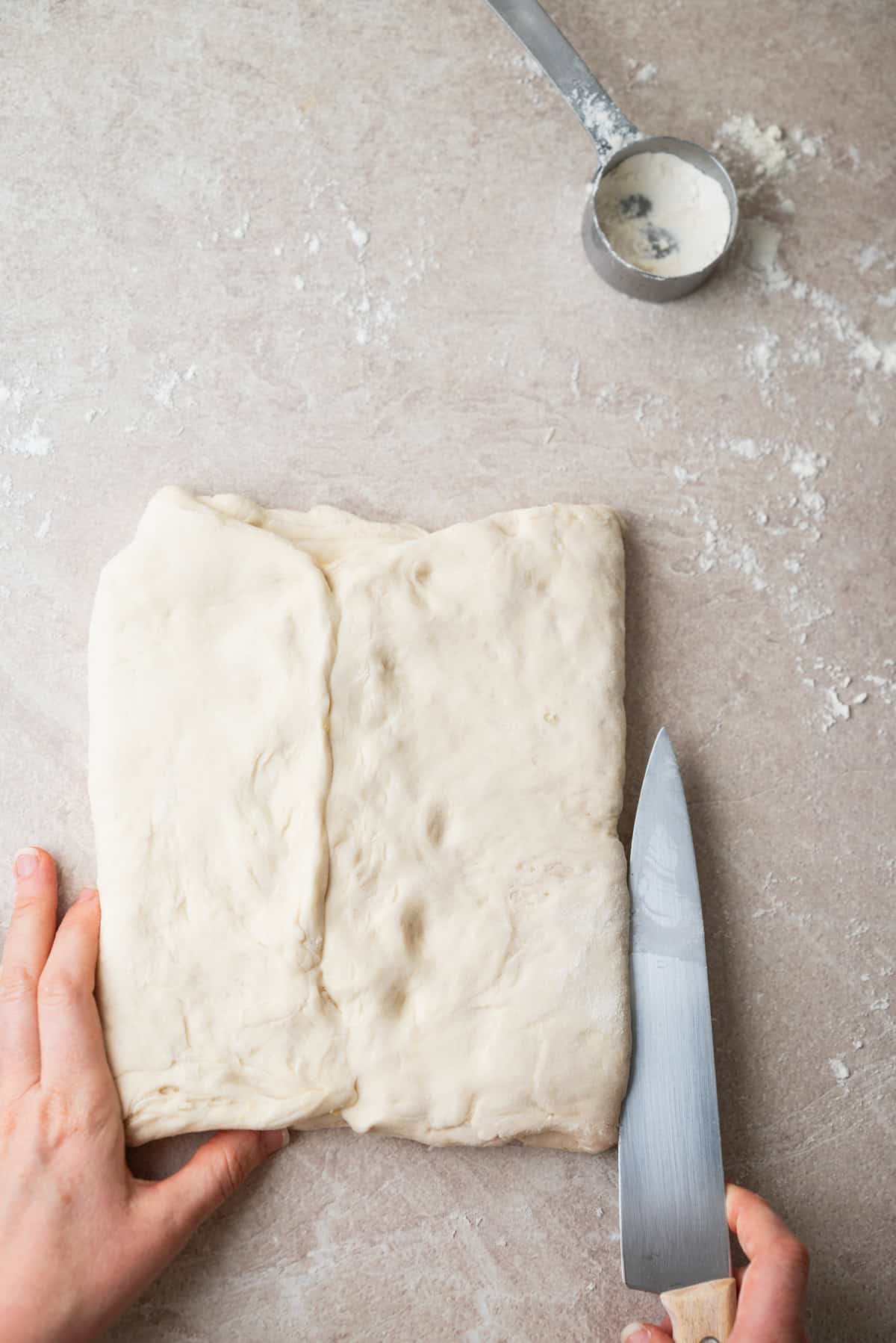
- Use a sharp knife to make a slit through the folded dough along both side edges. This releases tension and helps the dough roll out more evenly for the first fold.
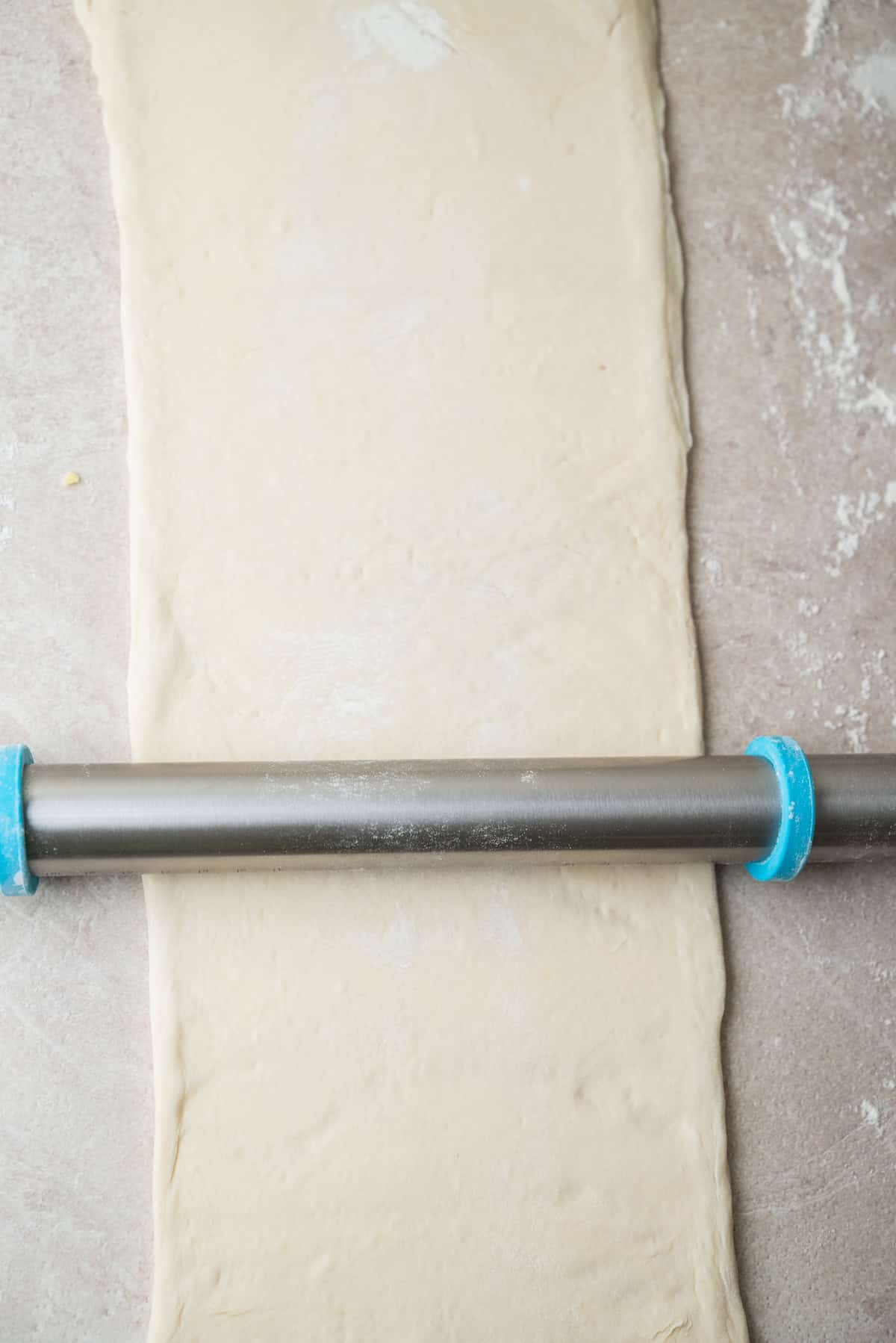
- Roll the dough into a long rectangle, around 1/4 inch (7-8 mm) thick.
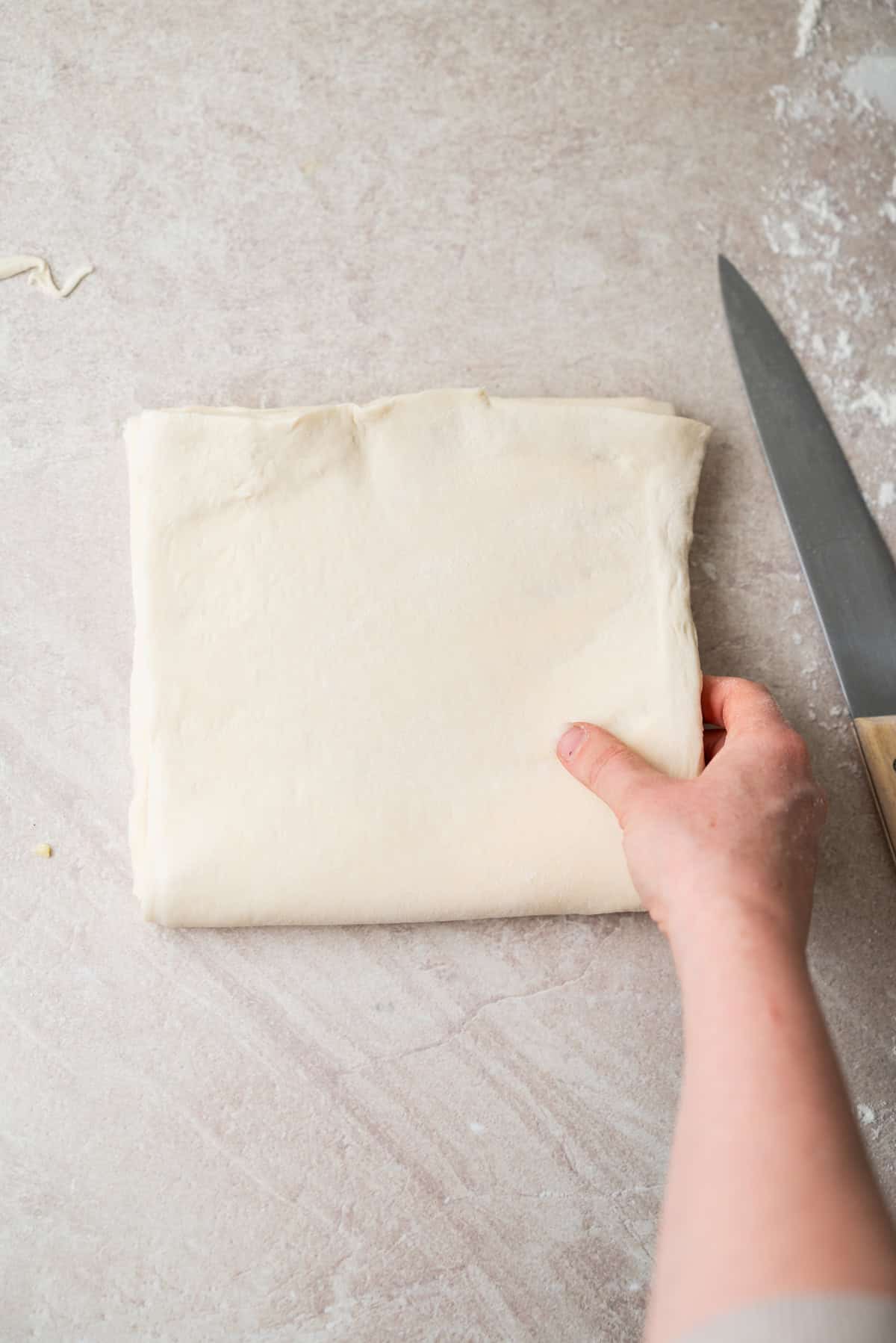
- Fold into thirds, wrap tightly and chill for 30 minutes. Repeat the rolling and folding process 2 more times, chilling between each fold. After the final fold, chill the dough again for at least 2 hours or overnight.

- Make the pastry cream so it has time to chill completely. For more detail: You can find my full crème pâtissière recipe here, with more information on cooking the custard.
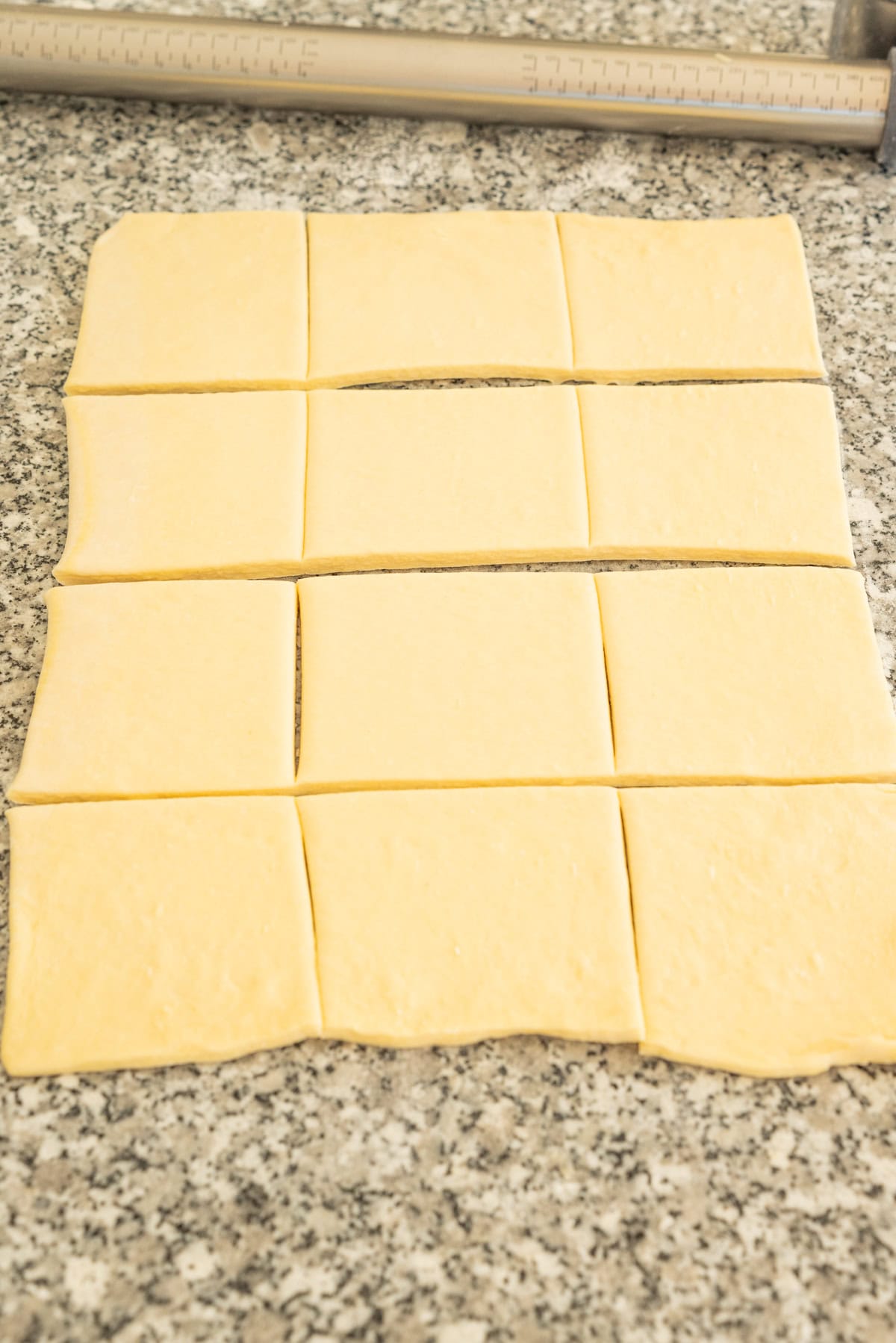
- Roll the finished laminated dough to about 12 x 16 inches (30 x 40 cm), around 1/5 inch (5 mm thick), and cut into twelve 4 x 4 inch (10 x 10 cm) squares.
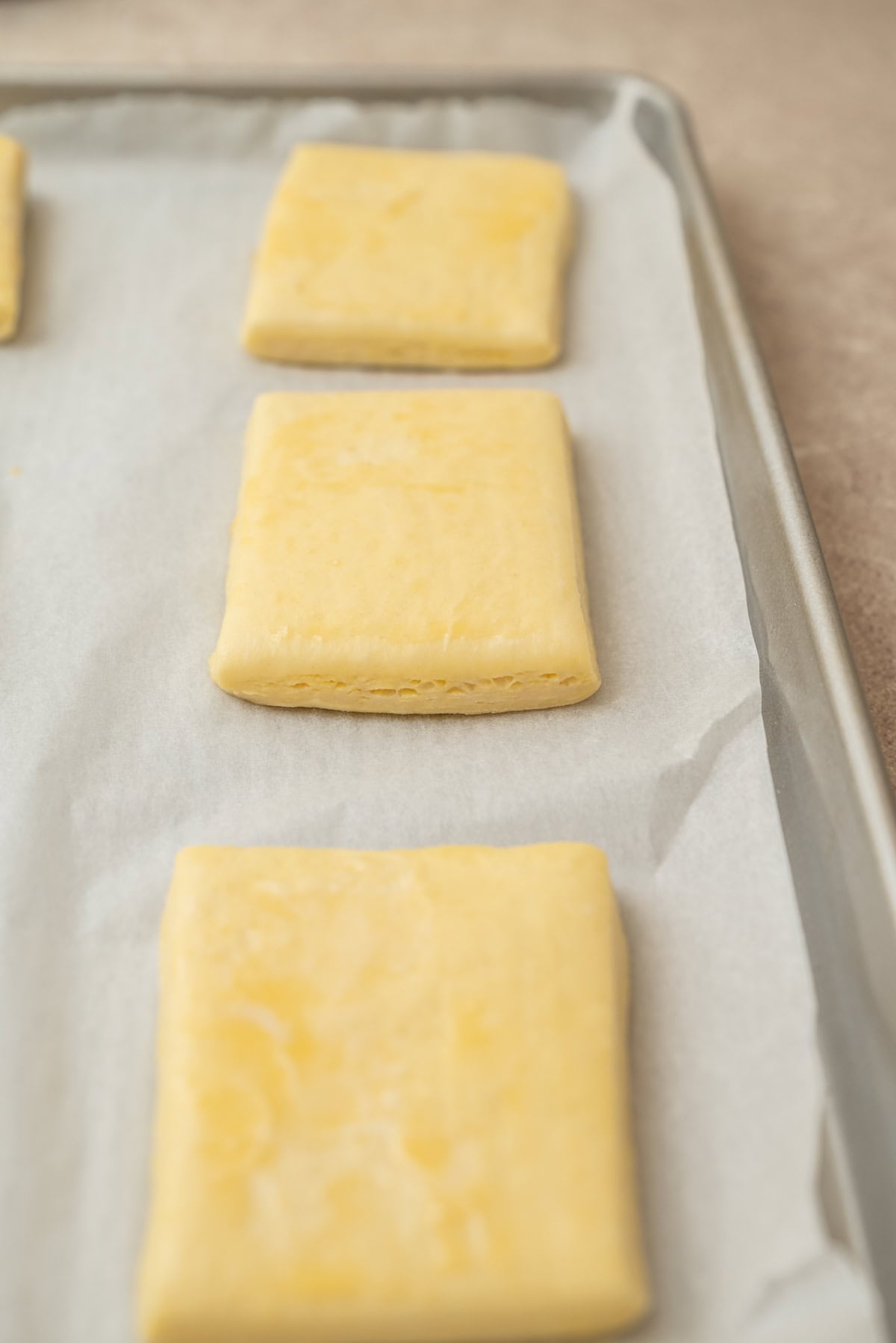
- Proof the squares until puffy and light, brush the tops with egg wash.
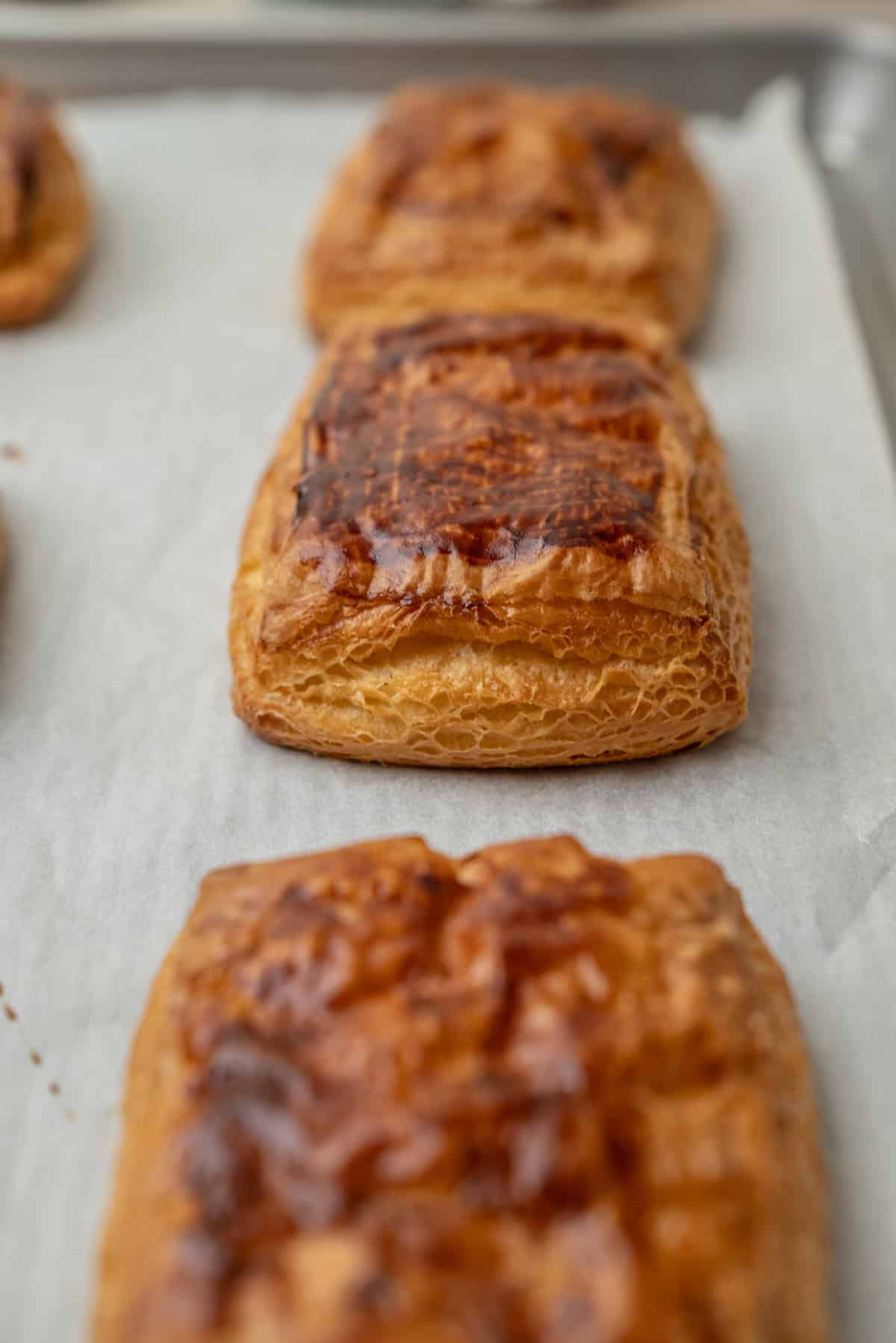
- Bake until deeply golden and crisp.
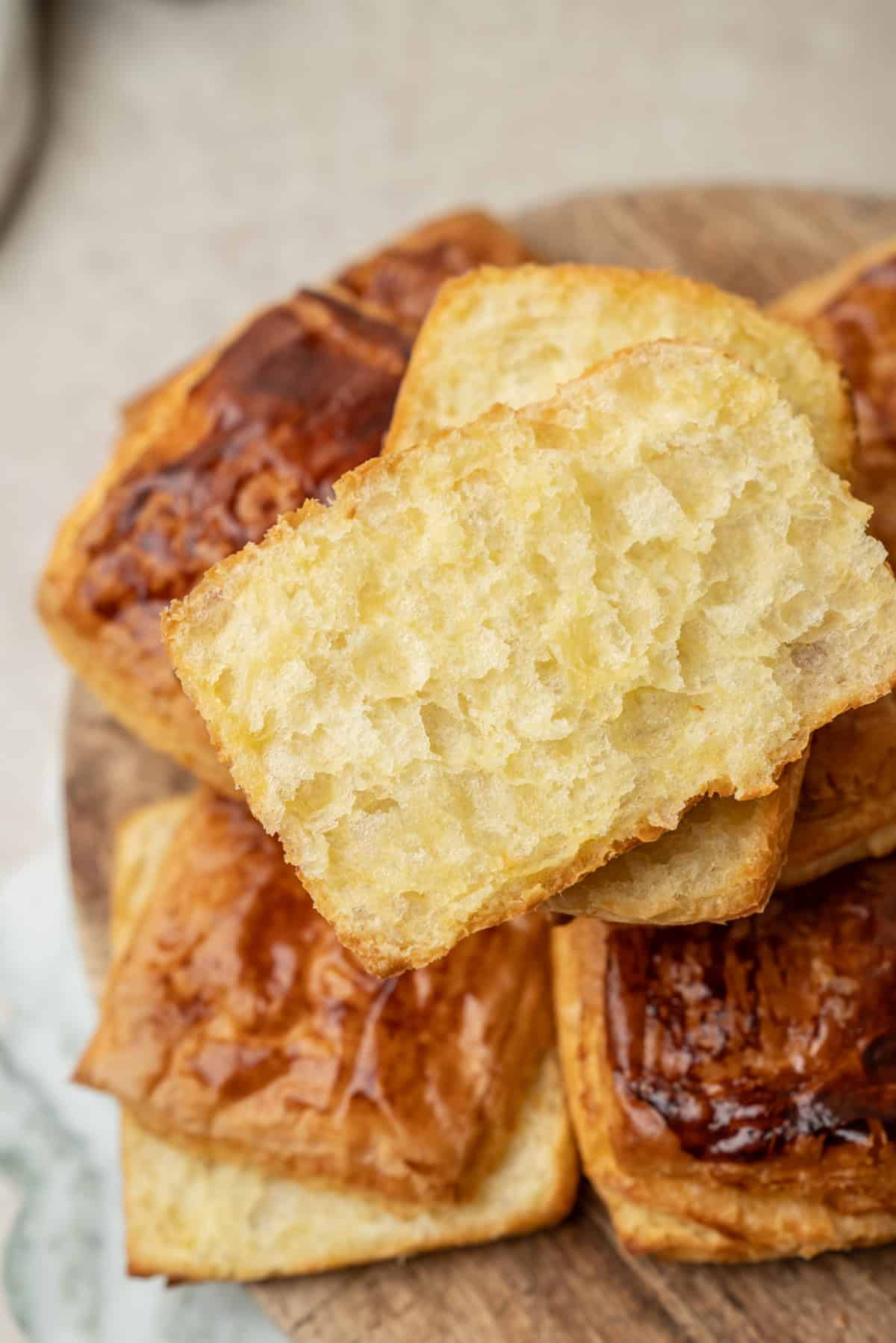
- Cool completely then split each pastry horizontally.
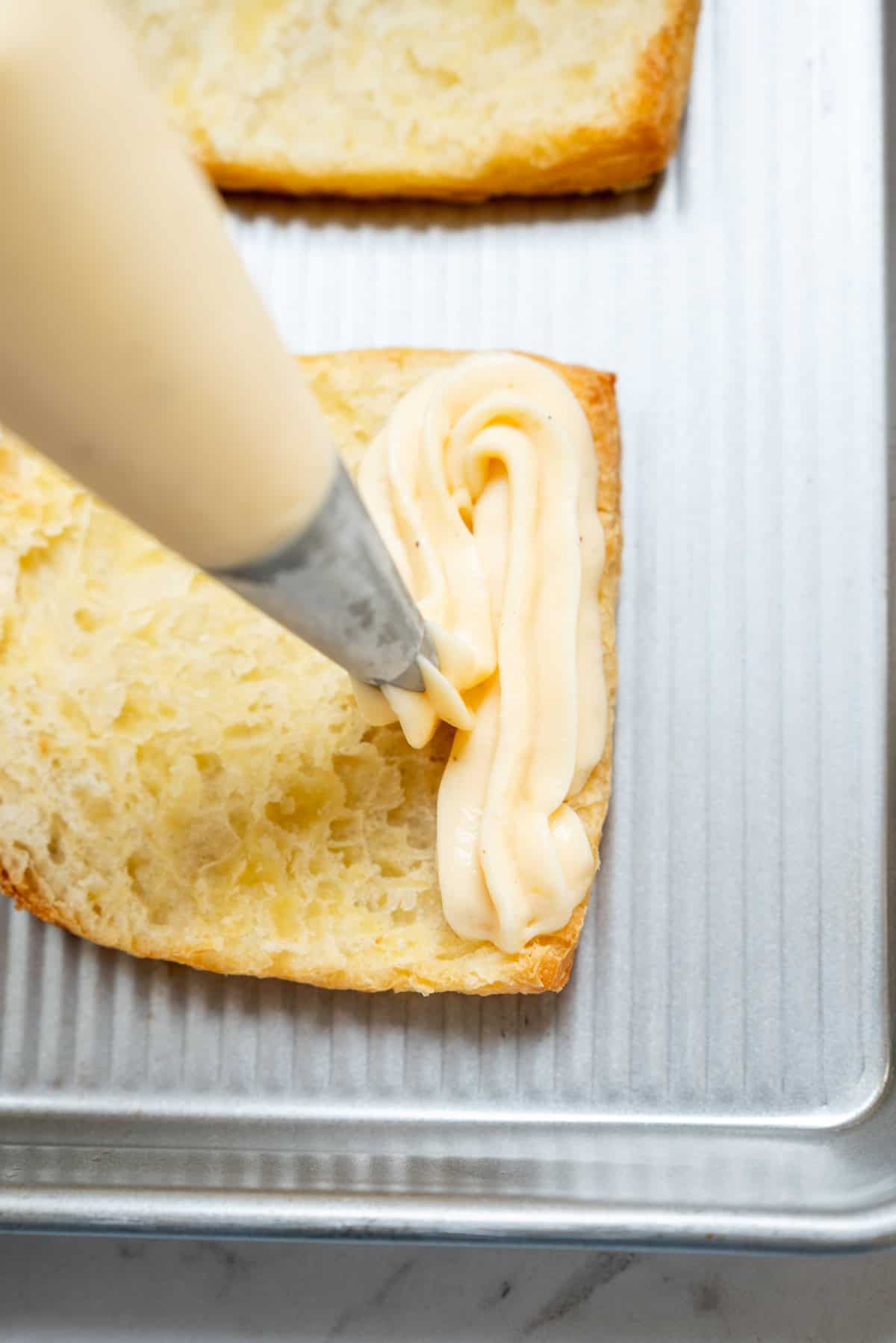
- Pipe custard on each pastry bottom.
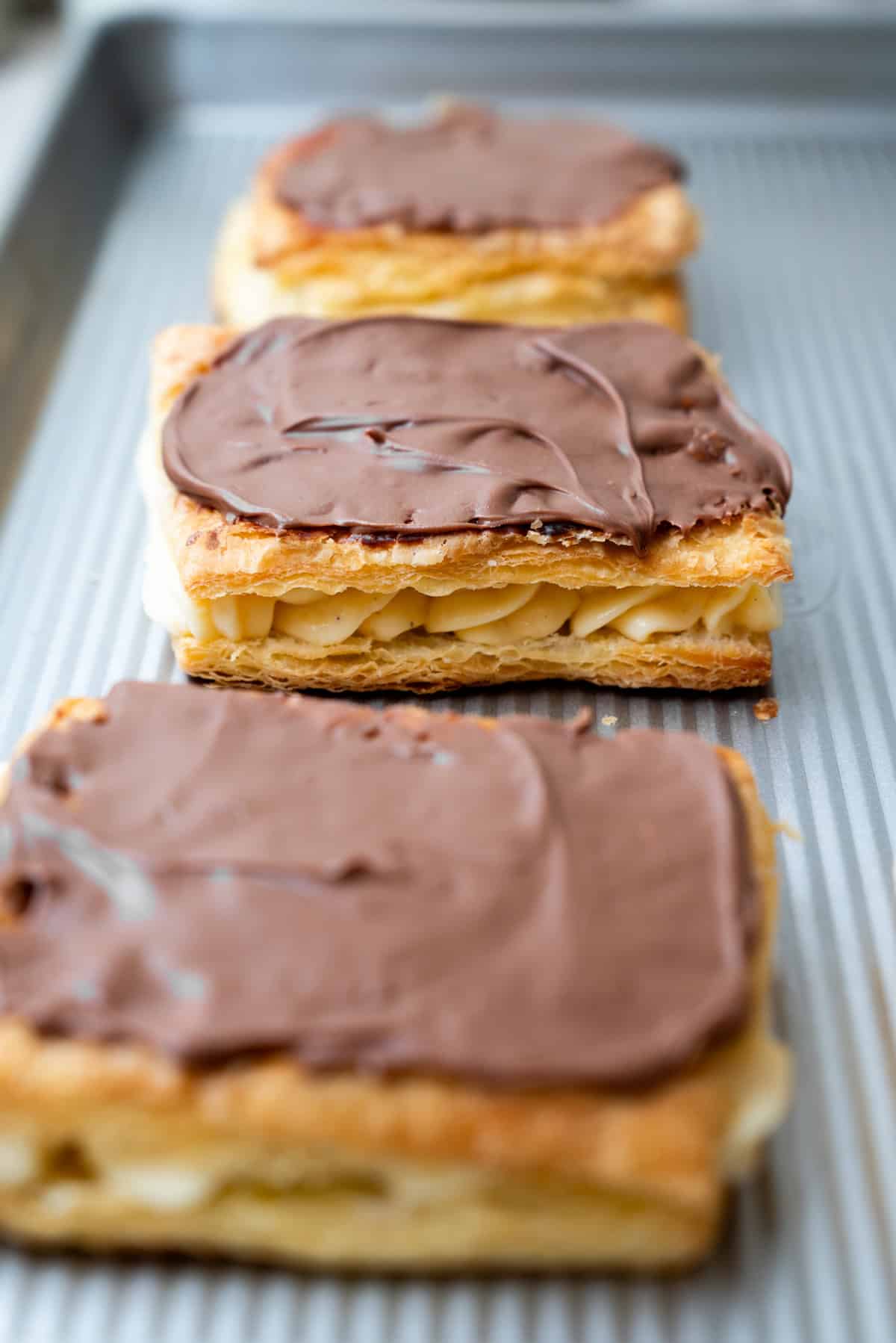
- If topping with chocolate: Melt together chocolate and butter, and spread it over the pastry tops.
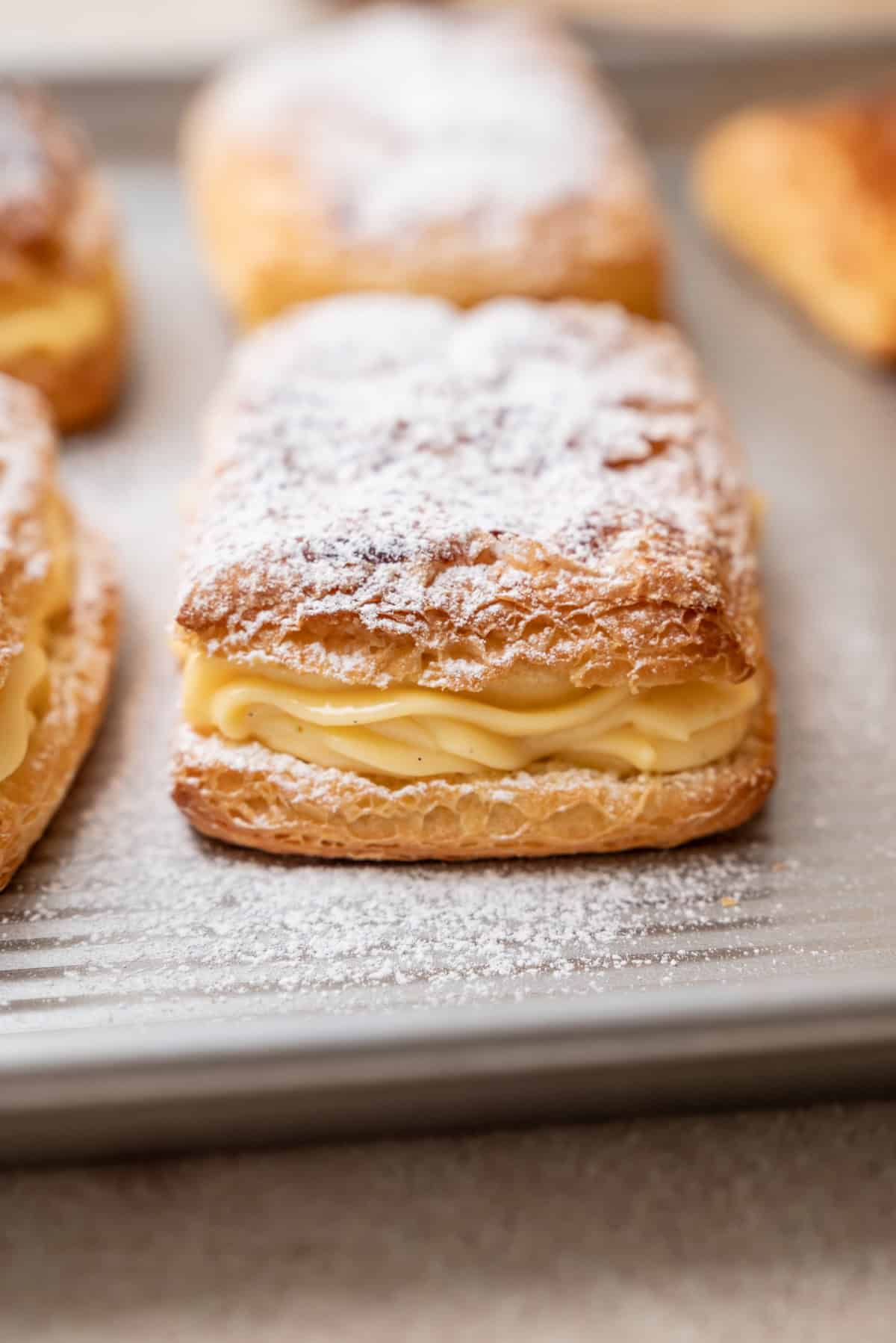
- Or, dust with powdered sugar.

Tips & Tricks
- Keep the dough cold. If the butter starts getting soft while you are laminating or shaping, stop and chill the dough before continuing. You want the butter to stay in proper layers and not melt into the dough.
- Focus on length when laminating. During the folds, don’t worry too much about reaching an exact rectangle size. Roll mainly lengthwise until the dough is around 1/4 inch (7 to 8 mm) thick, then fold.
- Proof somewhere slightly humid. A dry surface can form a skin and it will hold back the rise. A turned-off oven or microwave with a mug of hot water nearby works well, as long as it does not get too warm (and make sure the hot water isn’t directly under the tray of proofing dough, or it will melt the butter!)
- Bake them deeply golden. A good bake gives the pastries a crisper, sturdier shell and helps them hold up once filled with pastry cream.
- Cool completely before filling. Warm pastry will soften the custard and make the layers lose their crispness more quickly.
- Fill close to serving. Crèmekoeken are best when the pastry is still crisp and the pastry cream is cold. Once filled, the pastry will gradually soften in the fridge.
Related recipes
If you enjoy making these you might also like my:
- Sourdough Pain au Chocolat
- Kouign-Amann
- Step by Step Pain aux Raisins Recipe
- Danish pastry dough
- Homemade Marzipan (Belgian Marsepein)
Belgian Crèmekoeken (Custard Filled Pastries)

Equipment
- Rolling Pin
- Parchment paper
- Baking sheets
- Pastry brush
- Medium saucepan
- Whisk
- Piping bag
- Serrated knife
Ingredients
Croissant dough
- 2 1/4 teaspoons instant yeast or active dry yeast
- 160 g whole milk lukewarm
- 120 g water
- 50 g granulated sugar
- 470 g all-purpose flour plus extra for dusting
- 9 g salt
- 30 g butter room temperature
Butter block
- 250 g butter cold
Egg wash
- 1 large egg
- 1 tablespoon water
Vanilla pastry cream
- 720 g whole milk
- 2 teaspoons vanilla paste or vanilla extract
- 6 large egg yolks
- 100 g granulated sugar
- 45 g cornstarch
- 1 pinch salt
- 65 g butter
Chocolate topping
- 230 g Belgian milk or dark chocolate, I use Callebaut
- 30 g butter
- powdered sugar for dusting, optional
Instructions
Make the croissant dough
- In a large bowl, combine the milk, water, yeast and sugar. If using active dry yeast, leave it for 5-10 minutes until frothy. If using instant yeast, continue straight away. 2 1/4 teaspoons instant yeast , 160 g whole milk, 120 g water, 50 g granulated sugar
- Add the flour and salt and mix until a rough dough forms. 470 g all-purpose flour, 9 g salt
- Turn the dough onto a lightly floured surface and knead for about 3 minutes to begin developing the gluten. Add the 30 g room-temperature butter and continue kneading until the butter is fully incorporated and the dough is smooth and elastic. You can also do this all in a stand mixer. 30 g butter
- Shape the dough into a rough rectangle, wrap well and refrigerate for at least 2 hours or overnight.
Make the butter block and laminate
- Cut the butter into 4 even slices and arrange them together in a rectangle between two sheets of parchment paper. Pound the butter with a rolling pin until the pieces join together, then roll it into an 8 x 6 inch (20 x 15 cm) rectangle, about 1/4 inch (5 mm) thick. You can fold the parchment paper around the butter to create neat edges and help guide it into shape. Chill until cold. 250 g butter
- Before laminating, beat and roll the chilled butter block in its parchment until it is pliable and can bend without cracking. It should stay cold.
- Take the chilled dough from the fridge and roll it into a rectangle roughly twice the width of the butter block.
- Place the butter block in the centre. Fold the sides of the dough over to completely encase the butter and pinch the edges to seal. Use a sharp knife to make a small slit along both folded side edges to release tension.
- Turn the dough so the seam runs vertically in front of you. Roll it out into a long rectangle about 1/4 inch (7 to 8 mm) thick. Don’t worry too much about the width here. Focus mainly on lengthening the dough evenly. Trim the edges to make it even and brush away any excess flour.Fold the top third down and the bottom third up, like a letter. Wrap and refrigerate for 30 minutes.
- Repeat the rolling and letter fold 2 more times, chilling for 30 minutes between each fold. Each time, roll mainly lengthwise until the dough is around 1/4 inch (7 to 8 mm) thick, rather than trying to reach an exact length or width.After the third fold, wrap the dough well and refrigerate for at least 2 hours or overnight before shaping.
Make the pastry cream
- In a medium saucepan, heat the milk and vanilla over medium heat until just at a simmer. Do not let it boil. 720 g whole milk, 2 teaspoons vanilla paste
- While the milk heats, whisk the egg yolks, sugar, cornstarch and salt together in a separate bowl until smooth. 6 large egg yolks, 100 g granulated sugar, 45 g cornstarch, 1 pinch salt
- Slowly pour the hot milk into the egg mixture in a steady stream while whisking constantly.
- Return the mixture to the saucepan and cook over medium heat, whisking constantly, until it thickens and begins to bubble. Once bubbling, keep it at a bubble and whisk continuously for 1 full minute.
- Remove from the heat and whisk in the butter until completely combined. Pour into a clean shallow bowl or container. Press plastic wrap directly onto the surface and let it cool, then refrigerate until completely cold. Whisk briefly before piping to loosen it again. 65 g butter
Shape, proof and bake
- After the final chill, roll the laminated dough to about 12 x 16 inches (30 x 40 cm), around 1/5 inch (5 mm) thick.
- Trim the edges if needed, then cut the dough into twelve 4 x 4 inch (10 x 10 cm) squares. Arrange them on parchment-lined baking sheets with space between them.
- Cover loosely and proof at room temperature for around 2-5 hours, until noticeably puffy and light. When the tray is gently shaken, the dough should jiggle slightly. Keep the proofing temperature below 79°F (26°C) so the butter does not melt. If your kitchen is dry, try to proof them somewhere a bit more humid so the surface of the dough does not dry out. You can place the tray in a turned-off oven or microwave with a mug of hot water nearby, but not directly underneath the tray, as this can make it too warm and cause the butter to melt, or cover the tray loosely with plastic wrap.
- Preheat the oven to 400°F (200°C). Whisk the egg with 1 tablespoon water and brush a thin layer over the tops, avoiding the cut edges. 1 large egg, 1 tablespoon water
- Bake until deeply golden and crisp, around 20-25 minutes, rotating the trays if needed. The undersides should be well browned and the pastries should feel crisp and sturdy. Transfer to a wire rack and cool completely.
Fill and finish
- Once completely cool, use a serrated knife to split each pastry horizontally through the middle.
- Transfer the cold pastry cream to a piping bag and pipe a generous layer over each pastry bottom. Replace the tops.
- Finish with a generous dusting of powdered sugar, or melt Belgian milk or dark chocolate with butter and spread or dip it over the pastry tops. Let the chocolate set before serving.